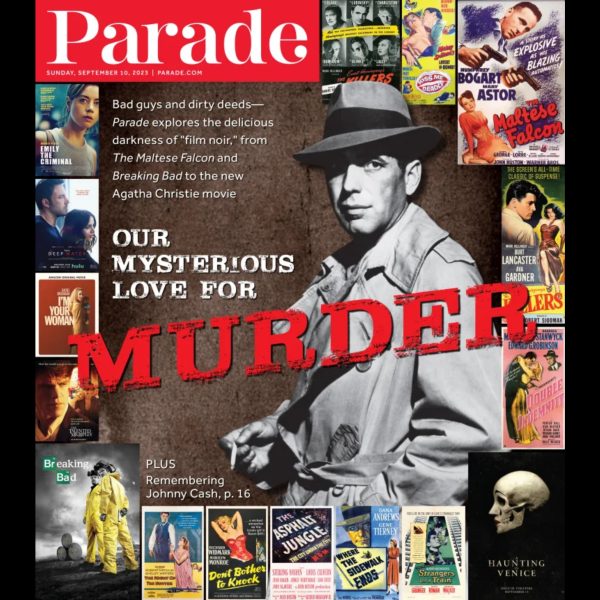
Parade is a US Sunday supplement, and was distributed with almost 700 newspapers – making it America’s most popular magazine – until 2022, when it went digital. Last weekend’s cover includes poster art for The Asphalt Jungle and Don’t Bother to Knock alongside other film noir classics and the likes of TV’s Breaking Bad, all under the watchful eye of Humphrey Bogart. (You can order a copy here.)
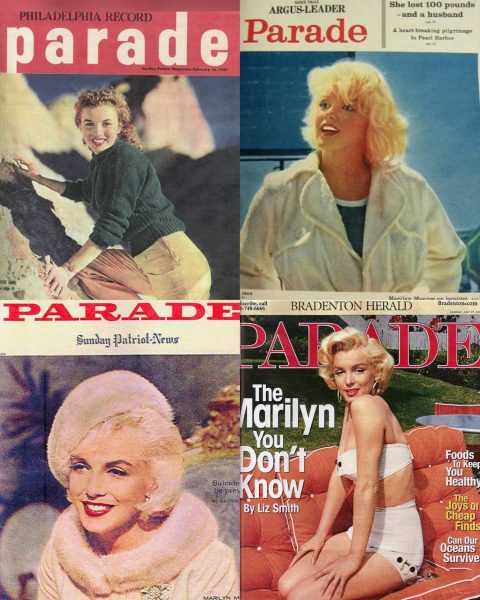
Marilyn has made numerous appearances in Parade over the years, including several covers. In 1947 she was better-known as a model, and Andre De Dienes’ 1945 photo of a brunette Norma Jeane made the cover. Then in 1958, Parade showed blonde MM filming Some Like It Hot. In 1963, shortly after Marilyn’s tragic death, Parade chose a shot from the set of the unfinished Something’s Got to Give, captioned, ‘Why Won’t They Leave Her Alone?’ And then 45 years later, in 2008, a sultry pose for Mischa Pelz – from a 1953 layout advertising lawn furniture – illustrated Liz Smith’s article, ‘The Marilyn You Don’t Know.’
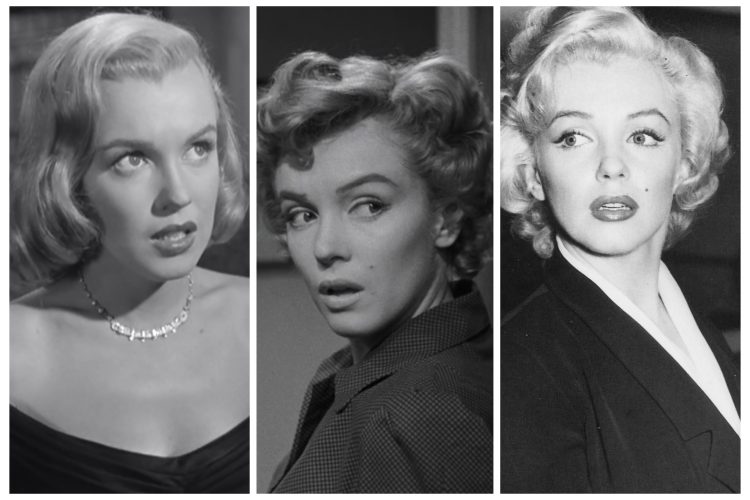
Eddie Muller, interviewed by Neil Pond for last week’s cover story, ‘A Guide to Film Noir,’ also introduced Don’t Bother to Knock on his regular TCM spot, Noir Alley, back in January. Although Marilyn’s disturbed babysitter very nearly kills her young charge – and then attempts suicide – she is more to be pitied than punished.
The Asphalt Jungle is a heist movie rather than a murder mystery; and while Clifford Odets’ play, Clash By Night, ended in murder, Fritz Lang’s big-screen adaptation does not. However, in Marilyn’s last Noir vehicle, Niagara, she is both accomplice to her lover’s failed murder plot and victim of her vengeful husband.
“All that darkness, Muller says, represented the disillusionment and disenchantment of Americans—specifically filmmakers—who’d lived through the dismal days of the Great Depression, only to transition into another period of bleakness with World War II, then finally come out on the other side with an all-new set of anxieties, fears, doubts and dread. During those days, things looked dreary for a lot of people, and movies began to show it.
Most of Hollywood’s biggest stars of the era—Humphrey Bogart, Lauren Bacall, Robert Mitchum, Orson Welles, Barbara Stanwyck, Marilyn Monroe, James Cagney—made noir movies, many of which are considered classics today. And you’ve probably seen noir, but maybe didn’t realise that’s what you were watching.
Women also play significant roles in noir. ‘Historically, a lot of people have written—and I think mistakenly—that film noir is misogynistic because it presents a kind of negative view of women as vixens or vipers,’ he says. ‘But in truth, the women of noir are surprisingly progressive for their era. They’re often self-sufficient, self-reliant women …’ Noir films are usually complicated and multilayered, full of twists and turns for both males and females—and often those turns turn out to be deadly.”
 The Marilyn Report
1 Comment
Comments are closed.