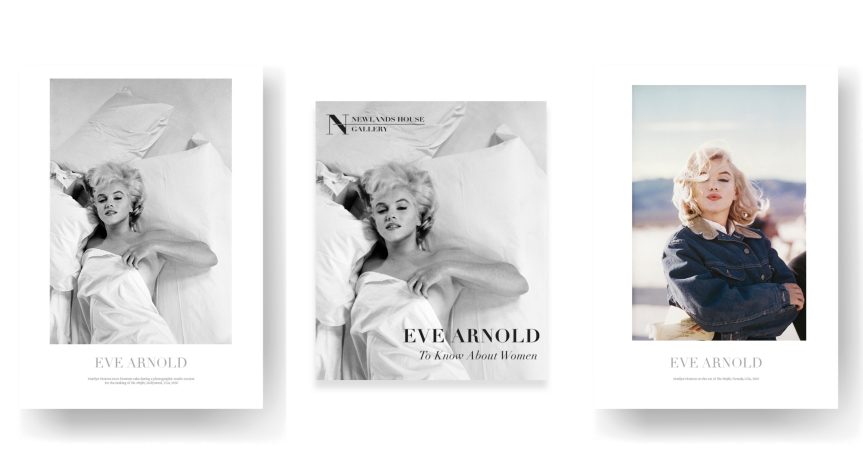
The first major UK retrospective for photographer Eve Arnold in a decade, To Know About Women continues at Newlands House Gallery in Petworth, West Sussex, until January 7th, 2024. An exhibition catalogue featuring 90 photos has now been published in paperback, and two prints of Marilyn are also available here.
Zoe Whitfield went behind the scenes for CNN recently…
“When Eve Arnold joined Magnum in 1951 — four years after the renowned photographic agency was founded — she was its first female photographer. ‘Magnum was about to open a New York office,’ she would write in her acclaimed monograph, 1976’s The Unretouched Woman. ‘I went to see them. Being a woman helped. I was to be their token American woman stringer.’ By 1957, when she became a full member, she was one of just two women on the agency’s books internationally.
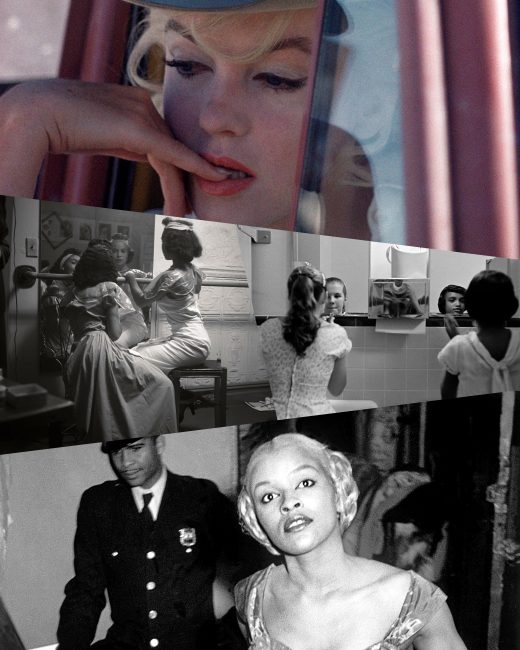
Seventy years later, a new exhibition delves into Eve Arnold’s extensive archive, foregrounding a collection of her most significant work. ‘The subject matter is definitely not just women, but it is her perspective that we wanted to reflect,’ said Nicola Jones, founder and director of the Newlands House Gallery … The photographer’s most celebrated images are presented alongside several of her lesser known but equally compelling works: from Marilyn Monroe on the set of The Misfits to Malcolm X speaking in Washington, and Black fashion shows in Harlem to a natal ward in Long Island.
‘One thing that comes through in all of her photographs is a non-judgemental, empathetic character,’ continued Jones. ‘The breadth of her work too, was so extraordinary, as was how quietly and effectively she overcame various taboos, and similarly the access she managed to obtain.’
‘The issues she photographed are as important (now), if not more so, than ever before,’ Michael Arnold, the photographer’s grandson, told CNN in an interview. ‘She kept herself neutral because she saw her job as a reporter. She was fascinated in what was going on in the world around her and wanted to shine a light on it. Despite being apolitical, her subjects (revealed) her interests.’
Indeed, she acknowledged the anomaly and supposed eccentricity of her gender in The Unretouched Woman. ‘My colleagues were not spoken of in inverted commas; they were not “career men” or “men photographers,”‘ she wrote, recognising the double standard while never establishing herself as a feminist.
Her gender however, while in no way shaping her photographic successes, would, by default, inform her legacy at the vanguard of twentieth century photography, something she frequently downplayed said Michael. ‘It wasn’t false modesty, she genuinely found it quite strange,’ he recalled. ‘She perhaps didn’t even recognise the role that she played in the history of photography.’
While Eve once told Michael she didn’t want to be known just for her Marilyn Monroe work, the images are a striking example of her broader practice and ability to build authentic relationships with her subjects. ‘Those shots, globally known now, tell a story of a lady who managed to gain the trust of someone who was notoriously vulnerable and at times fragile, who trusted Eve to photograph her in ways that perhaps she wouldn’t allow others to,’ said Jones.
Moreover, what allowed Eve ultimately to produce work as she did, was her bold sense of curiosity. ‘That drove her, a genuine, insatiable kind of curiosity. She wanted to know what made someone tick,’ said Michael. ‘I think her compassion and curiosity is one of the major things that sets her apart. It’s the kind of humanity that shines through, whether she’s photographing the royal family or a working-class family. That’s what makes her photography relatable, and timeless.'”
 The Marilyn Report
1 Comment
Comments are closed.