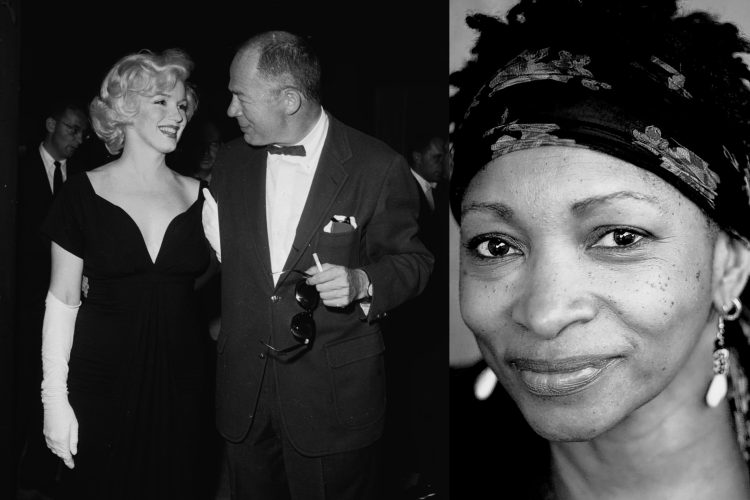
Bonnie Greer is a Chicago-born, London-based writer and academic. Perhaps her best-known play, Marilyn and Ella, was first broadcast on BBC radio in 2005 before being reworked for the stage. This sparked media interest in the Monroe-Fitzgerald story, although it’s still widely misunderstood (see here.)
Greer also appeared in the CNN docuseries, Reframed: Marilyn Monroe (2022.) In a recent column for The New European, she wrote about Billy Wilder’s early days as a roving reporter in 1920s Berlin, before the fall of the Weimar Republic and the rise of Adolf Hitler – and the impact of this hedonistic era on Wilder’s later Hollywood movies (a subject covered more fully in Noah Isenberg’s book, Billy Wilder on Assignment.)
“Beneath Weimar, beneath that endangered republic, was always the sense that life was fleeting; that it would all come to an end, and that so much was illusion. Even lies. So enjoy yourself; take none of it seriously; remember that human beings are fundamentally crazy … Yet that insouciance, that knowledge that ‘some like it hot’ stayed with Wilder, thrived in him, and when he could he found a way to go back to the spirit of Weimar; back to its shape-shifting and criminality, its irony.
There are three films that exemplify, for me, that Weimar spirit.
In 1948, he released A Foreign Affair starring his old pal from the Weimar days, Marlene Dietrich … Dietrich is Weimar itself, its irony … Wilder’s touch is light. Ephemeral … But it is with Marilyn Monroe that Wilder frames a kind of symbol of Weimar and its tragedy.
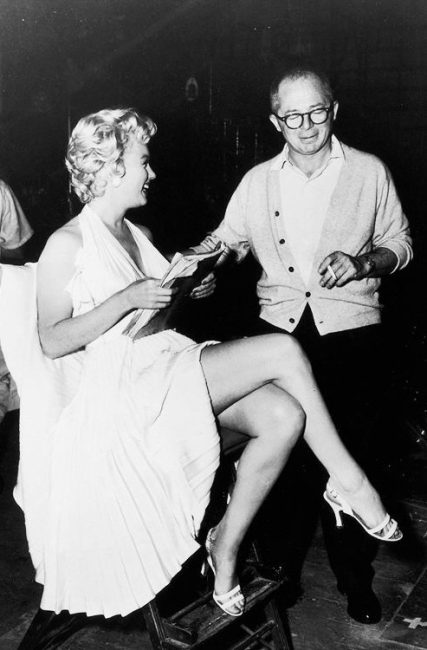
In The Seven Year Itch, Marilyn portrays the quintessential dumb blonde, the girl who can’t help it. She is the summer vacation for a guy whose family has gone ahead of him to their holiday spot. While they’re gone, he discovers that he is experiencing that ‘itch’, the need to play away, and conveniently Monroe appears.
Her very presence shows not only his hypocrisy but the hypocrisy of the American dream with its roots in a ‘solid’ marriage. She upends by her very presence. And in that famous scene, where her dress upends – and of which Wilder did a lot of takes surrounded by an audience from the street – he reveals not just her underwear, but the sham of the ‘sex symbol’ construction itself. She is vulnerable. In the wind.
His next and last film with MM, Some Like It Hot, ends with the line: ‘nobody’s perfect’. Just as no one was in Weimar.”
 The Marilyn Report