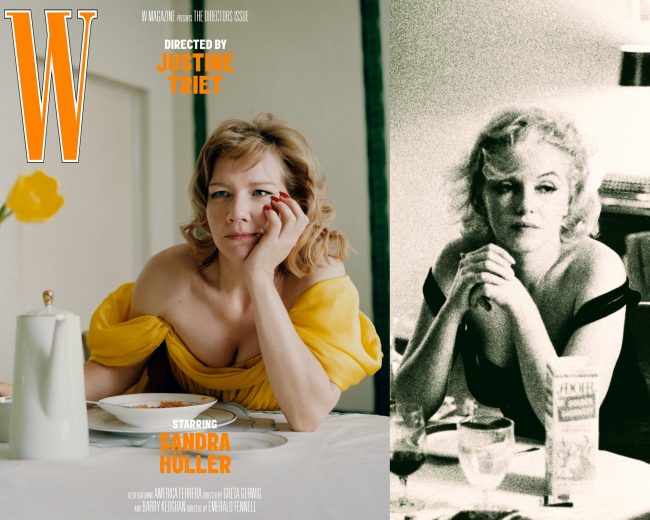
Following its ‘Best Performances‘ issue – linking Golden Globe nominees Charles Melton and Barry Keoghan to Hollywood’s golden age (and Marilyn) – W Magazine turns to the upcoming Academy Awards for its Directors Issue.
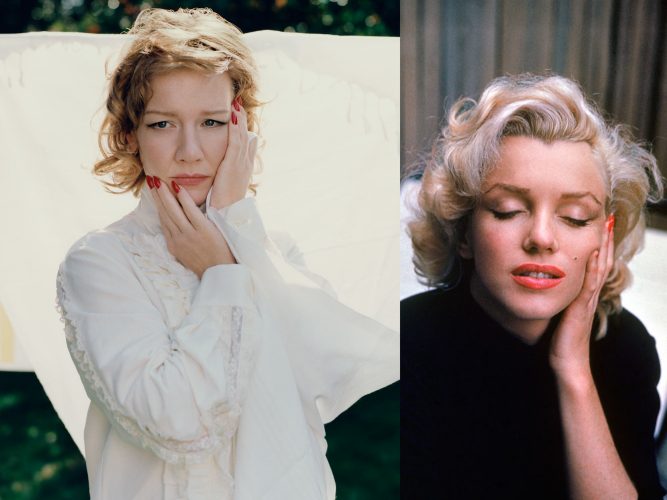
In one of three covers, we see German actress Sandra Hüller above, collaborating with photographer Tyler Mitchell and French filmmaker Justine Triet. Both women are Oscar-nominated this year for the Hitchcockian thriller, Anatomy of a Fall. Sandra’s pose is based on a Bruce Davidson photo of Marilyn having dinner in her bungalow at the Beverly Hills Hotel in 1960.
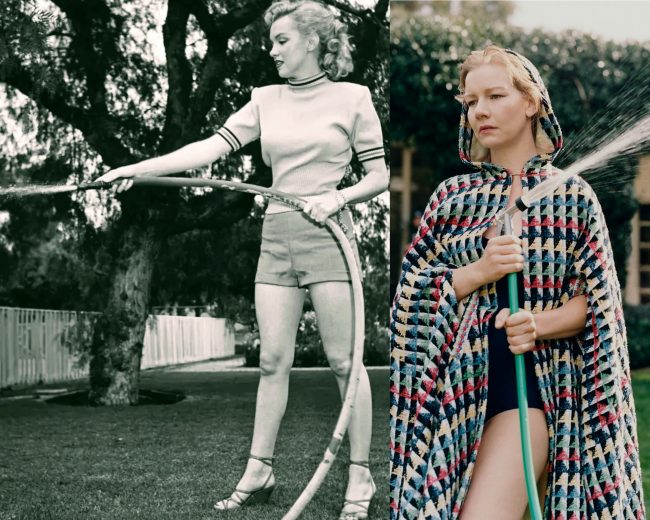
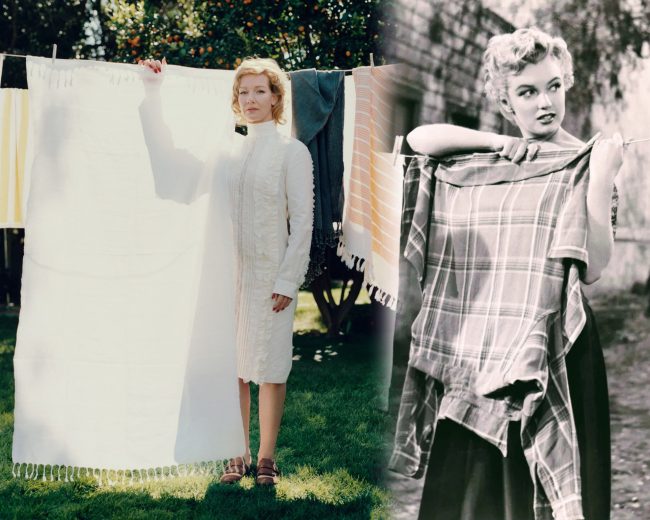
The Monroe theme persists throughout this layout, which largely eschews stereotypical glamour to reimagine her as a mature, sophisticated woman away from the spotlight. While some of the poses directly reference familiar images, others are more impressionistic, perhaps drawing upon several photos of Marilyn to subvert the sexpot cliché.
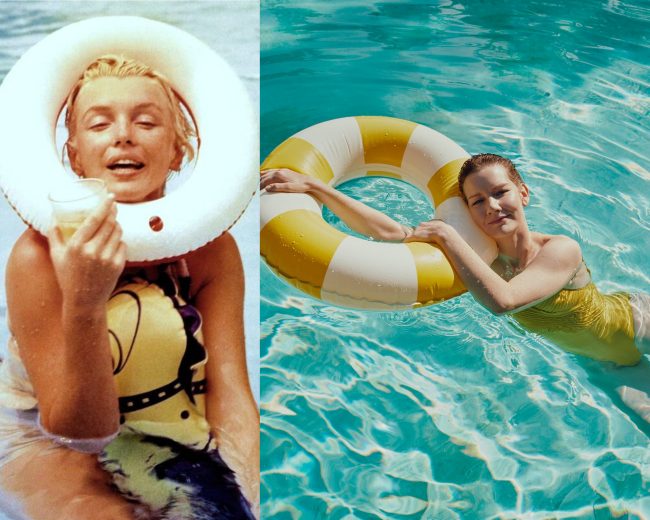
“‘Justine and I were wondering what Marilyn’s life would have been like when she was my age—in her mid-40s,’ Hüller told me, before changing into a lemon yellow Louis Vuitton one-piece bathing suit. ‘Marilyn died before she was 40. Maybe her star would have faded, and maybe she would have become a recluse in her home. We are imagining.’
Triet, who is nominated for Best Original Screenplay (together with her partner in life and work, Arthur Harari), Best Director, and Best Picture Oscars, agreed with Hüller. ‘Look at this photo of Marilyn,’ she said, showing me her phone. Monroe was in her kitchen, with a plate of food nearby. ‘She has a little sauce around her mouth,’ Hüller exclaimed. ‘She had just eaten too much pasta!’ Triet nodded—she clearly loved the small flaw behind the perfection. ‘Today I want to create a character that is as far away as possible from who Sandra is,’ said Triet. ‘I am low-maintenance,’ Hüller explained. ‘Marilyn was not.’ Triet laughed. ‘Exactly.’
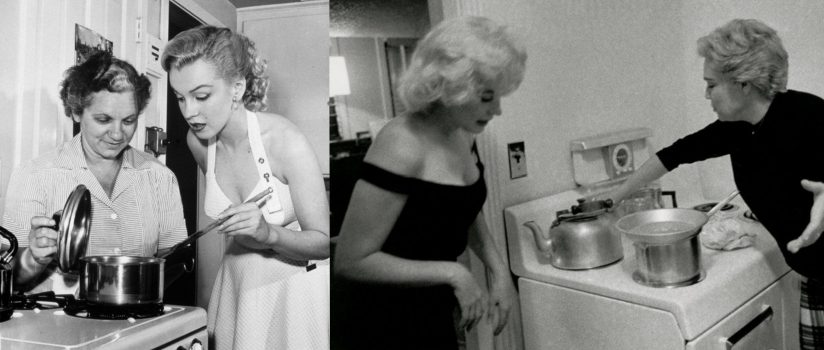
‘Let’s go to the water,’ Hüller continued as Triet followed her to the pool’s edge. Hüller began to swim, and Triet took off her sneakers and stood on the steps of the pool in her bare feet. ‘I love it,’ she said. Tyler Mitchell, who was photographing the scene, asked Hüller to stand in the shallow end. The idea was to capture the joy Marilyn clearly felt when she was submerged in water. ‘I’m so happy,’ said Hüller, swimming with her head above the surface, as they always do in the movies. ‘I don’t ever want to get out of this pool.’
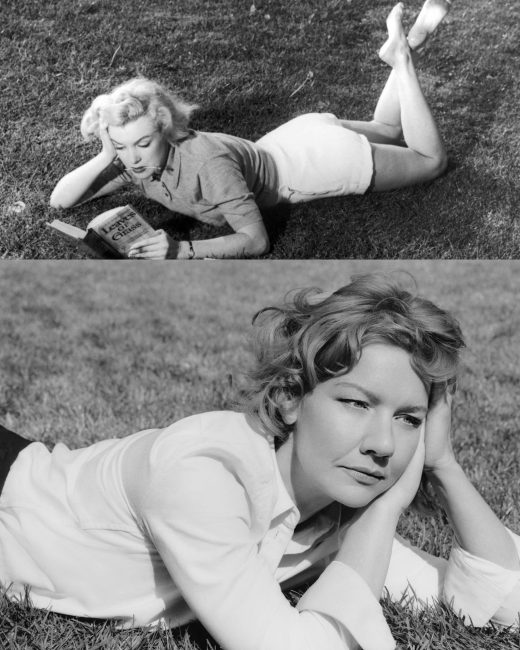
Back at the shoot, Hüller, with softly curled hair and long red nails, was lying on her side in the grass. She was wearing a simple white Loewe shirt and black slacks, channeling a famous Marilyn photo. Hüller’s natural severity melted as Mitchell snapped away. ‘I love it!’ said Triet. ‘But maybe add some melancholy to your eyes.’ In a flash, Hüller went from perfectly golden to slightly tarnished. The transformation was fascinating to watch, and true to the story Triet wanted to tell.

For the next setup, Hüller changed into a black cocktail dress from Bottega Veneta. One shoulder was exposed, and the dress looked like it might have actually been borrowed from Marilyn’s closet. ‘If you ask, “Would Marilyn wear that?”‘ Hüller said, ‘it would have to be yes!’ Back on the lawn, next to a pergola covered in vines, Hüller struck another Monroe-esque pose. ‘I knew that Sandra could do anything, but this is coming faster to her than I thought it would,’ Triet marvelled.
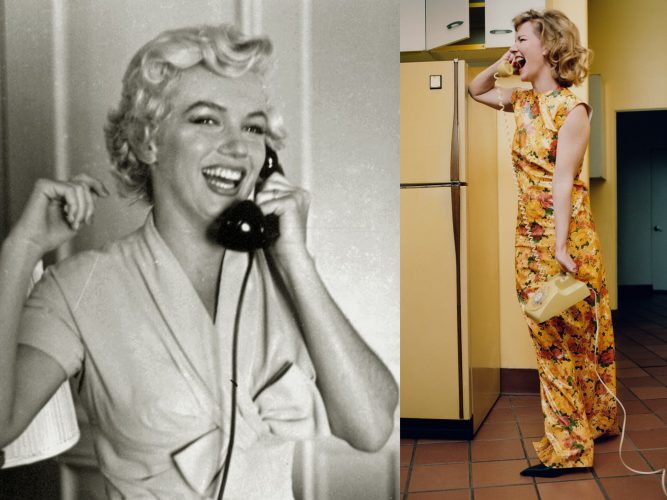
Just then, she was called into the house—a sparsely decorated midcentury ranch. Hüller was in the yellow kitchen, wearing a brightly patterned Balenciaga gown that seemed to be made from a plastic floral tablecloth. Hüller, as Marilyn, was holding a period-correct telephone, the cord wrapping around her. “I love it!” said Triet. ‘But let’s not make it too happy.’
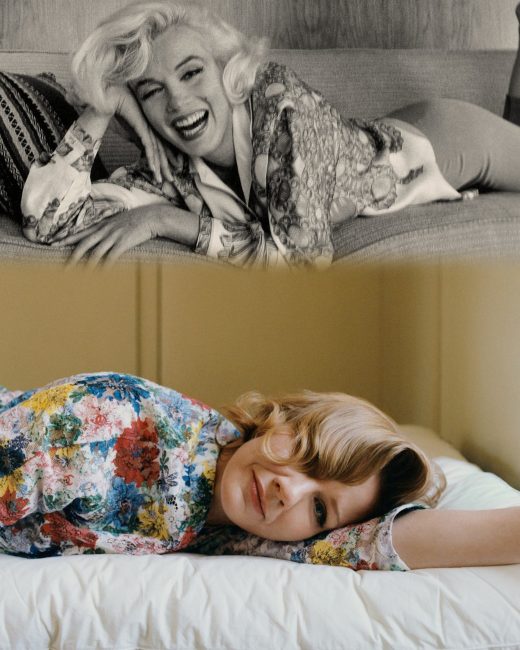
For the final Marilyn moment, Hüller changed yet again. She had just taken a photo on a towering pile of mattresses, and the last shot would be in the bathroom. The idea was a wistful Marilyn contemplating her uncertain future in the mirror. ‘More sadness,’ Triet said to Hüller. ‘We need to have an impulse other than just telling a story about Marilyn or anything else,’ Triet explained. ‘I’m interested in texture, about finding a way to be very personal.’
Hüller’s eyes immediately clouded over: The contemplative mood was set. And then, just as quickly, it was over. Hüller changed into her street clothes, removed the red nails, and un-bounced her hair. Arm in arm, Triet and Hüller left the house. And Marilyn was gone.”
 The Marilyn Report