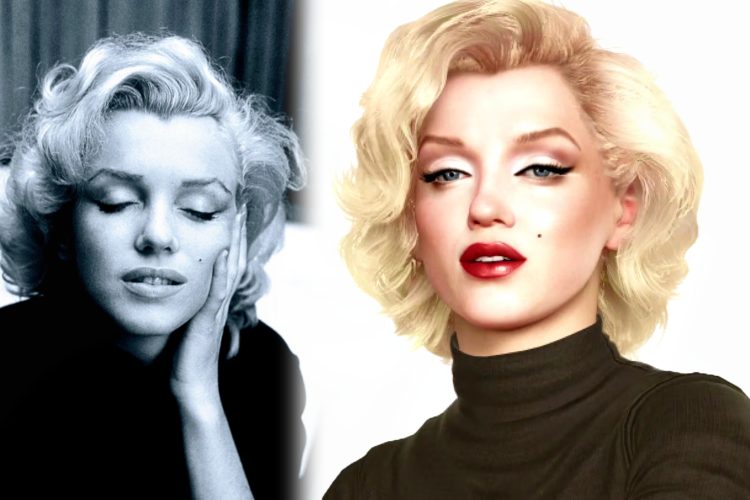
An AI Marilyn chatbot was unveiled at the South by Southwest tech conference (SXSW) in Austin, Texas last week – in partnership with Marilyn’s estate, as Dawn Chmielewski reported for Reuters. The event coincided with International Women’s Day.
“Appearing via computer screen in a modest black turtleneck sweater and sporting her familiar blonde pixie hairstyle, the iconic actress’s digital doppelganger will converse in her familiar breathy voice. She can express emotions, such as smiling in response to a compliment.
In a recent test, Digital Marilyn talked about her favorite movie role as Sugar in the 1959 comedy Some Like It Hot, pausing and glancing down in a reflective manner before offering her responses. She said she found the sexy yet vulnerable character to be ‘a challenging role, but also rewarding.’ She also recommended other comedies, such as Gentlemen Prefer Blondes.
Digital Marilyn was built by Soul Machines, an AI firm that specialises in creating realistic digital people, in partnership with Authentic Brands Group. The marketing firm owns a portfolio of brands, including the likeness rights to Monroe as well as other dead celebrities.
‘Every time I talk to Marilyn, it’s a special feeling,’ said Greg Cross, CEO and co-founder of Soul Machines. ‘You feel like you have a good relationship with an icon.’
Soul Machines will unveil Digital Marilyn at an event hosted by The Information, where attendees will have the opportunity to interact with the character. Cross said he hopes the demonstration will spark conversations about using the character as a brand ambassador.”
It’s unclear how this ‘unveiling’ was received at SXSW, but the reaction from Monroe fans was swift – and damning.
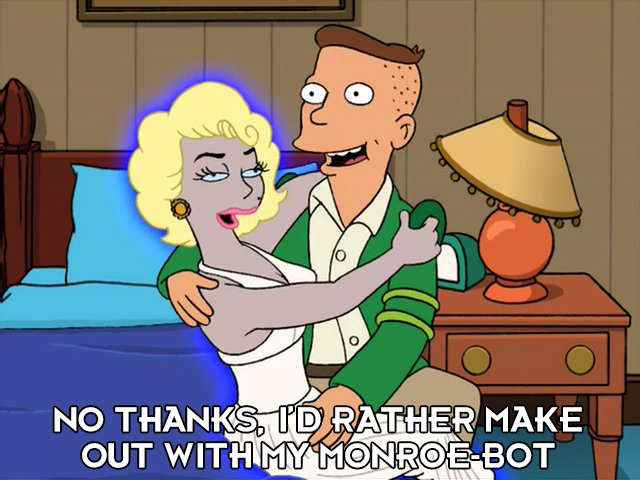
While the Digital Marilyn Project presents a fully-clothed Marilyn (modelled after her 1953 photo-shoot with LIFE photographer Alfred Eisenstaedt), it remains true that chatbots, like deepfakes, are often hyper-sexualised. And as Reddit users noted when the story broke, it mirrors a 2001 episode of the satirical animated series, Futurama, in which a human dates a ‘Monroebot.’
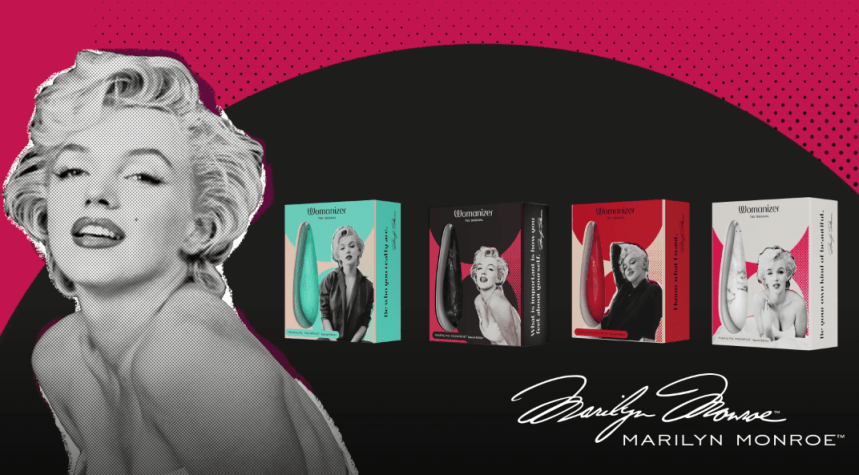
Furthermore, Authentic Brands Group (ABG) – the majority owners of Marilyn’s estate – have alienated many fans with their aggressive campaign to close down multiple nonprofit fan-pages on social media sites including Instagram. At the same time, some of ABG’s recent endorsements – such as a range of adult toys from the Womanizer brand, promoted with images by Milton Greene – have also been criticised within the fan community.
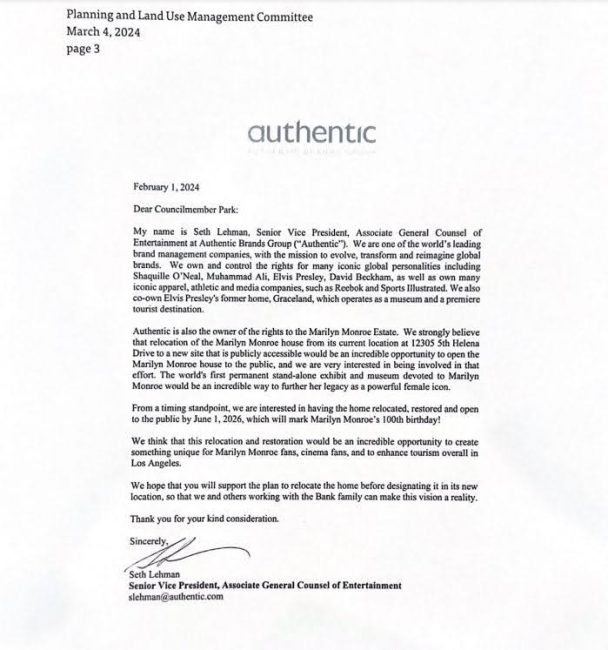
In this fractious climate, reports of ABG’s intervention in the ongoing campaign to save Marilyn’s final home at Fifth Helena Drive have left many of us wondering about the motives behind their plans to relocate the property and open it as a public attraction on June 1st, 2026 – which will also mark the centenary of her birth.
Discussing DUCK, her deepfake movie short pairing Marilyn with James Bond, artist Rachel Maclean – who is not associated with ABG – commented on the creative possibilities of artificial intelligence, both positive and negative…
“Deepfake lets you steal someone’s face and make them do or say whatever you want. You can steal the face of someone more powerful from you, and in so doing co-opt some of their power. Or you can take the face of someone less powerful than you, and consolidate your power over them. It’s less the technology itself than how it’s used. Unfortunately, the reality is that the vast majority of deepfakes are pornographic images of women’s faces and bodies taken without their consent. There is nothing all that new in that. Women have never been allowed total ownership of their image in a patriarchal society. In terms of the fear around untruth, the belief that images can be objectively truthful has only really been around since the dawn of photography—and even then, photography was used to fake ghosts and phantoms. I think the way we relate to images is much more complex than just as indexes of truth. Again, the fear for me is less that deepfakes can be untruthful and more how that is exploited.”
And finally, concern about the Digital Marilyn Project is not limited to fan-club members or social media debate, as it has also attracted widespread coverage in mainstream media outlets, much of it sceptical.
Maureen Lee Lenker covers the topic in an excellent piece for Entertainment Weekly …
“Every bit of Monroe, from her private property to the sound of her voice, has been divvied up and used to generate attention and money. Often attributed to her is the quote ‘Hollywood is a place where they’ll pay you a thousand dollars for a kiss and fifty cents for your soul.’ But at this point, Monroe’s soul has been forgotten entirely, while those with no connection to her rake in thousands selling her kiss.
But we may have arrived at an all-time low with Soul Machines’ recent unveiling of an AI-generated digital Marilyn chatbot. As I type those words, I think my soul just left my body.
For starters, 62 years after her death, no one could ever form a ‘genuine’ connection with Monroe — or anyone, for that matter. Because there’s nothing genuine about a computer-generated version of a movie star. But setting aside the cognitive dissonance of trying to forge a connection with a long-dead woman and the heaps of ethical issues surrounding the use of a deceased individual’s likeness in AI-generated material — including that individual’s inability to consent to such a thing — there’s also the deeply concerning issue of how misunderstood Monroe was, and still is. Those in charge of Monroe’s legacy have never respected, never really gotten, her.
This version of Monroe will even tailor her responses to your personal preferences, erasing any sense of the star’s authentic self. In life, she had to cater to powerful men to make it as an actress. And now that she’s gone, the greatest tribute we can give her is to create a new way for her to mould herself to the whims of others?
This doesn’t honour Monroe’s legacy — it whores it out. She deserves so much better.”
 The Marilyn Report