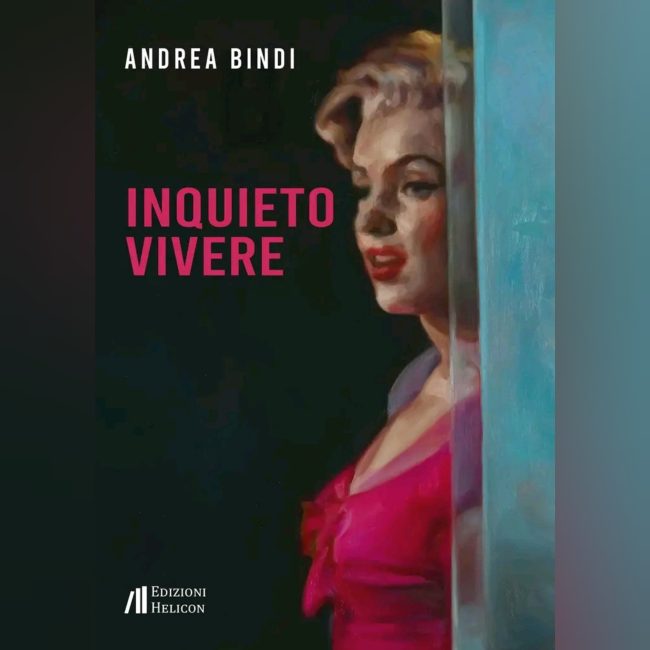
A painting inspired by Marilyn’s performance in Niagara (1953) graces the cover of Italian poet Andrea Bindi’s debut collection, Inquieto Vivere (which translates as ‘restless living’.)
‘Poetry is like comedy. If you have to explain it, it’s no longer funny.’
“Born in 1983. Firefighter for over ten years. Andrea Bindi has won numerous literary competitions and prizes, for narrative and poetry.
In this, his first book, the two languages merge, giving life to a new type of poetry.
“A form of ‘paratactic’ poetry as it has been defined by some, a meta-narrative that has everyday life as its object. The world of rescue that the author knows very well. Social hardship and abandonment. Up to the tributes to the rock music of Grignani or Bruce Springsteen and the unique characters of an Italian province that no longer exists.
A new language. That fills a void.
Easy to understand.
Impossible to forget.”
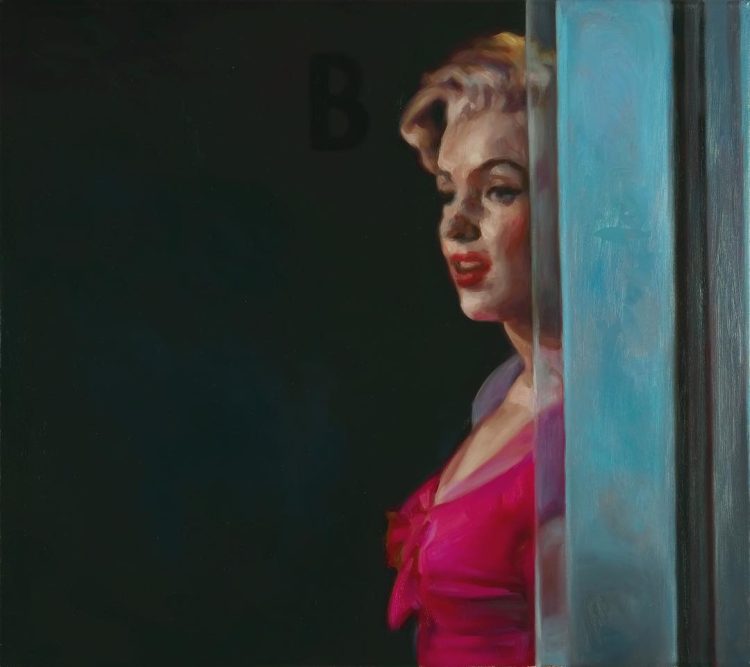
‘The Necessary Angel’ is an oil painting created by artist Sarah Ledda for her 2009 exhibition, Imago Dei, blending religious tableaux with movie iconography. It’s one of several paintings based on the scene from Niagara where Rose Loomis dons a daring pink cutaway dress to join a party outside her motel cabin, and provokes her sleeping husband by requesting her favourite song, ‘Kiss,’ from the disc jockey.
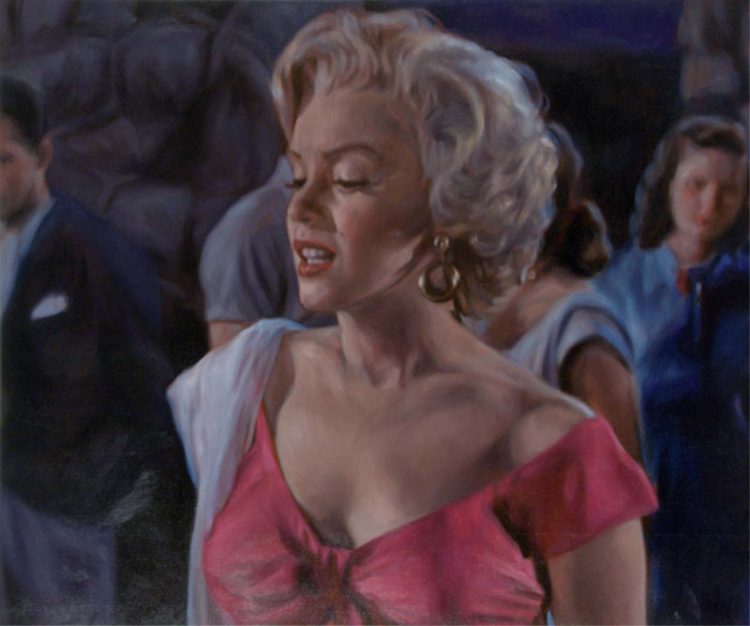
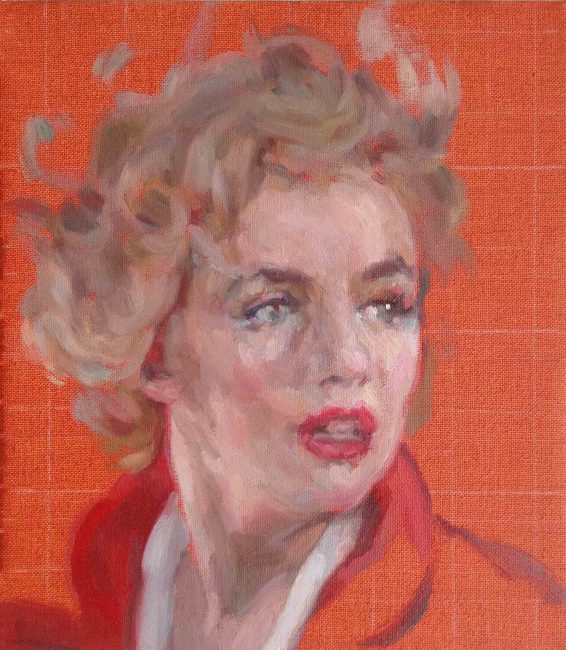
‘Slow (e)motion‘ (above) dates back to 2006, while ‘Fading‘ (below), a work in progress, was posted to Sarah’s Instagram account in 2017.
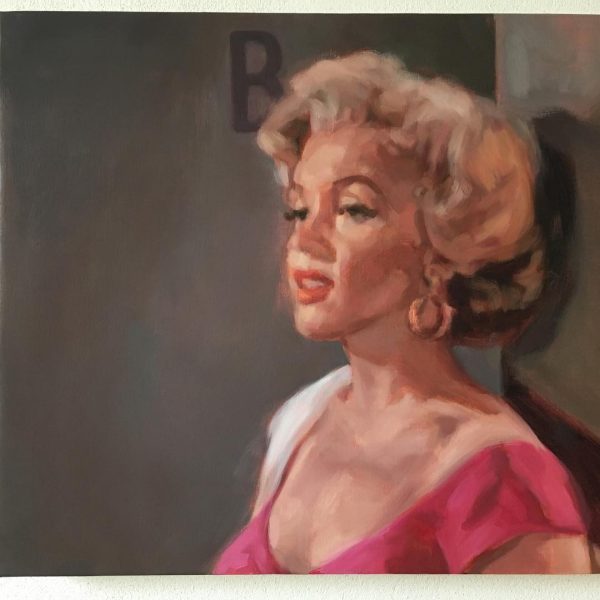
Described as a work in progress, ‘Fading‘ was posted to Sarah’s Instagram account in 2017. Another painting with the same title, dated 2014 (see here), draws upon a later scene from Niagara, in which Rose draws two unsuspecting honeymooners into the plot against her husband.
Two more paintings show Marilyn with co-star Jean Peters in the film’s mortuary scene.
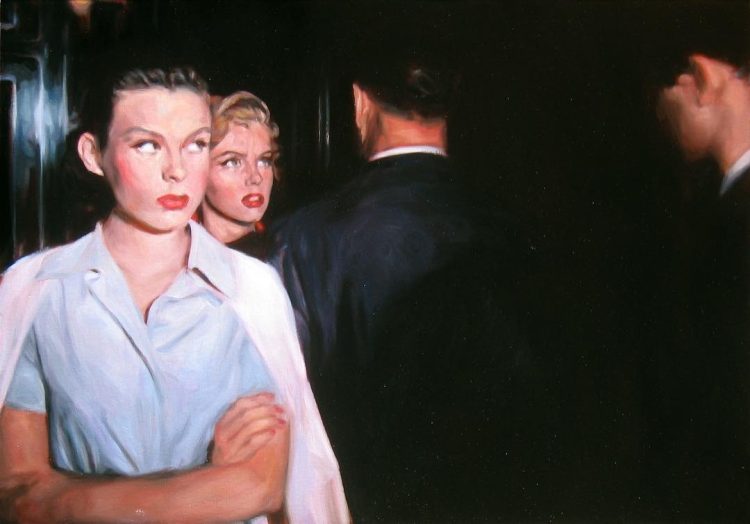
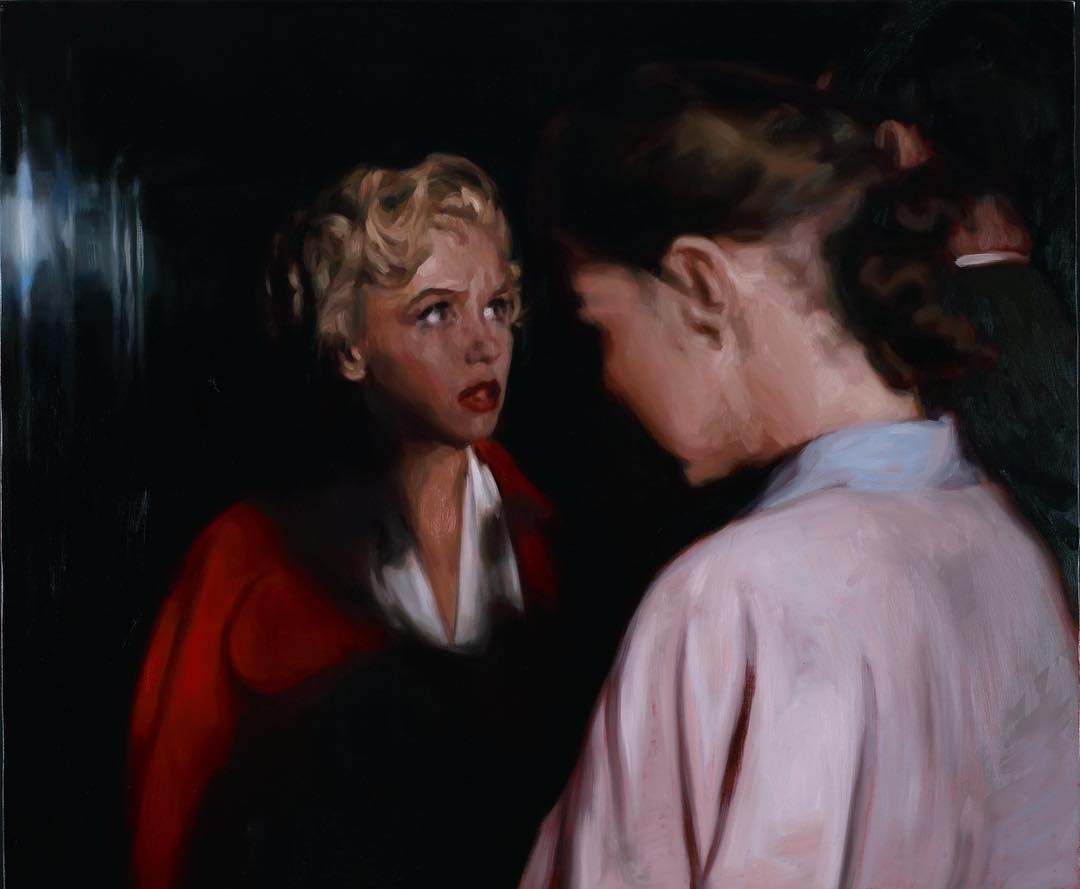 ‘For Every Kiss of Judas‘ (2009)
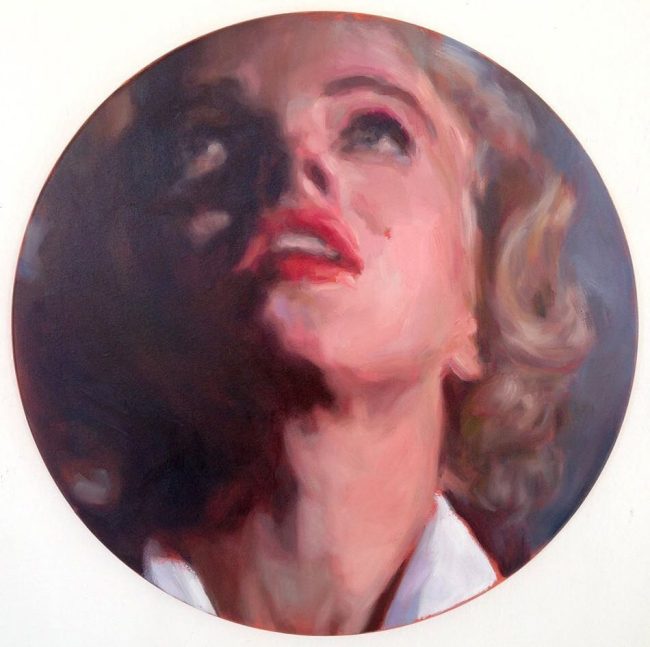
Focusing on Marilyn’s climactic belltower chase, ‘Searching for the Darkness to See the Stars‘ was part of Ledda’s 2014 exhibition, To Be Or Not,
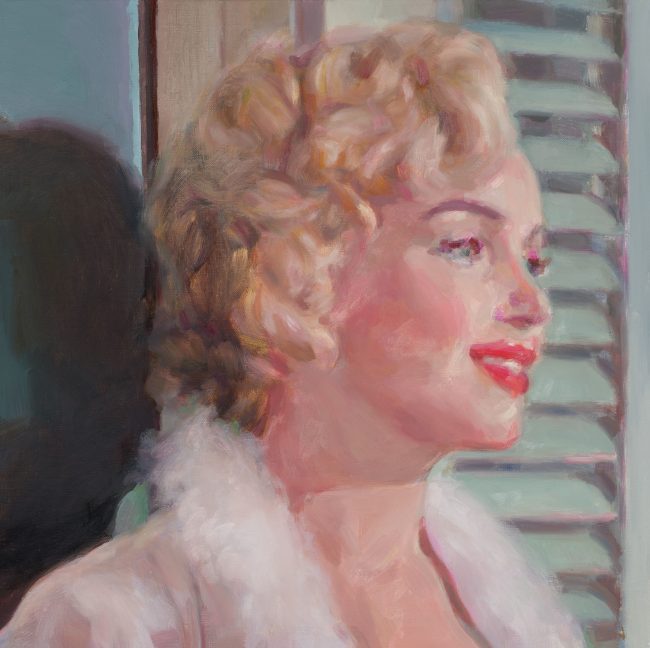
Sarah’s most recent Niagara-inspired painting, ‘Almost True,’ was featured in her eponymous 2023 show, exploring the formation of female identity through characters who become symbols. The bold colours and high drama of 1950s cinema are key to her aesthetic.
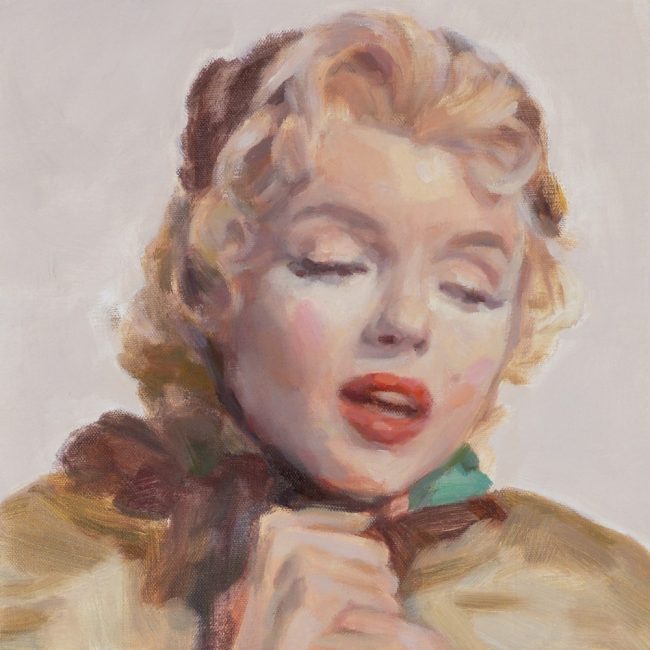
While Niagara is considered a definitive Technicolor Noir, Marilyn’s later films were shot in CinemaScope, including Bus Stop (1956). ‘Warming on Ice‘ (2022) is based on the film’s final scene.
Thanks to Lorenzo at Marilyn Remembered
 The Marilyn Report