
Marilyn Monroe Style is a new publication from ACC Art Books, produced in collaboration with Marilyn’s estate.
“Marilyn Monroe’s world was the stuff of fairy-tale – the orphan who conquered Hollywood and hailed as the most beautiful woman in the world before her untimely death in 1962.
Marilyn Monroe Style celebrates Marilyn’s impact on fashion by revealing the influence of her many iconic looks. Her wardrobe encompassed sensual femininity as well as low-key minimalism. Outfits span from shimmering showpieces such as the Jean Louis gown worn to serenade JFK on his birthday, to Pucci slacks and cats-eye spectacles.
Born Norma Jeane Mortensen, whenever she ‘became’ Marilyn, she mesmerised onlookers with showstopping outfits that helped make her a legend, yet throughout her life the clothes she wore represented many ways of being a woman.”
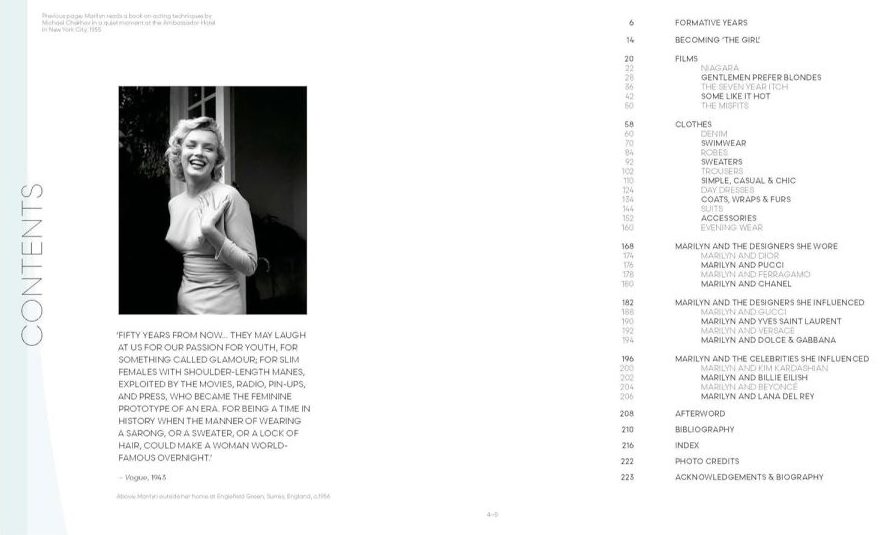
Whereas previous books like Christopher Nickens’ Marilyn in Fashion focused mainly on the clothes themselves, Marilyn Monroe Style takes a broader look at how Marilyn’s life shaped her style choices and her influence today, as author Terry Newman explains here.
“I’ve worked a lot writing and trying to explore celebrity and fashion because today, like during Marilyn’s formative years, they are symbiotic. I’ve spent time recently pouring over Marilyn writing this new book but like many young folk, I fell in love with her while I was at school when I read everything I could about her. Despite stardom she was an inspiration for outsiders. I found Marilyn Monroe’s wardrobe a contradiction, and this contradiction is at the heart of everything about her.
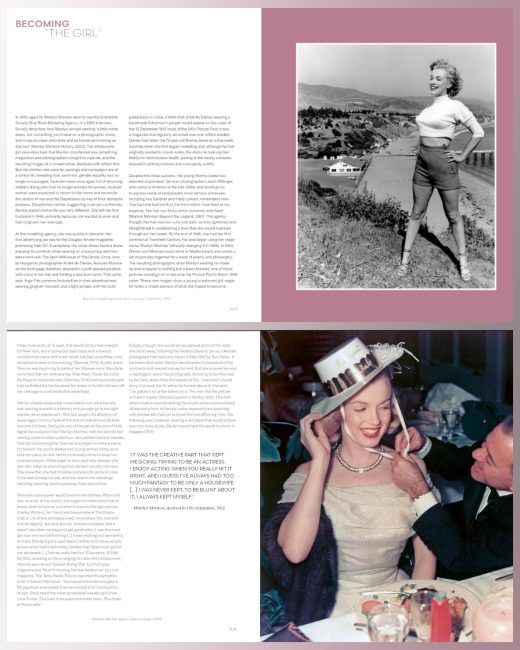
For Monroe the early, dreamy draw of luxuriant ‘30s goddess-wear held firm – as a child, she sat in the cinema watching her favourite film actresses – it was embedded in her DNA. In comparison to the clothes she saw on the big screen, her childhood and teenage closet was meagre. Early photographs show her wearing straightforward and plain pieces reflective of the utility-mode styling of the great depression, recession and war.
For an icon whose characteristic outfits worn on-screen are instantly recognisable it’s poignant to know that when she was poor, and growing up, was never able to afford more than a few clothes, and the ones she had she took great care with. She revealed: ‘my own costume never varied. It consisted of a faded blue skirt and white waist. I had two of each, but since they were exactly alike everyone thought I wore the same outfit all the time. It was one of the things that annoyed people – my wearing the same clothes.’
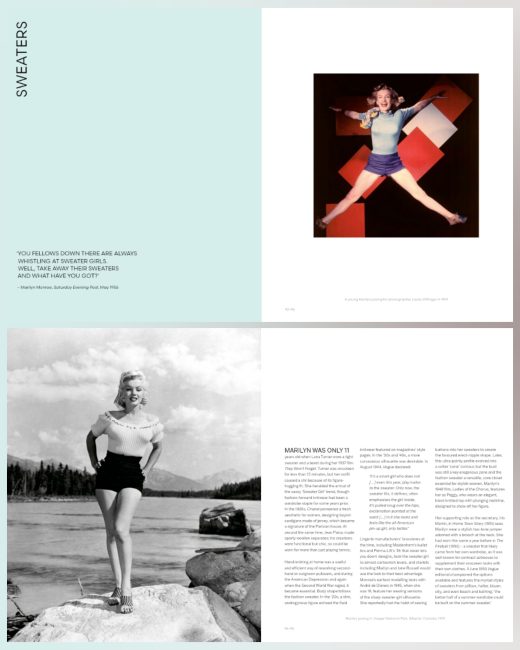


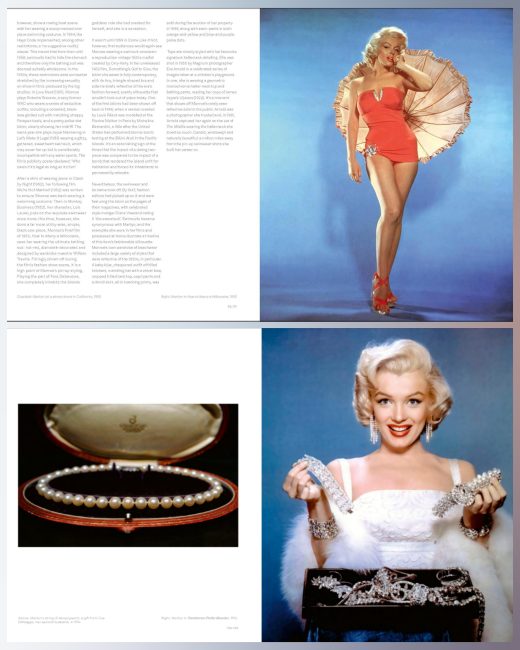
Climbing the ladder to super-success, sartorial choices mapped to fitting her curves to the clothes she wore when on camera and sporting simple, American-line laid-back separates when she was off-set, and as when she was growing up, she stuck to a rotation of simple silhouettes.
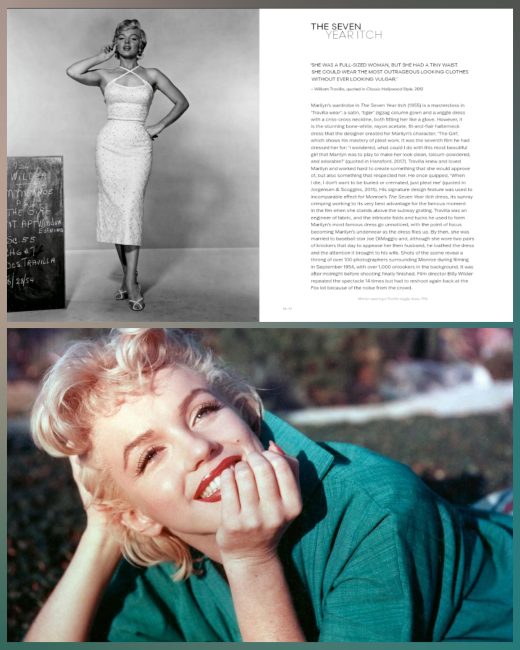

She would of course go on to wear some of the most high-profile designers and have outfits created for her by fashion houses including Dior, however, the clothes she wore and saw growing up would mirror in many ways the clothes she would wear once a star; the yin and yang of dressing down and aspiring to dress up is at the core of Marilyn’s fashion styling.”

The author explained her cover photo choice in another Instagram post…
“Marilyn Monroe was a misfit and a dreamer who inspires misfits and dreamers today. She was an orphan who grew up in the Great Depression, and with nothing, built her own world. She was an outsider who championed outsiders – she defended civil rights and stood up to McCarthyism. She was a woman in Hollywood who launched her own production company. She has become one of the most enduring icons of all time, but she was no stereotype and writing Marilyn Monroe: Style and looking at the clothes she wore helped me see all this and gave me a new way of knowing her.
Character is revealed by what everyone wears and Marilyn’s wardrobe tells us how multidimensional and modern she was, not just the bombshell on the silver screen which is all people sometimes recognise. Of course she is an icon and I love her cinematic outfits, but here is one of my favourite shots of her by Alfred Eisenstaedt for Life Magazine in 1953 – another one of his images is the cover of my book wearing one of my favourite Monroe looks: a simple black polo-neck jumper and white pants.”

UPDATE:
Marilyn is also featured in two other style-focused books – first up is Nancy J. Hajeski’s Hollywood Fashion…
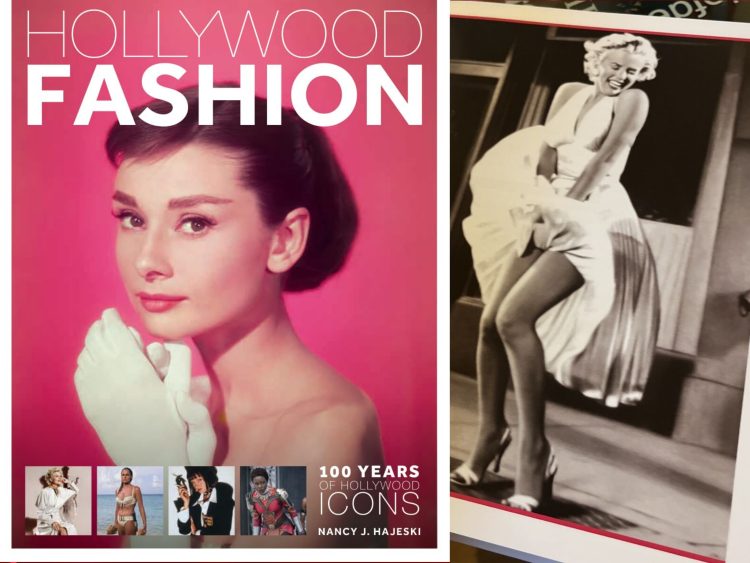
“Hollywood Fashion explores the art and legacy of the cinematic costume designer, starting with the birth of the modern motion picture industry on a prime piece of California real estate known as Hollywood.
Readers will discover how film clothing evolved from actors selecting items from their home wardrobes to outfits customized for their roles — everything from suits of armor to ball gowns to office attire to lingerie, all created by a studio designer and a dedicated staff of costumers.
They will also encounter the actresses from each decade who displayed a distinct fashion sense, on and off the screen — women who made the costumer’s job less demanding by embodying the character and evoking the time, place and circumstances the designer wished to portray.
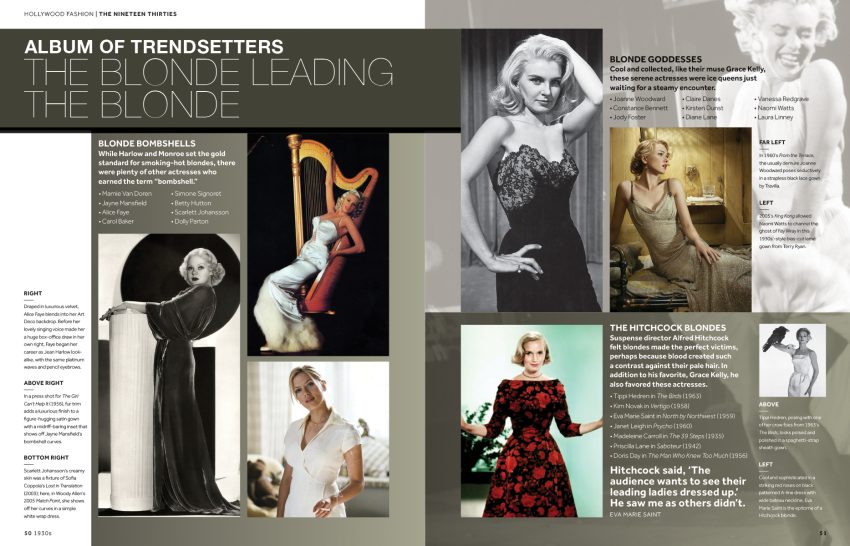
Feature spreads throughout the chronological chapters include:
- Style makers: offering biographies of the legendary designers and showcasing their most outstanding creations
- Style trends: exploring the social movements and cultural phenomena that affected movie costumes and further influenced how America — and the world — dressed
- Album of trendsetters: highlighting red carpet fashions and introducing the fans’ favorite blondes, Brunettes and Redheads
- Men of the decade: showing how male actors used fashion — contemporary, historical or futuristic — to create a character or enhance ambience.
Hollywood Fashion will leave readers with a wider understanding of film costuming and an increased appreciation for the men and women who clothed the stars — and made the spellbinding world of the American cinema memorable.”
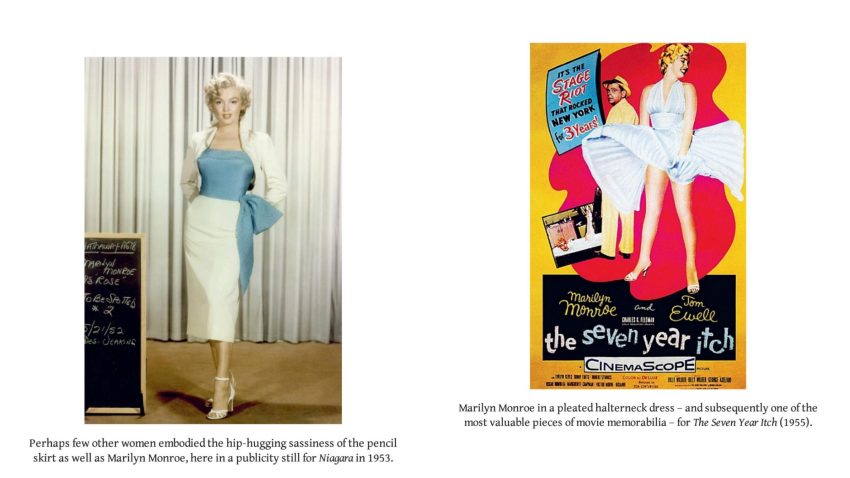
And finally, Josh Sims’ Icons of Style in 100 Garments includes a wardrobe test of Marilyn in one of Dorothy Jeakins’ designs for Niagara (1953.) Although this gorgeous white suit didn’t make the cut, Marilyn wore two other pencil skirt ensembles in the film. And at right, the famous ‘subway dress’ by Travilla, seen in poster art for The Seven Year Itch (1955.)
 The Marilyn Report
1 Comment
Comments are closed.