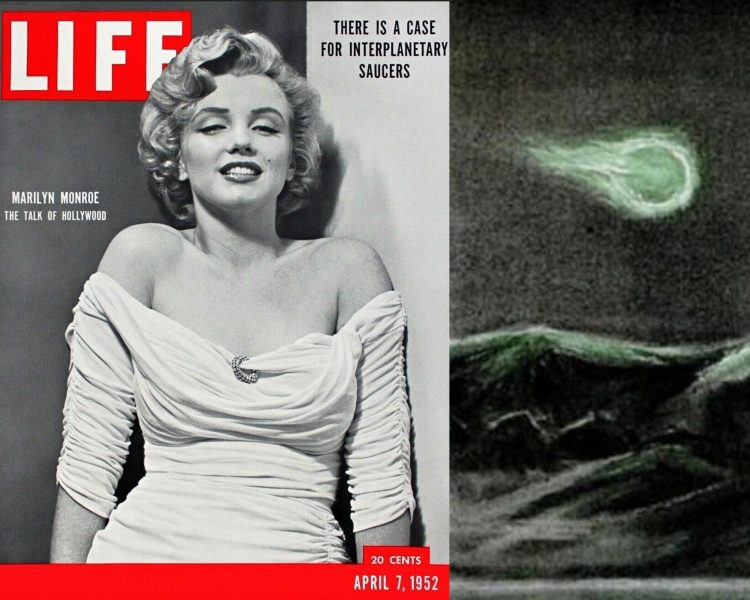
Marilyn’s first LIFE cover, published in April 1952, was portentuous for several reasons. Philippe Halsman’s photo of her in an off-shoulder white gown is now in the Smithsonian collection, while the inclusion of her nude calendar shot inside the magazine sparked controversy. It was also a career highlight for Stanley Flink, who interviewed her for the story.
If Marilyn was indeed ‘The Talk of Hollywood’ in 1952, she shared the cover with another hot topic. ‘There is a Case for Interplanetary Saucers,’ declared a second headline, with a lengthy article inside asking ‘Have We Visitors From Space?‘ – now considered so influential in the history of modern Ufology that it now merits its own Wikipedia entry.
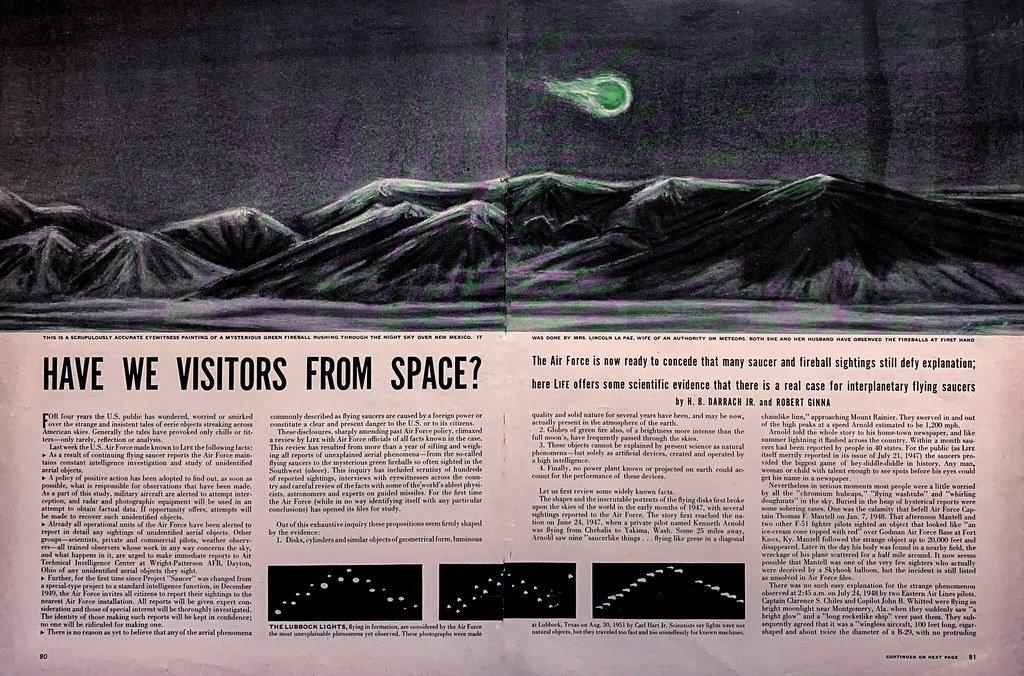
Robert E. Ginna Jr., who researched and co-wrote the article, died aged 99 on March 3, 2025, the New York Times reports.
“To Mr. Ginna’s eternal dismay, the article made him a target for UFO buffs and kooks … it examined 10 reports of unidentified flying object sightings, followed by an unequivocal assessment from German rocket expert Walther Riedel: ‘I am completely convinced that they have an out-of-world basis.’
While reports of UFOs in the late 1940s were often trivialised, Phillip J. Hutchison and Herbert J. Strentz wrote in American Journalism in 2019: ‘By the early 1950s, however, more substantial human-interest features embraced the idea that U.F.O. reports might corre spond to extraterrestrial Earth visitors. A widely cited April 7, 1952, Life magazine feature titled “Have We Visitors From Space?” represents one of the most influential examples of the latter trend.’
Captain Edward J. Ruppelt, who led the Air Force’s internal UFO investigation, Project Blue Book, wrote in ‘The Report on Unidentified Flying Objects’ in 1956 that ‘the Life article undoubtedly threw a harder punch at the American public than any other UFO article ever written.’
Other reporters had visited the Air Technical Intelligence Center (now the National Air and Space Intelligence Center), in Dayton, Ohio, he wrote, but ‘for some reason the name LIFE, the prospects of a feature story, and the feeling that this Bob Ginna was going to ask questions caused sweat to flow at ATIC.’
‘Life didn’t say that the U.F.O.s were from outer space; it just said maybe,’ he added. ‘But to back up this “maybe,” it had quotes from some famous people,’ including Riedel. (In 2024, a congressionally mandated Pentagon report concluded that there was no evidence that any UFO sightings represented alien visits.)”
Ginna (pronounced ‘Gun-nay’) was born in 1925 to Robert Emmet Ginna Sr., an executive at Rochester Gas and Electric, NY, and his wife Margaret, both of Irish descent. After serving in the US Navy during World War II, he went on to get a master’s degree in art history at Harvard.
His 1952 LIFE article was co-written with H.B. Darrach Jr. aka Brad Darrach, who went on to interview Marilyn for her TIME cover story in 1956 – revising Ezra Goodman’s star profile in a more sympathetic vein.
“She was Marilyn, and reasonably pretty,” Darrach told author Anthony Summers. “Yet I never felt for a moment any sexual temptation … I am sure that was something she put on for the camera.”
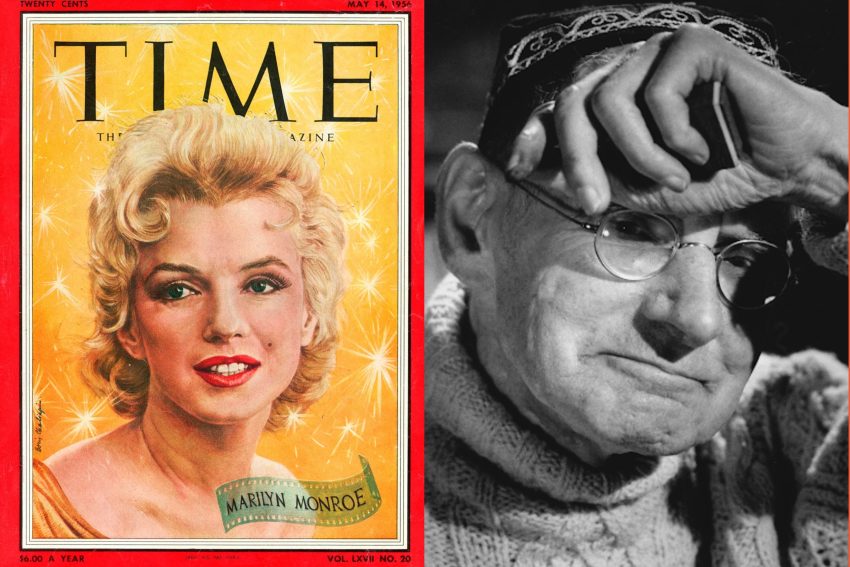
Throughout the 1950s, Ginna worked as a reporter and editor for Horizon, LIFE, Scientific American, Saturday Evening Post, Esquire, and Entertainment Weekly. In 1955, he interviewed the Irish playwright Sean O’Casey for NBC Television, and they became good friends.
Among O’Casey’s many admirers was Marilyn, who owned several of his books and had hoped to meet him when she visited England. “That was a tragedy that affected me very much,” he told reporter W.J. Weatherby after her death. “I would like to have talked with her.”
After marrying LIFE staffer Margaret Williams in 1958, Ginna settled in Sag Harbour, NY, and raised two children. He interviewed novelist Ernest Hemingway and filmmakers Carol Reed and Stanley Kubrick, and helped to produce ABC’s docudrama series, FDR – starring Charlton Heston as the former US president.
In 1965, Ginna produced Young Cassidy, a film based on O’Casey’s memoir. It was directed by Jack Cardiff, the cinematographer whose prior credits included The Prince and the Showgirl.
Ginna also wrote the screenplay for a 1967 Western, The Last Challenge, and produced two more films, Before Winter Comes (1969) and Brotherly Love (1970), both directed by J. Lee Thompson. “As a producer, Ginna may have had limitations,” wrote his friend James Salter. “He was scrupulously honest.”
He returned to TIME Inc. in 1973 as a founding editor of People magazine, envisioning it as a ‘highbrow showcase’ for the likes of Graham Greene and Vladimir Nabokov, but left as the magazine’s focus turned to what he saw as ‘celebrity fluff.’ He joined the publishing house Little, Brown as Editor-in-Chief from 1977-80, and later returned to LIFE for another stint.
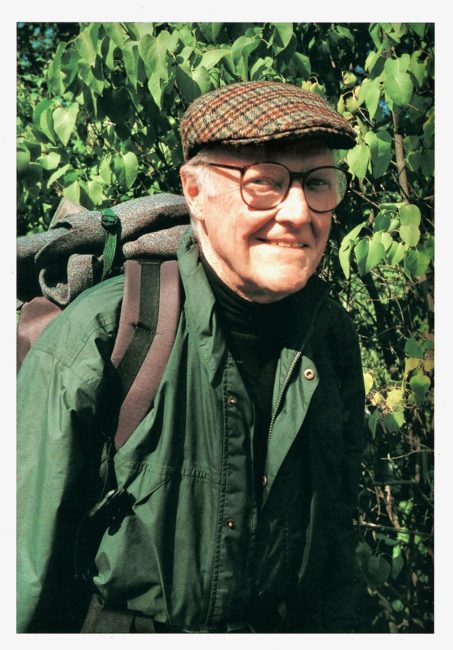
In 1987, he began a new career in academia, teaching writing film courses at Harvard, and later establishing a scholarly press at New England College. Aged 74 he went on a walking tour of Ireland, the basis of his book, The Irish Way (2003.)
After his wife died in 2004, he was the companion of journalist Gail Sheehy, who died aged 83 in 2020. He retired from teaching in 2016, but continued working on literary and film projects including an unfinished memoir, Epiphanies.
Robert Emmet Ginna Jr. is survived by his children, a sister, two grandchildren, and a great-grandson.
 The Marilyn Report