Some Like it Hot is showing at BFI Southbank in London throughout May, with screenings on Monday, May 5, at 11:45 am; Saturday, May 17, at 12:20 pm; Friday, May 23, at 8:30 pm; and Monday, May 25, at 11:45 am.
“Twin centenaries for Jack Lemmon and Tony Curtis, who formed a memorable double-act in this timeless period comedy from the masterful Billy Wilder. The actors revel in the rapid-fire dialogue and at the lightning-paced hi-jinks, in this homage to the screwball comedies and gangster movies of the 1930s. With an equally impressive performance by Marilyn Monroe, Some Like It Hot is smart, sexy and very, very funny.”

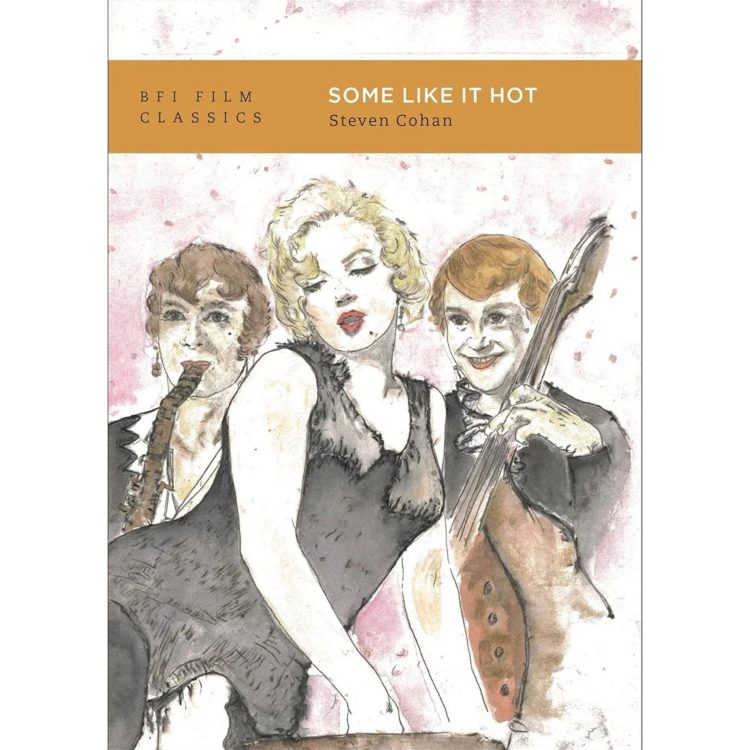
Additionally, Some Like It Hot is joining the BFI Film Classics series with a book-length essay, illustrated with cover artwork by Rania Moudarres and 60 black-and-white photos inside, and due for release on Thursday, May 1. Author Steven Cohan’s prior works include a volume on Wilder’s Sunset Boulevard, and Audrey Hepburn: An Opinionated Guide.
“Billy Wilder’s classic screwball comedy Some Like it Hot (1959), starring Jack Lemmon, Tony Curtis and Marilyn Monroe, tells the story of two struggling Jazz musicians who accidentally witness a mob massacre in Chicago who then, disguised as women, join a female band to escape the gangsters’ pursuit. Despite the film’s popular reception, with Academy Award nominations for Wilder and star Jack Lemmon, the film gained notoriety for its crossdressing plot and gender-bending comedy.
Steven Cohan’s study of the film disentangles its production history and subsequent notoriety from the film itself, reconsidering the ways in which it playfully challenged generic and gender conventions of the 1950s. He provides an in depth analysis of the film’s near perfect comedic structure, Wilder’s aesthetic choices and self-reflexive star performances by Curtis, Lemmon and Monroe.
He goes on to consider the film’s queerness, as well as its promotion and reception in 1959. Contextualising the film within its contemporary moment, he argues its textual richness, one that allows it to be viewed differently across generations, securing its lasting influence in popular culture.”
 The Marilyn Report