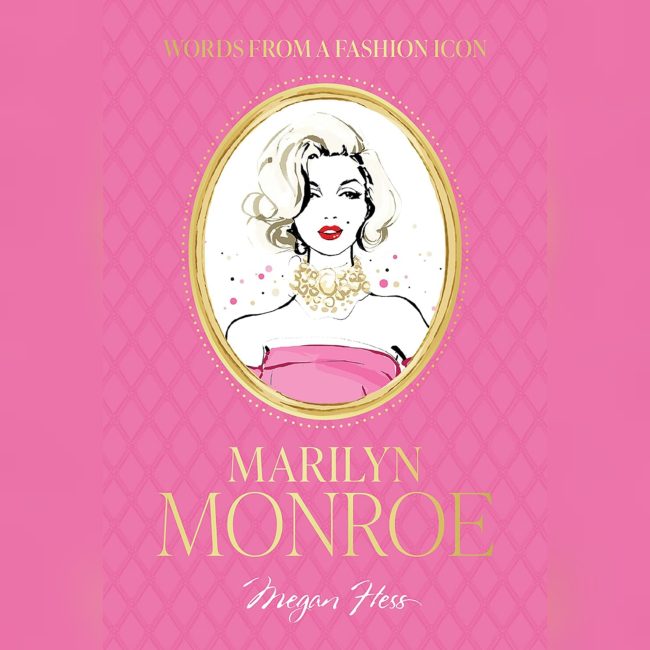
Marilyn Monroe: Words From a Fashion Icon is the latest publication from Australian fashion illustrator turned author Megan Hess. Published in March 2025, this small but stylish hardback is now available worldwide (including digital formats.)
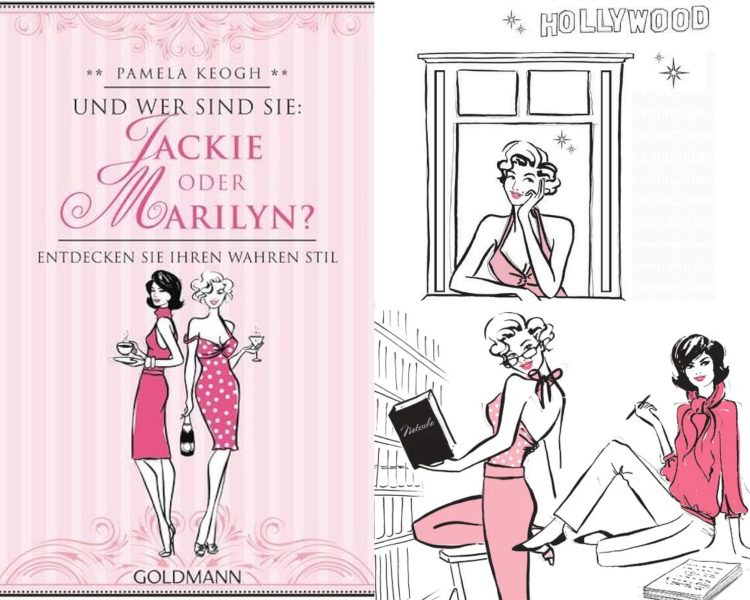
Megan Hess first drew Marilyn for Pamela Keogh’s 2011 book, Are You a Jackie or a Marilyn? One of her illustrations made the cover of the German edition.
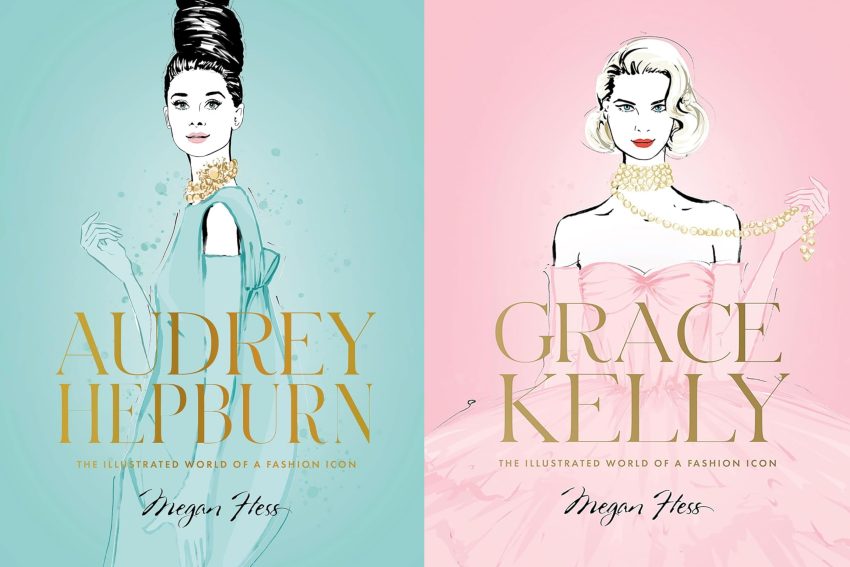
Her other celebrity subjects include Marilyn’s Hollywood peers, Audrey Hepburn and Grace Kelly – both of whom arguably had stronger ties to the great European fashion houses that Hess has also covered (such as Chanel, Dior, and Gucci.)
However, movie costumer Travilla’s most famous designs for Marilyn have made it into the pages of other books by Hess. The pink sheath gown from the ‘Diamonds Are a Girl’s Best Friend’ number from Gentlemen Prefer Blondes (1953) is featured in The Dress: 100 Iconic Moments in the History of Fashion (2014.)

And the cream pleated halter-dress which blew up over a subway grate in The Seven Year Itch (1955) appears alongside a bottle of Chanel No. 5 in Coco Chanel: The Illustrated World of a Fashion Icon (2015.)

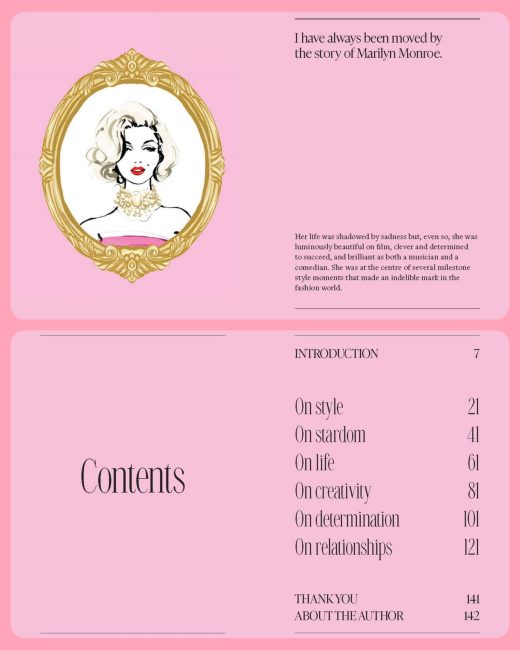
Hess mentions both garments, and the ‘Happy Birthday Mr President’ gown designed by Jean-Louis, in her introduction to Marilyn Monroe: Words From a Fashion Icon. Earlier artworks have been reworked for this book alongside new images inspired by Marilyn’s personal style.
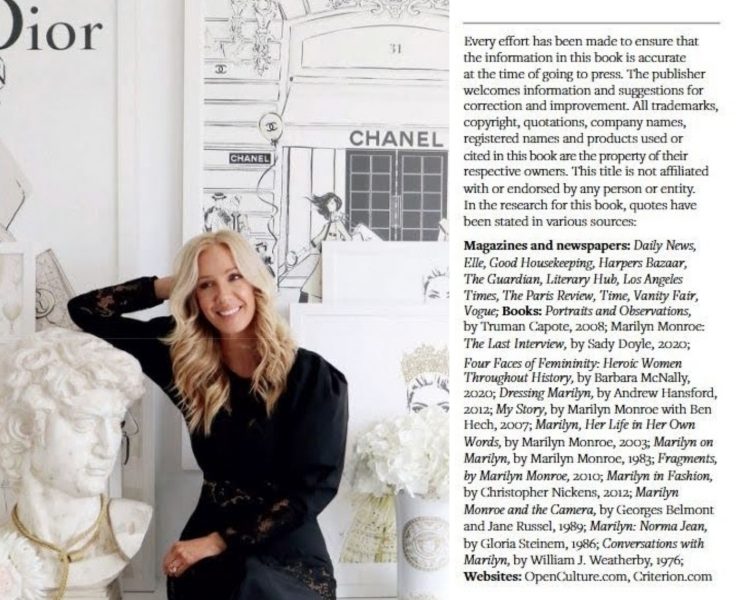
But beyond the ‘pretty in pink’ aesthetic, does the content hold up? Hess cites sources including Marilyn’s 1954 memoir, My Story; Fragments, a collection of her private letters, notes and poetry; a 1960 interview with Georges Belmont, reprinted in Marilyn Monroe and the Camera; Marilyn: Her Life in Her Own Words, based on interviews with George Barris; W.J. Weatherby’s Conversations With Marilyn; and a recent anthology, The Last Interview and Other Conversations.
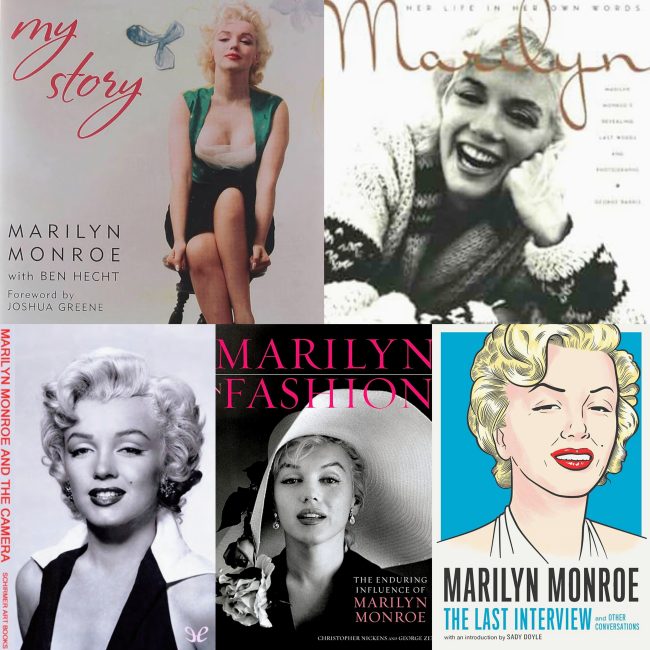
She also references other style-themed titles, like Marilyn in Fashion and Dressing Marilyn; Truman Capote’s essay, ‘A Beautiful Child’; and various newspapers, magazines, and websites.
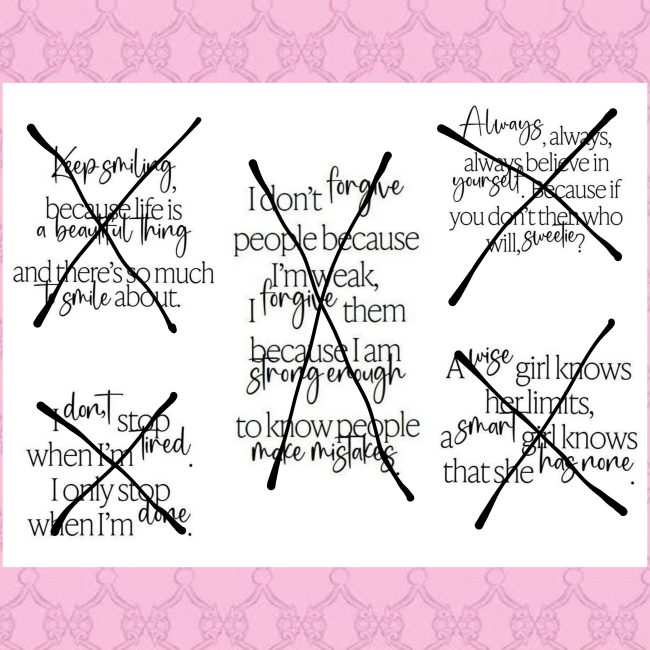
However, the book includes a handful of misquotes which were circulated online before making their way into mainstream media. These quotes have not been traced back to any pre-Internet source, and should thus be considered spurious.
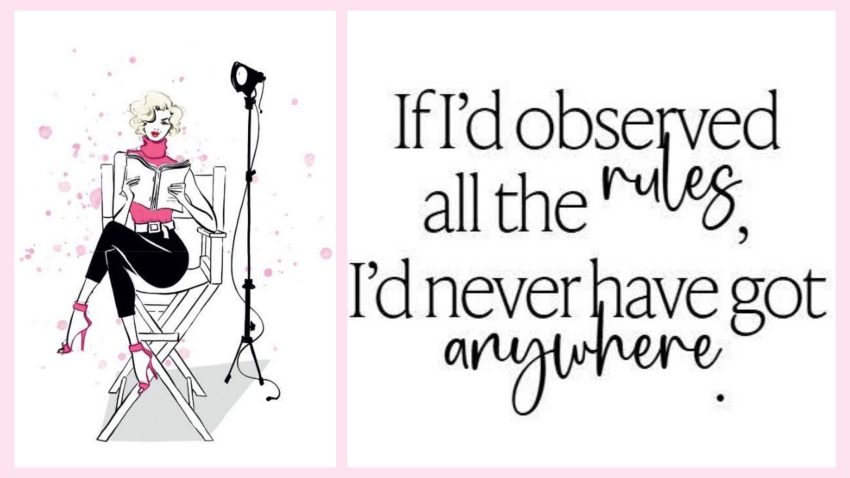
This quote appeared in Roger S. Taylor’s Marilyn on Marilyn (1983), but its original source remains undetermined. Some have compared it to a similar quote attributed to Katharine Hepburn (‘If you obey all the rules, you miss all the fun.’)
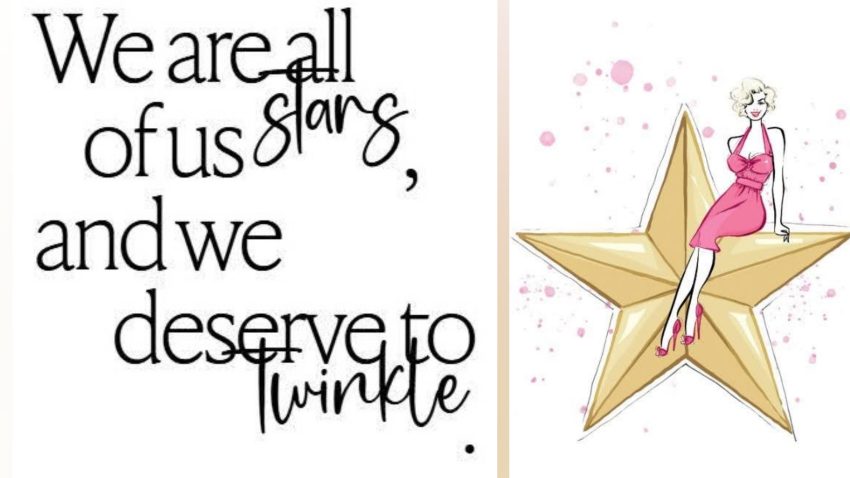
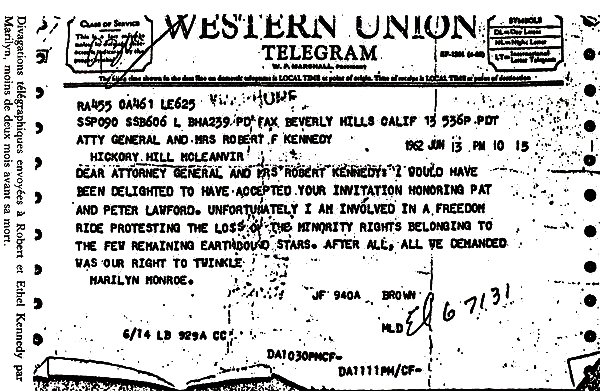
This popular quote derives from a telegram Marilyn sent to Bobby and Ethel Kennedy in 1962, declining a party invitation after being fired by Twentieth Century-Fox. However, her message has been reworded and its meaning lost – including a witty reference to the ‘freedom riders’ of the civil rights movement. “Unfortunately, I am involved in a freedom ride protesting the loss of the minority rights belonging to the few remaining earthbound stars,” she explained. “After all, all we demanded was our right to twinkle.”
This line from Marilyn’s final interview with LIFE reporter Richard Meryman has also been reworded – the original quote is highlighted below…

“It might be a kind of relief to be finished. You have to start all over again. But I believe you’re always as good as your potential. I now live in my work and in a few relationships with the few people I can really count on. Fame will go by, and, so long, I’ve had you fame. If it goes by, I’ve always known it was fickle. So at least it’s something I experienced, but that’s not where I live.”

Another reworded quote, lifted from a 1953 Motion Picture op-ed headlined ‘I Live As I Please’, in which Marilyn responded to Joan Crawford’s criticism of her revealing attire: “Name calling won’t alter the facts, and it is unlikely to change me. I live as I please, and I like it.“

One of Marilyn’s best-known quotes is actually reported speech from an unnamed studio attorney, interviewed for Pete Martin’s Saturday Evening Post profile in 1956 – later reissued in book form as Will Acting Spoil Marilyn Monroe?
“One day she was in this office and I said to her, ‘It would be better for you to sign this contract this year instead of next. It will save you money.’ She looked at me and said, ‘I’m not interested in money. I just want to be wonderful.‘ Then she walked out. What do you suppose she meant by that?”

Although placed separately within the text, these two quotes pertain to the same topic: Marilyn’s favourite perfume…
“People are funny. They ask you a question and when you’re honest, they’re shocked. Someone once asked me, ‘What do you wear in bed? Pajama tops? Bottoms? Or a nightgown?’ So I said, ‘Chanel Number Five.’ Because it’s the truth. You know, I don’t want to say ‘nude,’ but … it’s the truth.” – Georges Belmont interview, 1960

Originally planned for a Cosmopolitan feature, photographer George Barris’s interviews with Marilyn were serialised in newspapers after her death, and later collected in his 1996 book. Here she recalled her early years in Hollywood, and the ‘sugar daddies’ who courted struggling actresses.
“Believe me, there were and still are many starstruck girls that do get by that way. But for me, respect is one of life’s greatest treasures. I mean, what does it all add up to if you don’t have that? If there is only one thing in this life that I am proud of, it’s that I’ve never been a kept woman.”
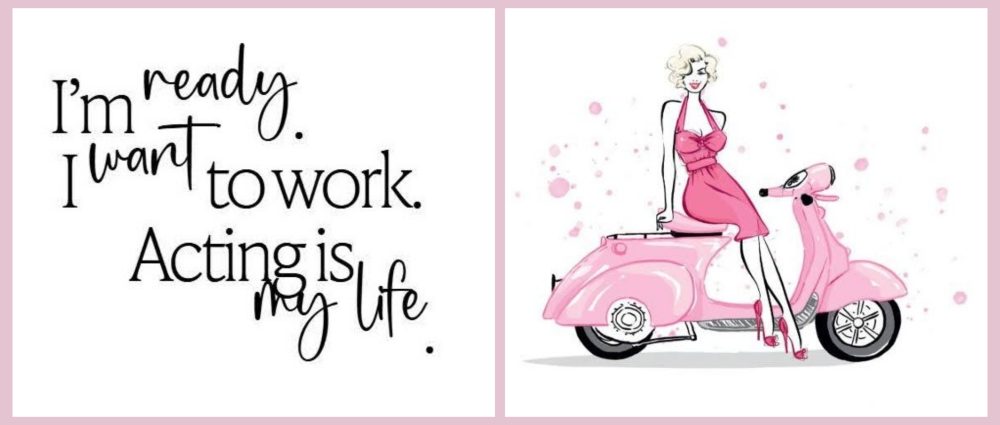
In the last weeks of her life, Marilyn spoke frankly of her distress at being sued by Fox, as she fought to resume her career.
“I hope I can continue Something’s Got to Give. It can be successful – I know it can, and so does everyone connected with it. But all I can do is wait until they let me know. I’m ready. I want to work. Acting is my life.” – to George Barris, 1962
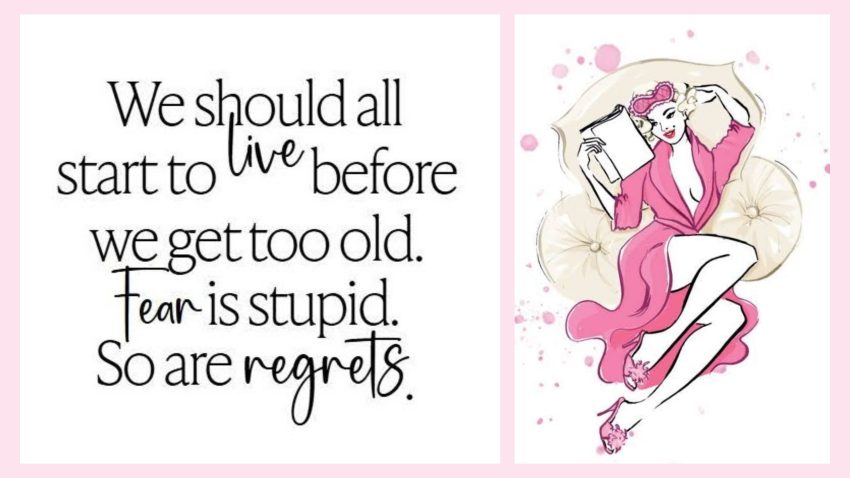
Marilyn met the British journalist W.J. Weatherby on the set of The Misfits (1961.) He later wrote her obituary for the Manchester Guardian, and published a book, Conversations With Marilyn, in 1976.
“I ask myself, ‘What am I afraid of?’ I know I have talent. I know I can act. Well, get on with it, Marilyn. I feel I still try to ingratiate myself with people, try to tell them what they want to hear. That’s fear, too. We should all start to live before we get too old. Fear is stupid. So are regrets.“
Another condensed quote…
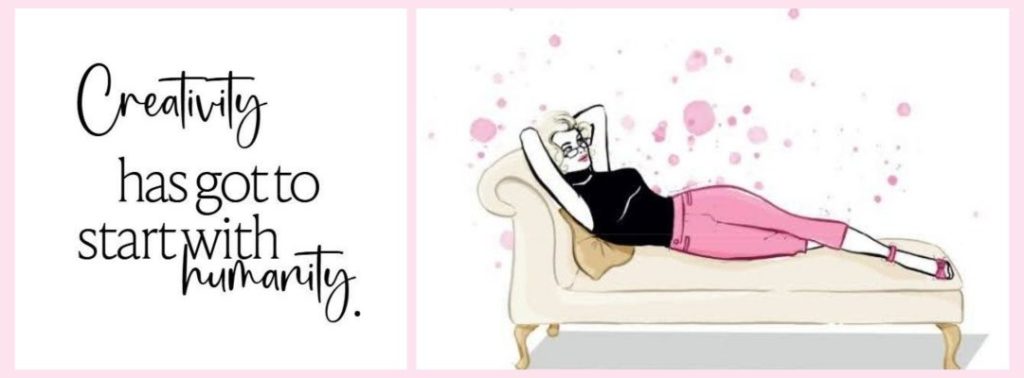
“An actor is not a machine, no matter how much they want to say you are. Creativity has got to start with humanity and when you’re a human being, you feel, you suffer.” – LIFE, 1962

Thought to be from the same interview, although seemingly omitted from the final edit. Gloria Steinem included it in her feminist biography, Marilyn: Norma Jeane (1986.)
“What I really want to say: That what the world really needs is a real feeling of kinship. Everybody: stars, labourers, Negroes, Jews, Arabs. We are all brothers.”
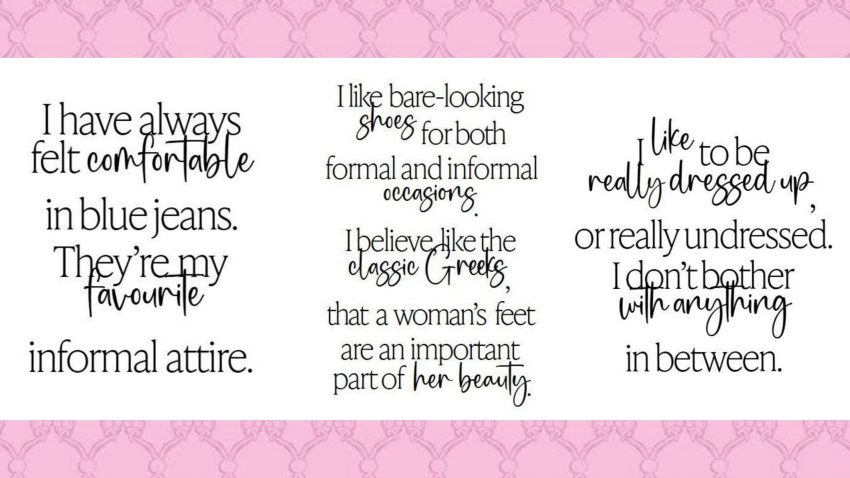
While soundbites can remove nuance, the format works well for Marilyn’s style-related interviews from the early 1950s: whether extolling the virtues of blue jeans in Photoplay; talking shoes with Modern Screen; or getting ‘really dressed up or really undressed’ for Cosmopolitan.
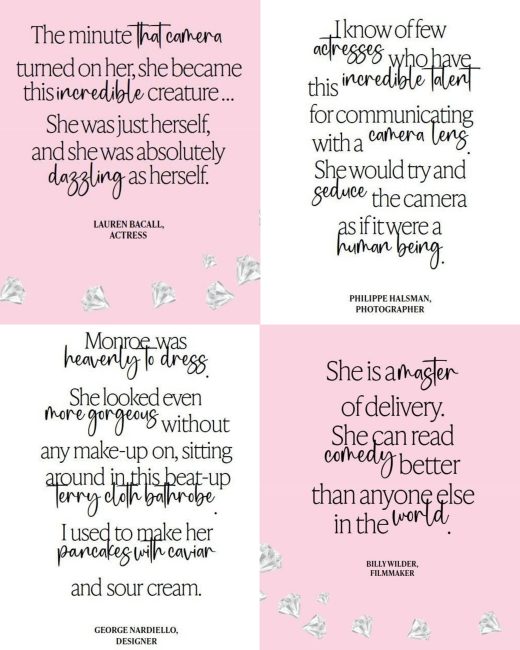
Words From a Fashion Icon also features quotes from those who knew and worked with Marilyn, including Lauren Bacall, her co-star in How to Marry a Millionaire; photographer Philippe Halsman, who shot her first LIFE cover in 1952; George Nardiello, the New York designer who helped to create ‘the new Marilyn’; and her two-time director, Billy Wilder.

The fascination with ‘Monroeisms’ is not a new phenomenon, with several collections published in the 1980s alone. More recently, another Australian title, Marilyn Monroe: Icons of Style, was marketed to ‘fans of Megan Hess.’ The compact format, cover art (by costume designer Gypsy Taylor) and pink/gold and black/white palette anticipates Words From a Fashion Icon. It’s a shorter book, avoiding misquotes but also lacking context.
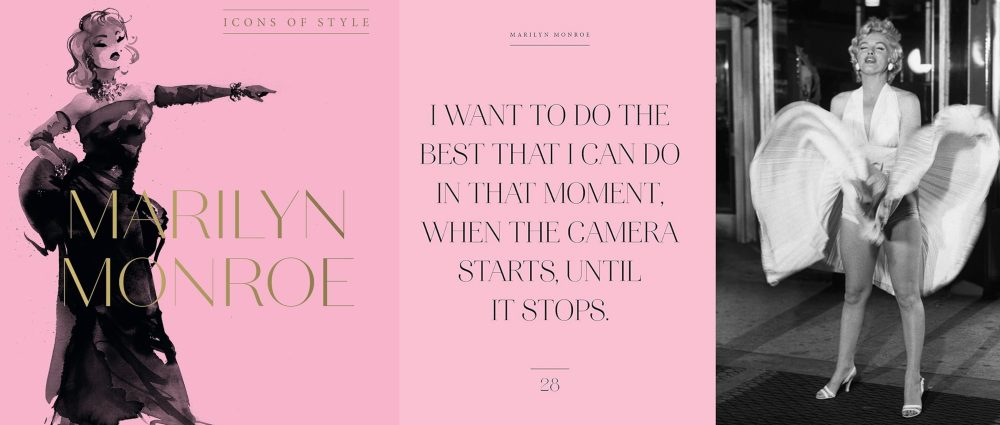
Authenticating Marilyn’s quotes is a challenging process, as many of the newspapers and magazines she spoke with are no longer operating. While the artworks of Megan Hess are uniquely distinctive, perhaps only a Monroe historian could do justice to her words.
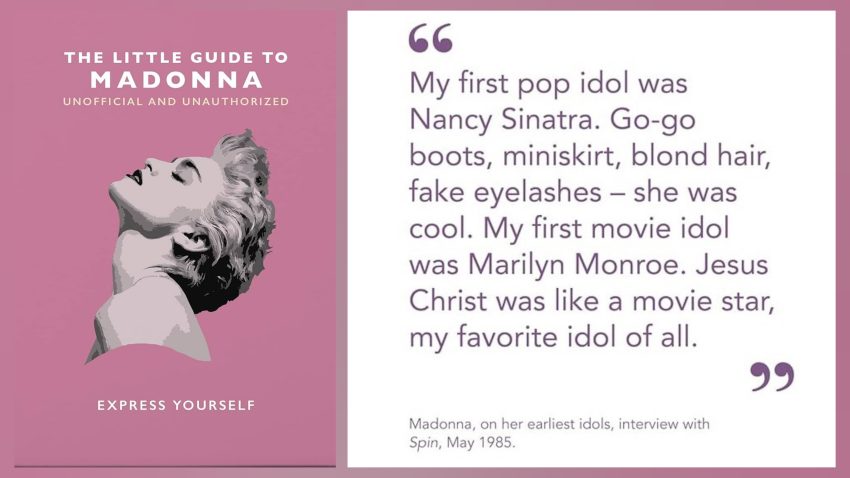
However, the Little Books series from publisher Orange Hippo suggests a way forward. Celebrating numerous public figures from Madonna and Audrey Hepburn to Betty White and Queen Elizabeth II, Little Books feature fuller quotes and noted sources.
 The Marilyn Report