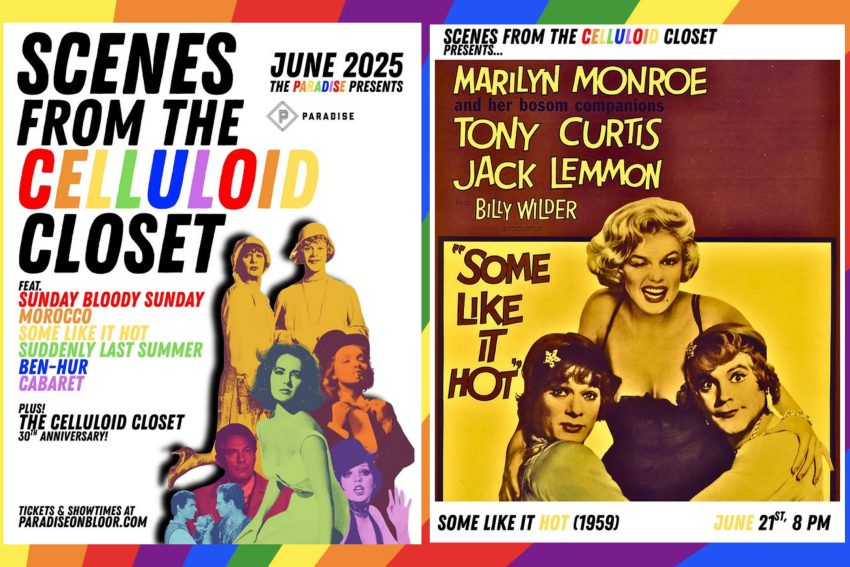
Some Like It Hot is showing at the Paradise Theatre in Toronto on Saturday, June 21, at 8:30 pm, as part of a Pride Month film series. ‘Scenes From the Celluloid Closet‘ is named after a groundbreaking 1980s book and documentary, The Celluloid Closet, which explored how queerness was suppressed during the Production Code era, and how enterprising filmmakers managed to bend the rules.
‘We have cooperated for a very long time in the maintenance of our own invisibility. And now the party is over.’ – Vito Russell, The Celluloid Closet
“It has been 30 years since Rob Epstein and Jeffrey Friedman’s landmark documentary premiered at the Venice Film Festival. Based on the acclaimed non-fiction book by historian and activist Vito Russell, THE CELLULOID CLOSET delves into the history of queer representation on screen with footage from 120 films plus interviews and anecdotes from the likes of Gore Vidal, Tony Curtis, and Whoopi Goldberg. Join us for Pride Month at the Paradise as we celebrate 30 years of THE CELLULOID CLOSET, and 100 years of queerness on screen. The Paradise Presents: SCENES FROM THE CELLULOID CLOSET.”
Interestingly, Some Like It Hot wasn’t the only movie that challenged Hollywood norms in 1959, as two other films from that year are also featured in this series: Suddenly Last Summer, Joseph L. Mankiewicz’s adaptation of a controversial Tennessee Williams play; and even Ben-Hur, the religious epic which swept the Oscars.
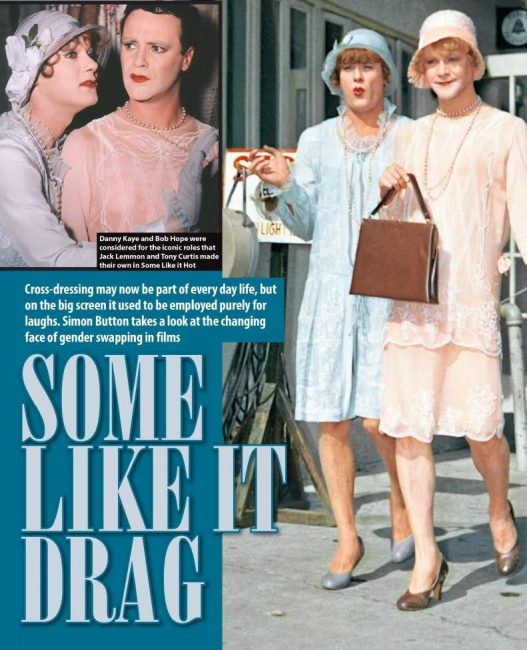
Meanwhile, Some Like It Hot takes centre-stage in the June 2025 issue of UK nostalgia magazine Yours Retro, as part of an article exploring gender fluidity on the big screen.
TOO HOT TO HANDLE
“Billy Wilder’s bona fide classic, Some Like it Hot (1959), is hilarious because of how funny Tony Curtis and Jack Lemmon look in frocks and wigs as two musicians hiding out in an all-girl band after witnessing a Mafia massacre. But it also turns out to be a learning curve for the pair as they befriend Marilyn Monroe’s singer, Sugar, and find that walking a mile in women’s shoes (which takes them a while to master) makes them better men in the process.
Like [John] Travolta did decades later (in Hairspray), Curtis and Lemmon took a serious approach, with the latter telling Michael Parkinson, ‘We were all, Billy included, very worried about it because it’s a fine line. It’s a farce, yes, and you wanna have fun, yes, but there still has to be the believability.’
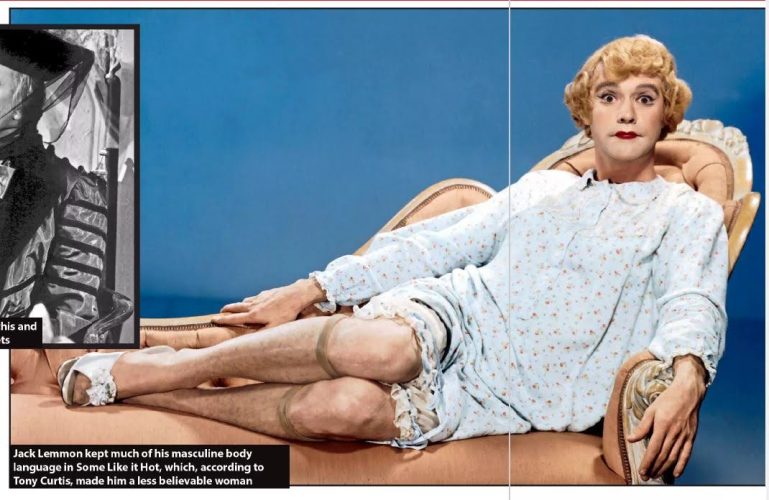
The pair spent six hours a day for four or five days sitting in front of a mirror with the hair and make-up team to come up with their now iconic looks. On the third or fourth day, they went to lunch in full costume and popped into the ladies powder room to adjust their make-up. ‘And there wasn’t one woman that batted an eyeball,’ Lemmon remembered.
Still, Wilder veered on the side of caution by shooting Some Like it Hot in black and white as he worried that colour would make his leading men pretending to be women appear too garish.”
– Simon Button
 The Marilyn Report