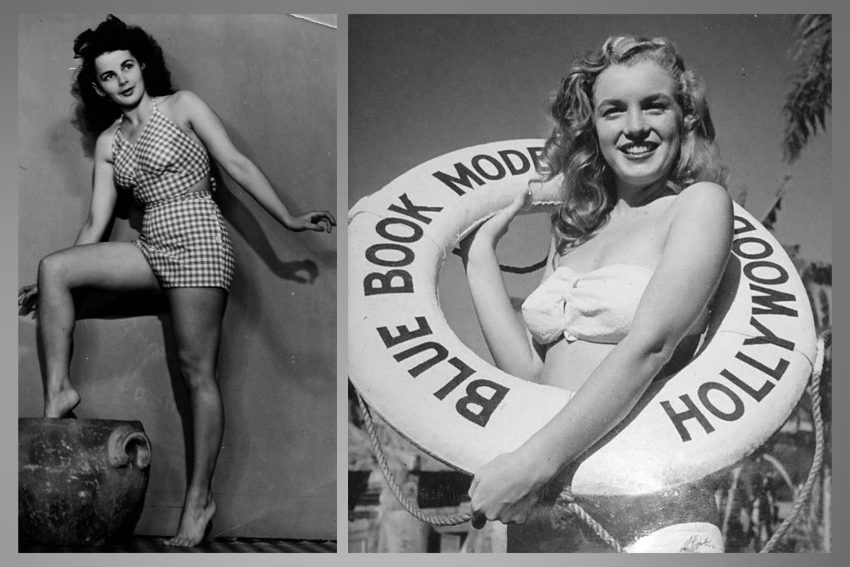
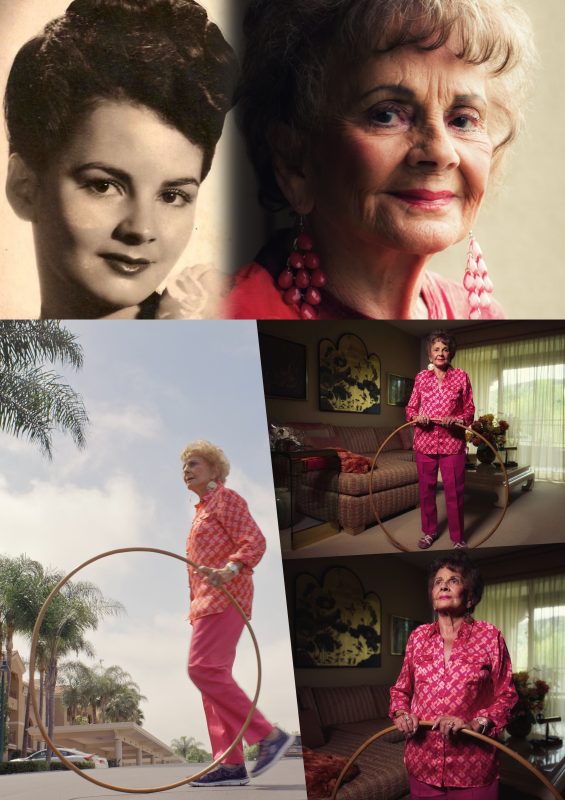
Joan Anderson, the Australian-born model who brought the hula hoop to the US, has died aged 101. She was born Joan Constance Manning in Sydney in 1923, daughter of a property agent, and began modelling swimsuits in her teens, becoming known as the ‘Pocket Venus’ as she was barely five feet tall. In 1945, she met an American GI, Wayne Anderson, on Bondi Beach. They married four months later and moved to Pasadena, and Joan signed up with the Blue Book Modelling Agency.
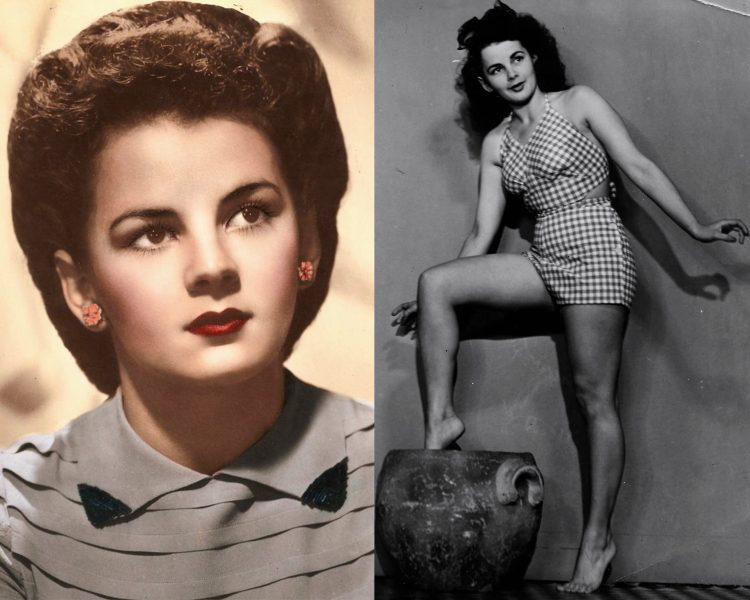
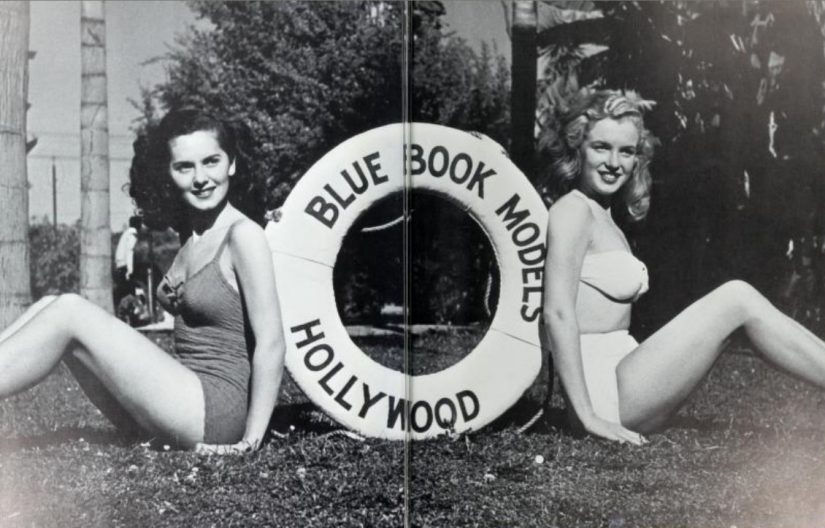
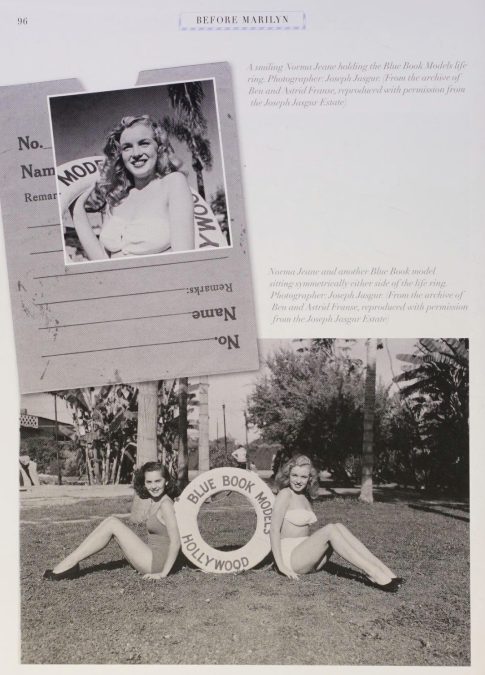
Headed by Emmeline Snively and based at the Ambassador Hotel in Los Angeles, the agency had recently signed another youngster, Norma Jeane Dougherty. Joan would later recall working on a layout with Norma Jeane, probably a group shoot for photographer Joseph Jasgur in 1946.
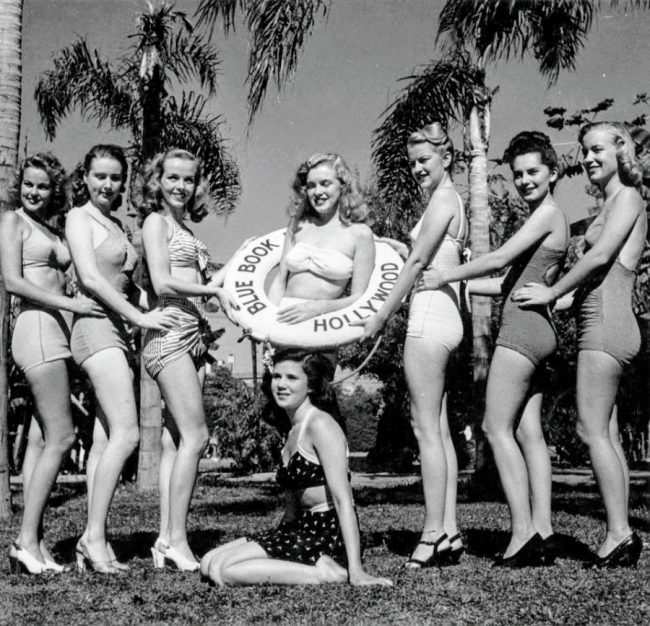
In this photo, Norma Jeane stands in the centre, as two other models hold a lifebuoy ring with a ‘Blue Book Models Hollywood’ logo around her. The models have not been identified, but the brunette at second from right looks rather like Joan Anderson. In other shots, Norma Jeane holds the lifebuoy with a brunette wearing the same bathing suit as Joan in the group picture, although her hair has been let down.
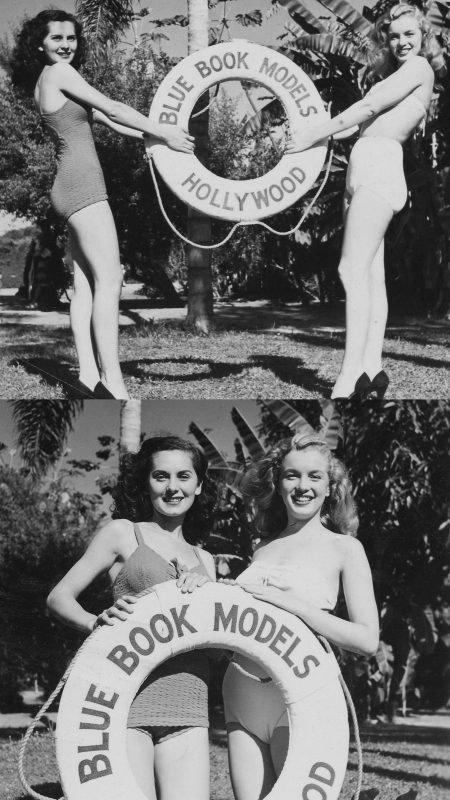
By 1946, Norma Jeane had been working at Blue Book for around a year. Her hair was bleached blonde and she would soon sign a contract with Twentieth Century-Fox under a new stage name, Marilyn Monroe. In the early years of her movie career, she continued taking occasional assignments for Blue Book.
Joan left modelling behind to raise a family, including four children. Then in 1956 she returned home to Sydney for Christmas, where a new craze was taking hold. “Everyone was giggling and carrying on,’ she said.. I said, ‘What’s going on?’ and they said, ‘Everyone is doing the hoop. They just love it’.”
After returning home, Joan told her husband about the bamboo hoops that Australians were twirling around their hips. At his insistence, she asked her mother to send one by mail. Her children loved playing with it, nicknaming it the ‘hula hoop’ after the Hawaiian dance.
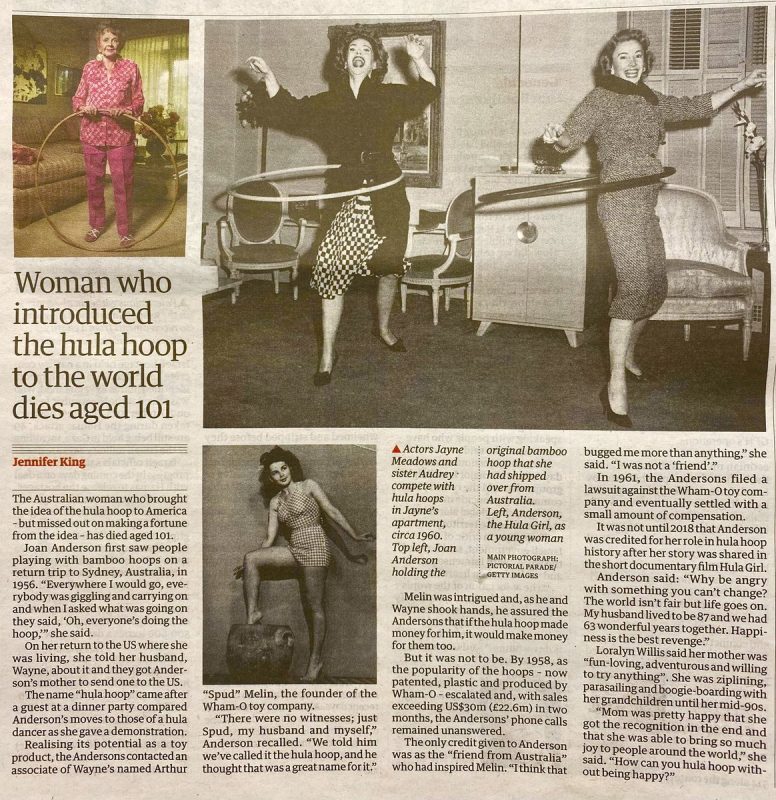
Wayne, who ran a woodworking machinery company, contacted a business associate, Arthur ‘Spud’ Melin, co-founder of the Wham-O toy company, which had recently manufactured the Frisbee. The couple met with Melin in the Wham-O car park, and he was impressed by their idea. “If it makes money for us,” he promised, “it’s going to make money for you.” There were no witnesses present, and no contract was signed – “just a gentleman’s handshake,” Joan said.
Wham-O produced a plastic hoop and after testing it out at schools and parks in Los Angeles, launched it onto the market in 1958. At a time when Elvis Presley’s hip-swivelling moves were driving America’s youth wild, the Hula Hoop was a runaway success, with between 20 and 40 million sold at $1.98 apiece in six months.
However, the Andersons received no credit – or payment – for their part in this phenomenon, with Wham-O company literature referring merely to an unnamed Australian friend. Calls to Melin went unanswered, and in 1961, they filed a lawsuit. The case was settled out of court, but as the Hula Hoop fad had passed and Wham-O was heavily in debt, the Andersons were paid barely $6,000.
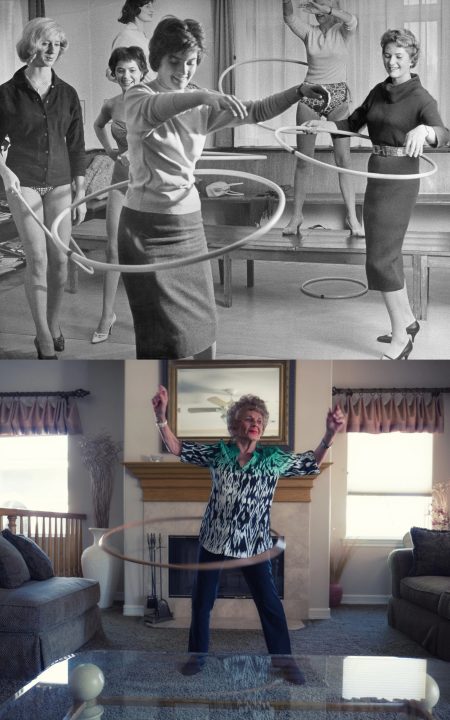
The story came to light when, in 2016, Joan’s daughter Loralyn Willis told a friend about it over lunch in a Los Angeles restaurant. Another customer overheard the conversation, and related it to her own daughter, Amy Hill, who went on to make a ten-minute film, Hula Girl (2018.)
“Why be angry with something you can’t change?” Joan reflected. “The world isn’t fair but life goes on. I had a great life. My husband lived to be 87 and we had 63 wonderful years together. Happiness is the best revenge.”
Joan Anderson spent her final years living in a retirement community in Carlsbad, California, still keeping fit, and showing off her original bamboo hoop. She died on July 14, 2025, and is survived by her daughter and two of her three sons.
 The Marilyn Report