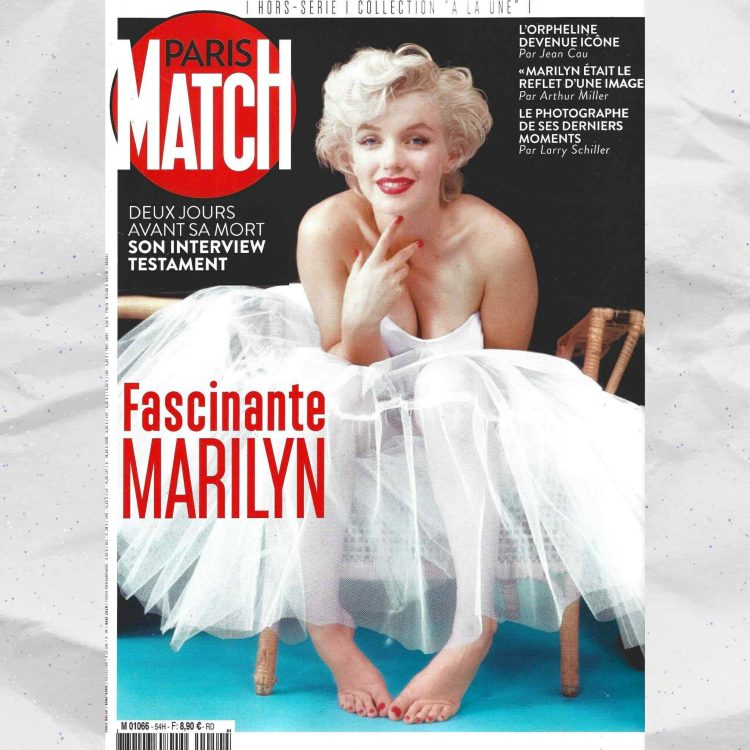
Paris Match has released a special edition magazine dedicated to Marilyn as part of its ‘In the Spotlight’ collection. With a cover shot from the 1954 ‘Ballerina Sitting’ by photographer Milton Greene, ‘Fascinating Marilyn’ draws upon Monroe’s long history with the French news weekly, following previous tributes to Audrey Hepburn, Brigitte Bardot, and Simone Signoret. Slightly larger than A4 and printed on thick glossy paper, it is currently available to UK readers via Newsstand (but hurry …)
“Why does Marilyn Monroe still fascinate, almost sixty years after her tragic death at the age of 36? Probably because she embodies the American dream as much as its brokenness. From model spotted by chance to global icon, she was at the forefront of women’s liberation. Master of her image to the point of forcing Hollywood studios to bend, she would probably have been an Instagram star today. But behind the blonde goddess hid a fragile woman: failed marriages, repeated miscarriages, an addiction to barbiturates … This duality between her public aura and her private fragility resonates with our era of social media. Her mysterious death on August 4, 1962, fuels the myth. Marilyn remains a contemporary mirror: a star sacrificed on the altar of celebrity, she prefigures our current obsessions with the perfect image and toxic fame.”
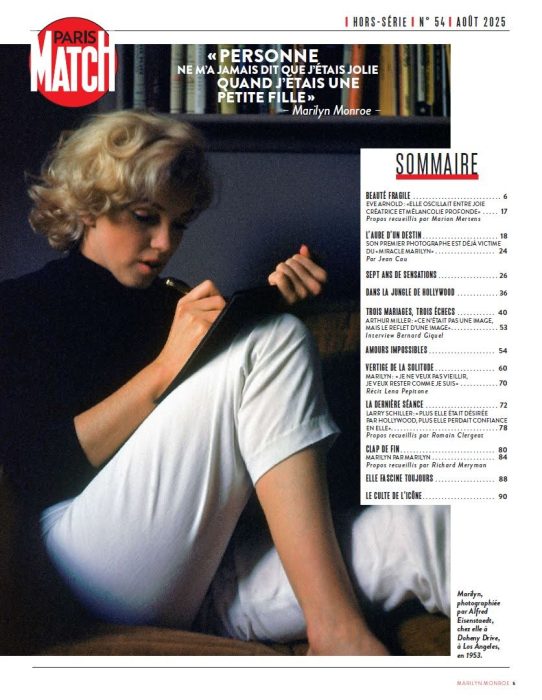
A photo from Marilyn’s 1962 cover shoot for Paris Match by Willy Rizzo introduces a series of full-page images contrasting studio portraits with more candid poses. Other contributors include Laszlo Willinger, Andre de Dienes, Tom Kelley, Frank Powolny, Alfred Eisenstaedt, Ed Clark, Bob Beerman, John Vachon, Bruno Bernard, Ed Feingersh, Walter Carone, Earl Leaf, Harry Myers, Philippe Halsman, John Bryson, Paul Slade, Elliott Erwitt, Claude Azoulay, Cecil Stoughton, Allan Grant, George Barris, and more.

An article originally published in 1970 details Marilyn’s difficult childhood and modelling breakthrough, while her acting career is explored visually. Her marriage to Joe DiMaggio and relationship with French star Yves Montand are also featured, alongside fleeting dalliances with Marlon Brando and José Bolanos, and sketchier rumours about Tony Curtis and the Kennedys.
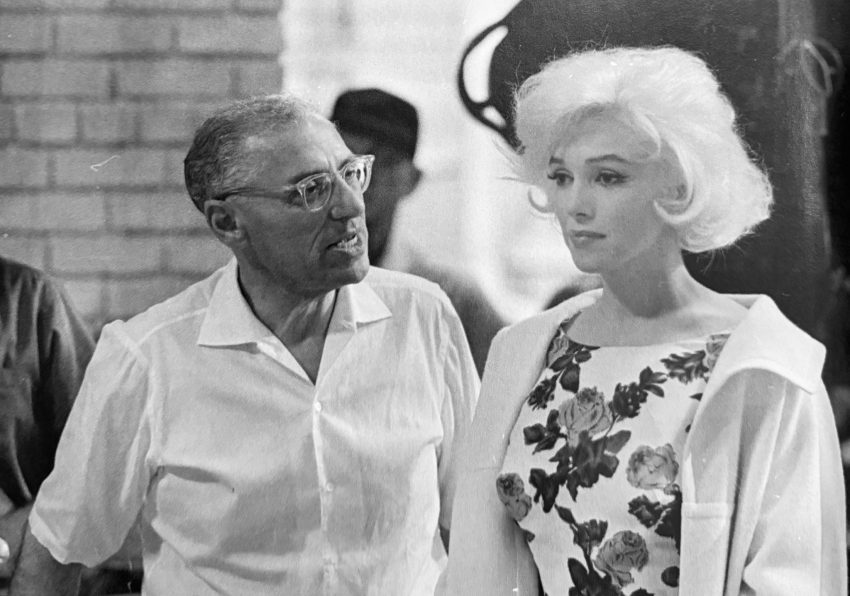
A new interview with one of Marilyn’s only surviving photographers, Larry Schiller, includes a rare photo of the star with director George Cukor during filming of Something’s Got to Give.
“In front of the camera, she had control. Including the ability to approve the shots. With the movie camera, she also had to move, speak, and to be part of a scene, a story, over which she had no control. She never knew how it would be used, in close-up or in wide shot. This was one of the reasons why she was unsure of herself on set. I even think that the more she was desired by Hollywood, the more profitable she became, the more she lost confidence in herself.”
Marilyn’s eloquent final interview with Richard Meryman is also reprinted, alongside an extract from the disputed memoir of Lena Pepitone (first published in 1979.)
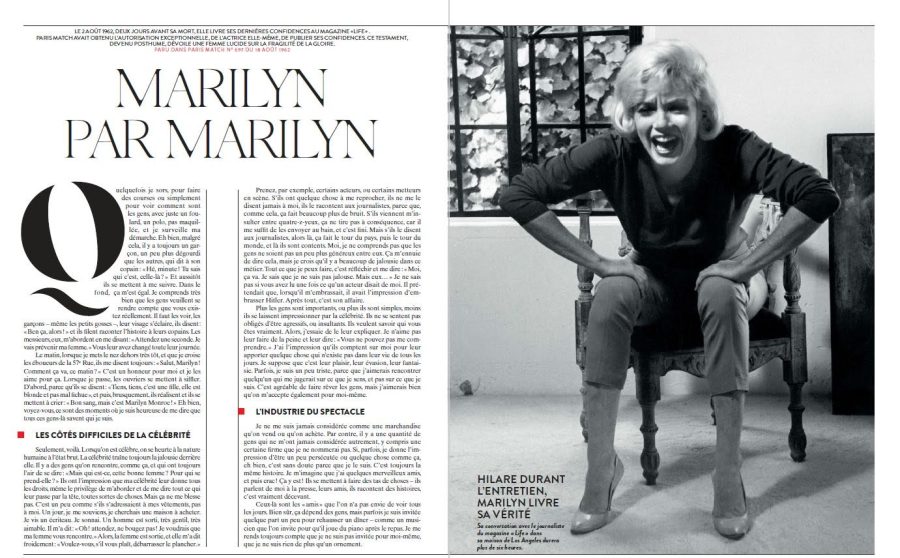
“I don’t think fame was a burden for Marilyn. It was more complex,” Eve Arnold told Paris Match in 2005. “Two days before he died, Arthur Miller called me. We talked about Marilyn, of course; he told me again how enchanting he found her. I told him that I remembered her as a delightful friend and a radiant woman.”

And finally, Miller spoke frankly about Marilyn’s private struggles in a 1988 interview.
“She was deeply sad. Sad and hurt like the orphan she was. Orphans often have a lot of charm. It’s their way of protecting themselves, because they have no one of their own blood to lean on … she sought her parents in everyone she met. Lee Strasberg of the Actors Studio, for example … Her demands on her profession and her life were enormous, not to mention dangerous. She wanted to be the best. Nothing less. She desperately wanted to be happy but had never been able to achieve it … Since she never hid her great vulnerability, everyone could see a little of themselves in her.”
 The Marilyn Report