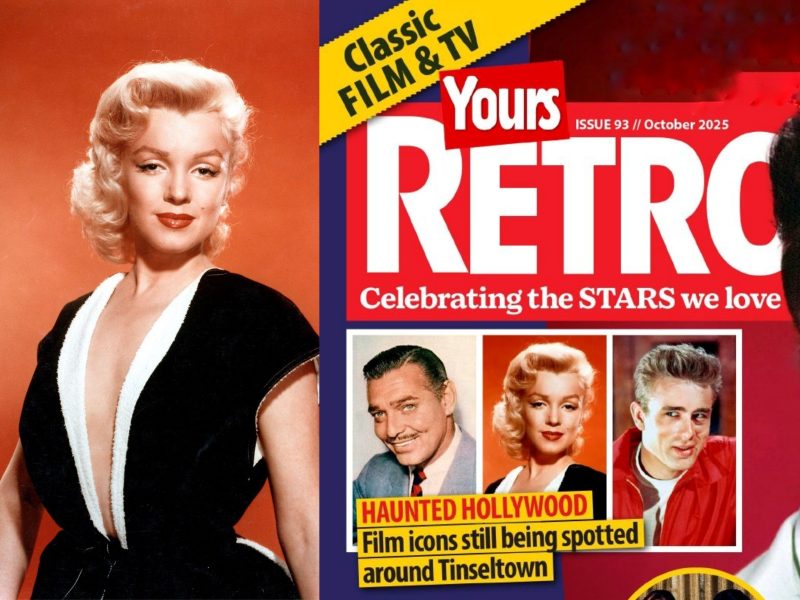
While Elvis Presley is the cover star of UK nostalgia mag Yours Retro‘s October issue (#93), a smaller 1953 photo of Marilyn by Frank Powolny is featured as part of an inset, alongside images of Clark Gable and James Dean. ‘There’s a slight Halloween theme running through this month’s issue,’ the editor admits. ‘You can discover which Hollywood icons refuse to let death get in the way of being seen around town …’
However, Marilyn is barely mentioned in Brian J. Robb‘s article, ‘Haunted Hollywood,’ although he previously wrote for Yours Retro about her relationship with Johnny Hyde, and is the author of an ebook examining conspiracy theories around her death.
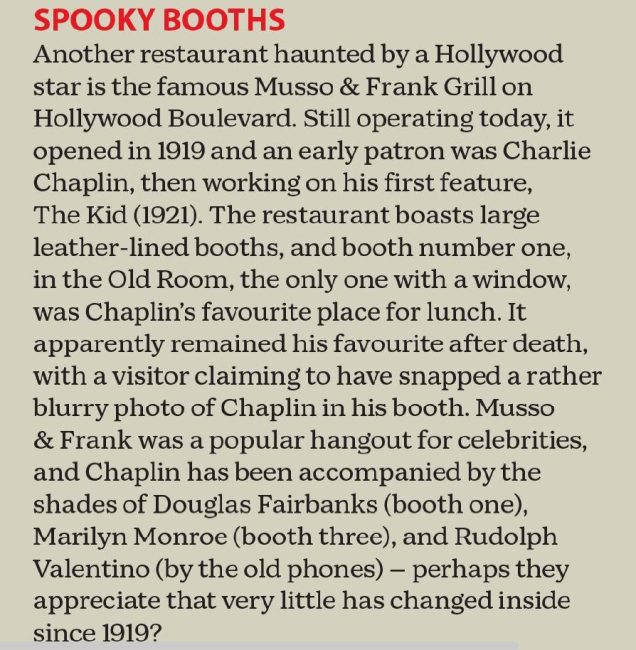
Musso & Frank is steeped in Hollywood lore, and was recently mentioned in Taylor Swift’s Life of a Showgirl track, ‘Elizabeth Taylor‘: (‘We hit the best booth at Musso & Frank’s/They say I’m bad news, I just say thanks’.) The restaurant also remembers Marilyn – and Elizabeth, among others – as former guests.
“It’s a history that reads like a Hollywood script. Deals were made on the old pay phone — the first pay phone to be installed in Hollywood. Scripts were discussed over a famous Musso’s martini. Contracts were signed over exquisite meals of Roast Duck and Lamb Chops. Stars were born … In the ‘50s, Hollywood legends like Marilyn Monroe (flanked by Joe DiMaggio), Elizabeth Taylor and Steve McQueen could be found enjoying drinks and appetisers in Musso’s famous Back Room.”
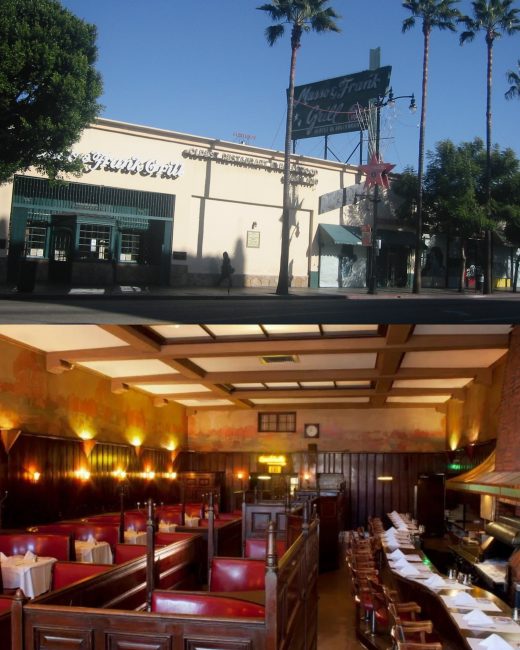
Photographs of Marilyn and Joe dining together in 1953 after she was honoured at the Chinese Theatre on Hollywood Boulevard are often labelled as being from Musso & Frank, but they actually dined at Chasen’s on Beverly Boulevard that evening. Both restaurants had similar wood-panelled booths with red leather banquette seating.
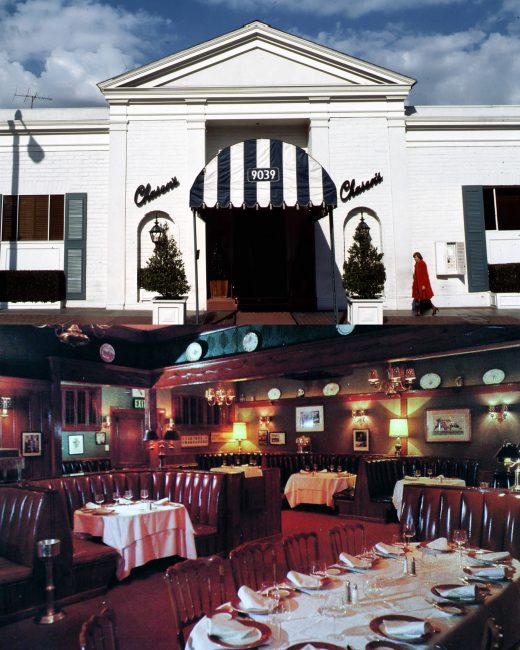
To compound the confusion, a scene depicting Marilyn and Joe’s first date in the Netflix biopic, Blonde, was shot at Musso & Frank, although it actually took place at the Villa Nova Restaurant on Sunset Boulevard (now the Rainbow Bar & Grill.)
In fact, Marilyn’s history with Musso & Frank is hard to retrace, though she did frequent several other Los Angeles eateries including Chasen’s, Ciro’s, and Romanoff’s, all of which are now closed.
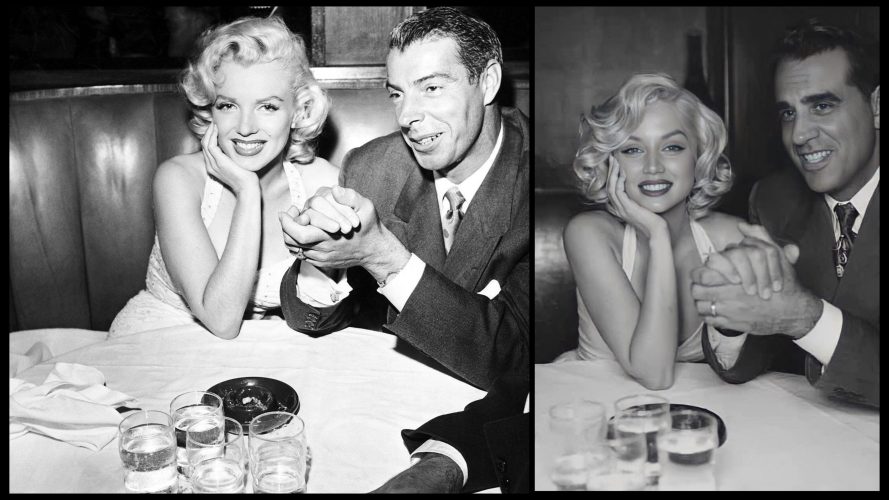
According to The Unabridged Marilyn (1987), she had dined at Musso & Frank as a young starlet, and then later with DiMaggio, but never became a regular. Rose Keegel, daughter of Musso & Frank founder John Mosso, ran the venue from 1974-2000, and when looking back on the storied past of her family business, said of Marilyn: “This wasn’t the type of restaurant that she would come to, because she couldn’t make a very big entrance from the back door.”
So where did the legend of Marilyn at Musso & Frank originate? The answer may lie in a 1999 interview with ‘psychic to the stars’ Kenny Kingston, conducted at the famed restaurant for Los Angeles Magazine. ‘He was the only medium Marilyn Monroe ever consulted,’ the article notes, although this has never been corroborated.
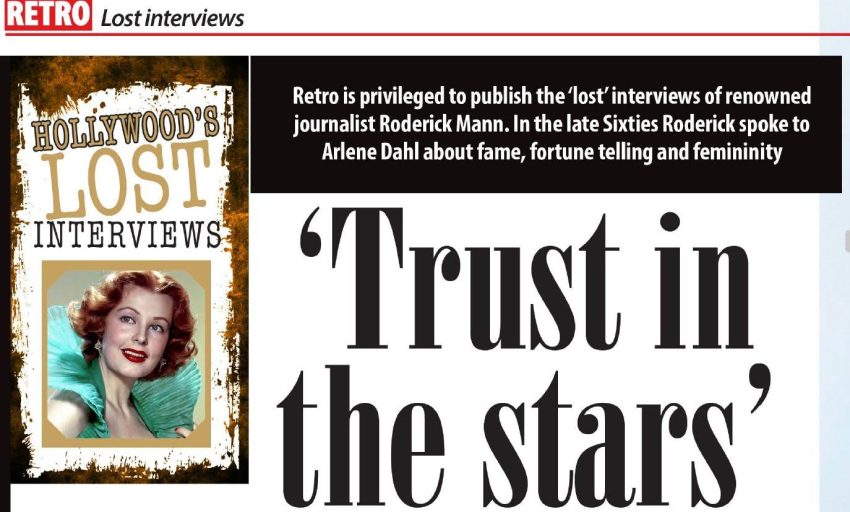
Elsewhere in Yours Retro is a ‘lost interview’ with the actress turned author and businesswoman Arlene Dahl, a contemporary of Marilyn. When dividing female stars into categories of “animal, vegetable and mineral,” Dahl likened Marilyn to “a beautiful tomato” – which although technically a fruit, not a vegetable, recalls a famous line from The Seven Year Itch: ‘Hi! It’s me, the tomato from upstairs,’ after Marilyn accidentally drops a tomato plant on her balcony onto the deck below, and the pot narrowly misses her neighbour’s head.
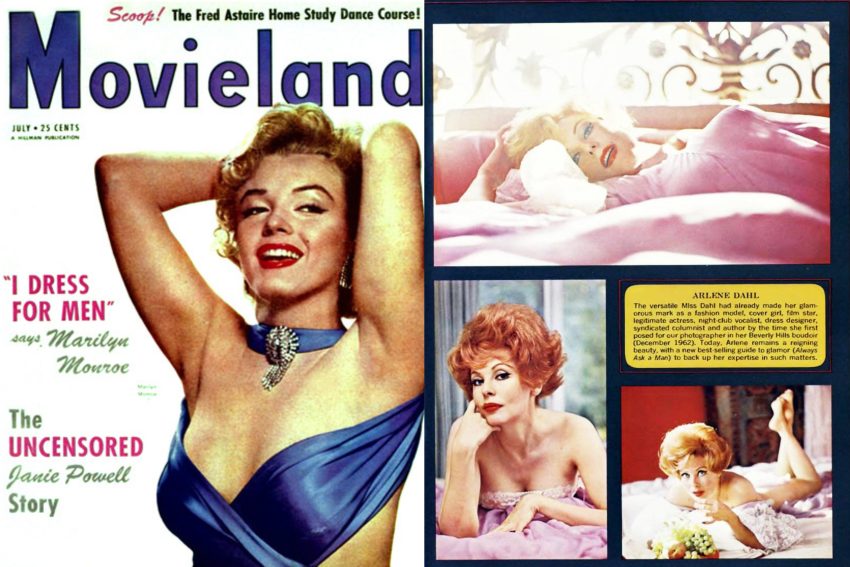
Dahl’s belief that women “should never show they have brains,” which now seems rather anti-feminist, nonetheless echoes a line from Gentlemen Prefer Blondes: ‘I can be smart when it’s important, but most men don’t like it.’ When Arlene voices her disapproval of American women dressing ‘for other women,’ I’m reminded of an article Marilyn penned for Movieland magazine in 1952, ‘I Dress for Men’.
And finally, Dahl’s response to criticisms of her Playboy spread – “I’m a working actress, not a stuffy institution” – mirrors Monroe’s unapologetic defence of her own nude calendar from a decade before. Arlene appeared in the December 1962 issue, for which Marilyn had allegedly considered posing before her death that summer.
 The Marilyn Report