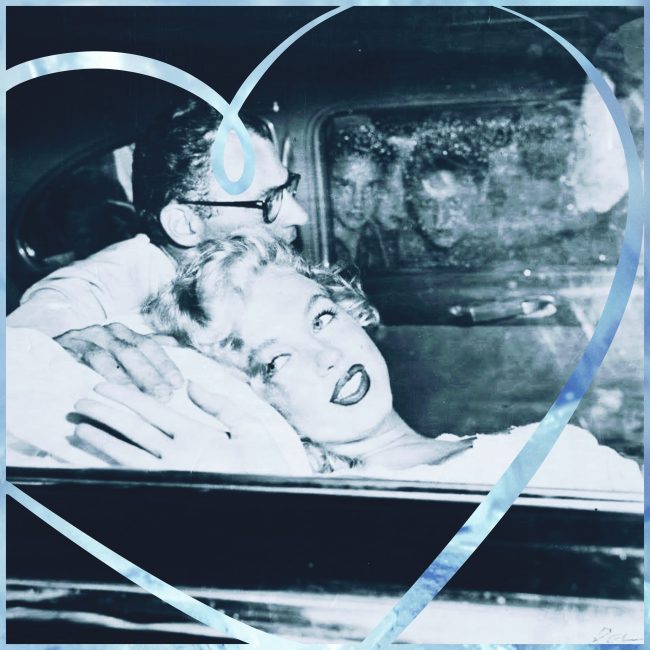
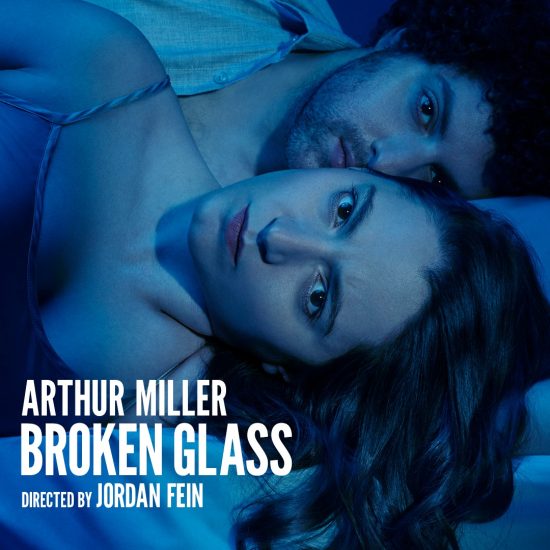
One of Arthur Miller’s later plays, Broken Glass, is currently playing at the Young Vic Theatre in London.
‘It’s like she’s connected to some… truth that other people are blind to.’
“Brooklyn, New York, 1938. Sylvia Gellburg reads about the violent attacks against Jewish communities carried out an ocean away in Germany. Most people look away, believing it will pass. Not Sylvia. Her obsession grows and soon she loses her ability to walk — a paralysis her husband, Phillip, believes is all in her head. Sylvia forms an undeniable bond with Dr Hyman and soon the cracks in her marriage become impossible to ignore. In the face of silence, Sylvia rises in defiance.
Jordan Fein (Fiddler on the Roof) brings this Olivier Award-winning Arthur Miller play to the Young Vic; a bold and passionate story about the consequences of disconnecting with the realities of our world.”
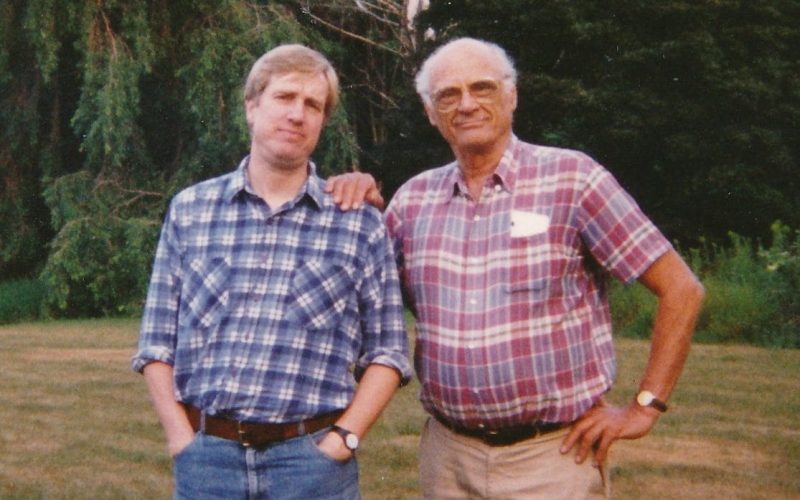
David Thacker, who directed the original production, has shared his memories of working with Arthur Miller in an interview for The Telegraph.
“On June 25 1994, after two weeks of rehearsals at the National, I flew to New York to watch Broken Glass on Broadway. I had arranged to see the show with Arthur, stay with him for a night at his Manhattan apartment, and then he would drive us to Connecticut for a weekend working at his house. I sat beside him in the stalls and, as the play progressed, became increasingly apprehensive about the way I was approaching rehearsals at the National while simultaneously feeling that the production we were watching did not measure up to the emotional and political demands of the play.
Waiting for a taxi afterwards, Arthur was silent. I thought, ‘I’ve got to say something.’ So I came out with it: ‘I’m sorry, Arthur, I hated the production.’ He wasn’t surprised. That was a huge weight off my mind: it gave me hope that, in London, our treatment of Broken Glass might be more as he would wish …
Somewhere between the curtain call of Broken Glass in New York and me leaving Arthur’s home in Connecticut four days later, I lost any inhibitions about talking to him. The crucial shift happened the first time he mentioned Marilyn Monroe (to whom he’d been married from 1956 to 1961, the year before her death). I had asked if any of the characters in Broken Glass were modelled on someone he knew. It turned out there was a real-life case of a woman who was paralysed, and also someone who dressed in black like Phillip Gellburg.
But astonishingly, the inspiration for Hyman was an 80-year-old doctor who had treated Marilyn. ‘It’s amazing, he could tell from her fingernails how she was,’ Arthur said. ‘On one occasion he was treating her and he pointed to bottles of pills.’ Arthur picked up some objects and became the doctor: ‘Marilyn, you see this? And you see this? They’re killing you.’
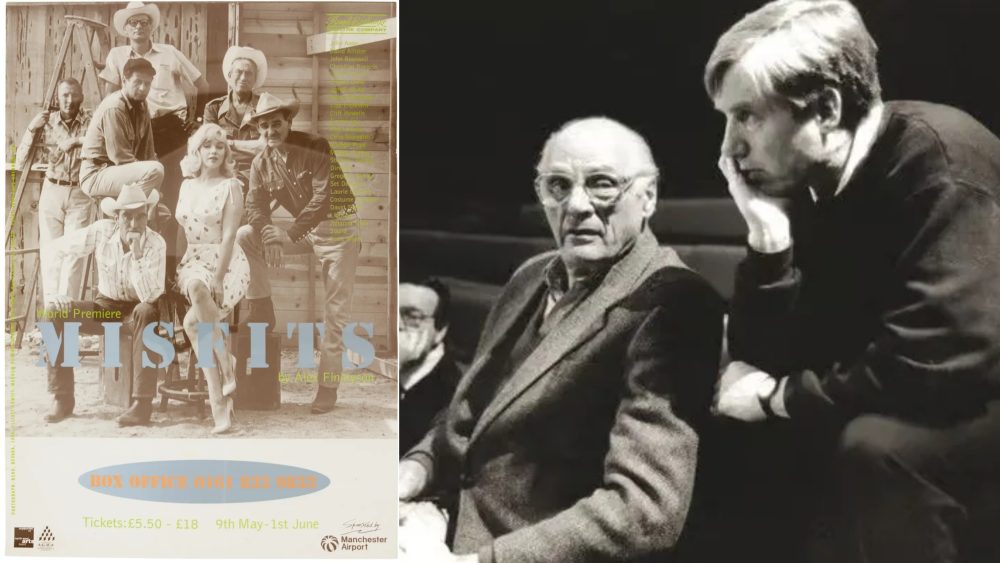
Arthur told me, ‘I tried everything I could to help her, and that’s one reason why I wasn’t writing in that period. It was impossible.’ Then he said: ‘You know they’re doing a play about us at the Royal Exchange Theatre?’ (Alex Finlayson’s Misfits, a docudrama about the making of the film of the same name, was staged in Manchester in 1996.) ‘It just goes to show: you spend years trying to keep someone alive, and that’s what they do to you.’ He was clearly wounded by people’s failure to understand what he had lived through.”
It’s unclear whom the doctor Arthur recalled might have been – perhaps a physician or surgeon who treated Marilyn during her pregnancies – but the ravages of her pill addiction were witnessed by many others. Sadly, Arthur’s relationship with Marilyn is still widely misunderstood, and he is often unfairly depicted as cold and unfeeling.
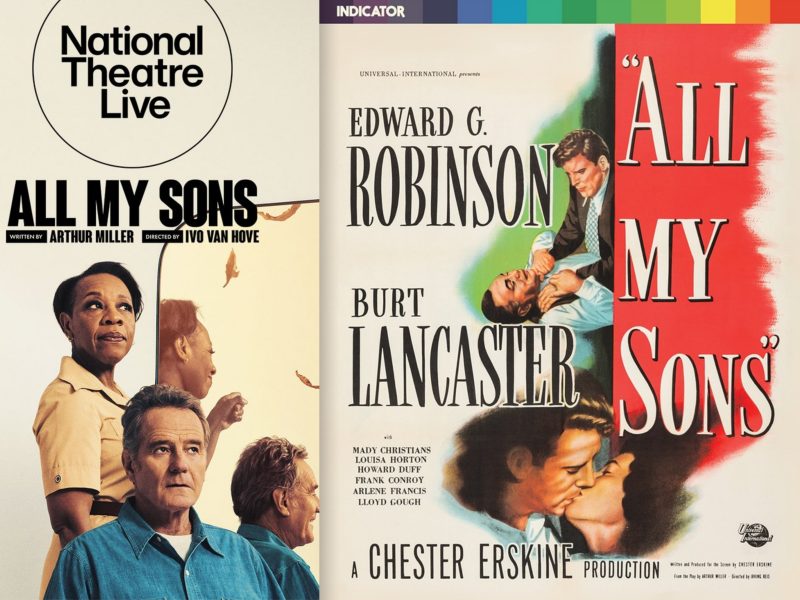
Meanwhile, Alex Finlayson’s Misfits is now largely forgotten – but Arthur Miller’s dramatic legacy still endures. Bryan Cranston is currently starring in an acclaimed revival of All My Sons at the Wyndham Theatre, and is coming to cinemas in April (via National Theatre Live.)
First staged in 1947, All My Sons pre-dates the Monroe-Miller romance; but in a 2024 article for Aviation History magazine, Stephan Wilkinson explored parallels between the play’s wartime setting and the teenage Norma Jeane’s ‘discovery’ by a US Army photographer while working at the Radioplane munitions plant.
And finally, Powerhouse Films is bringing the 1953 big-screen adaptation of All My Sons – starring Edward G. Robinson and Burt Lancaster – to Blu-Ray this month.
 The Marilyn Report