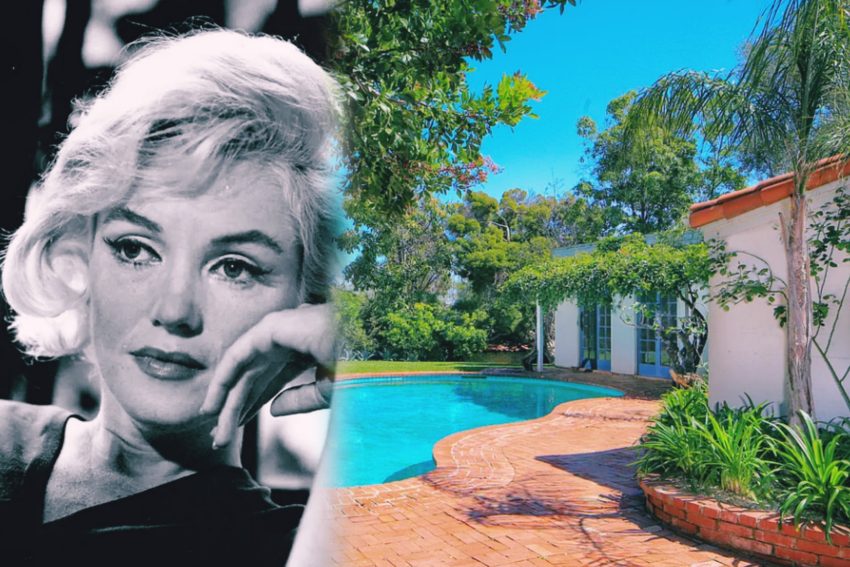
When Marilyn’s last home at Fifth Helena Drive in Brentwood, Los Angeles – the only one she ever owned – came under threat of demolition in September 2023, an international outcry was sparked. After a nine-month standoff with the current owners, Brinah Milstein and Roy Bank – who also own and live in a neighbouring property – the house was designated as an historical monument by the City Council in June 2024. And in September 2025, the owners’ bid to undo this ruling and proceed with demolition was rejected.
However, the battle didn’t end there. In January 2026, Milstein and Bank initiated their third attempt to demolish Marilyn’s Spanish hacienda in order to expand their family compound, as Jeremy Louwerse reported for the California Post.
“The owners of the Los Angeles home where Marilyn Monroe died have launched a legal battle against Mayor Karen Bass and the City of Los Angeles.
‘The city has turned the property into a tourist attraction, attracting (as the city wanted and expected) traffic congestion on the short, narrow dead-end street adjacent to the property along with numerous trespassers leaping over and onto property walls to get into the “designated” house (which cannot be seen from the public realm due to the property wall and landscaping),’ the docs state.
Milstein and Bank argue in their lawsuit that the city never took interest in the home in the sixty years after Monroe died, and it went through multiple renovations and had multiple owners. They claim the historical designation has now ‘rendered the property useless’ and has totally prohibited their ability to capitalise on the $8.3 million they put into purchasing the home.
The couple is asking the court to either allow them to go ahead with their plans to demolish the home or to force the city to pay the value of the home.”
Some of these arguments are questionable: Marilyn may have only lived at Fifth Helena Drive for six months before she died, but other than a few brief trips, she spent all of that time living at the Brentwood house, planning renovations and resuming her career.
Also, in the many years since her death, Marilyn’s last home has always attracted curious fans – often to the annoyance of neighbouring residents.
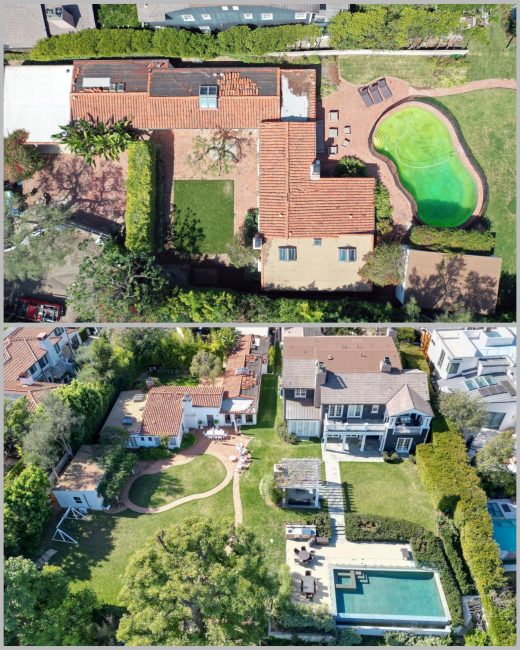
In a separate Post article, Louwerse noted that one major alteration to the contested property appears to have occurred quite recently.
“The couple suing Mayor Karen Bass over the Brentwood bungalow where Marilyn Monroe took her last breath has filled in the sparkling pool where the movie star found peace. Once a tranquil oasis for the blonde bombshell, aerial photographs show grass covering the spot where her famous pool once stood in the iconic backyard.
The sprawling adjacent lot, also owned by the new residents, features a massive mansion and newer pool. There are no barriers between the two lots, the photos show. It’s unclear when the homeowner filled in the pool once adorned with Spanish tiles that Monroe reportedly handpicked herself. Calls to the current homeowners were not returned …”
And finally, on March 20, Titus Wu reported for the Post on the City Council’s response to the Milstein-Bank lawsuit.
“The city of Los Angeles is pushing to dismiss a lawsuit in federal court from the owners of the Los Angeles home where Marilyn Monroe died, calling their legal action baseless and ‘premature.’
‘Despite the explicit notice that the Property was a known destination for tourists and a candidate for future landmark status, Plaintiffs proceeded with the $8.35 million purchase,’ the filing read.
There are still avenues for the homeowners to challenge the designation, they said, such as filing for a new demolition permit under the Historical-Cultural Monument designation. The homeowners never pursued that option, the city alleged.
‘The City’s designation does not encourage, let alone mandate, that Plaintiffs provide members of the public with access to the Property. The City’s action in no way appropriated a right to invade the property,’ attorneys wrote. ‘The alleged lack of economic utility is a function of Plaintiffs’ own choice not to maintain the improvements, rather than a restriction imposed by the City.’
The owners want to to force the city to let them demolish the house. A lower state court denied that petition and the homeowners are also currently challenging that decision in the state Court of Appeals.”
 The Marilyn Report