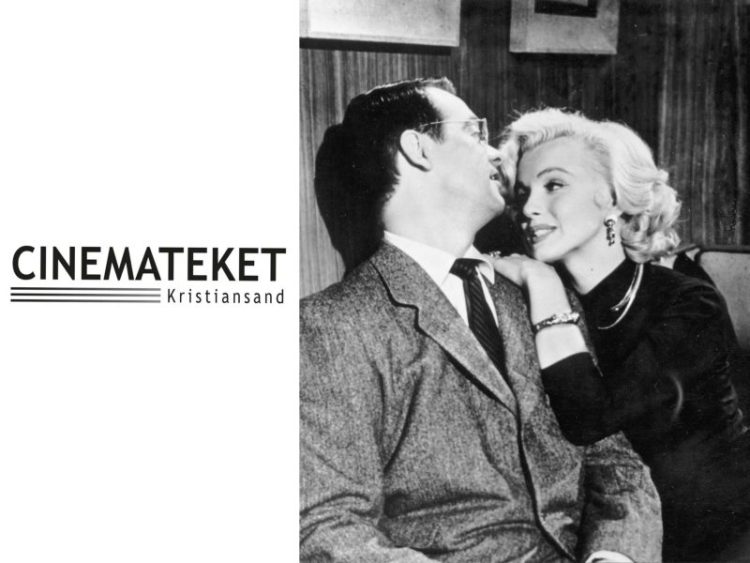
Gentlemen Prefer Blondes is showing at Cinemateket Kristiansand in Norway on Thursday, March 26, at 6pm.
“Gentlemen Prefer Blondes is a delightful 1950s musical comedy with a satirical twist. Marilyn Monroe plays Lorelei, a blonde cabaret artist with a strong interest in money, and the men who possess it. Together with her sharp-tongued friend Dorothy (Jane Russell), she gets into all sorts of trouble on a trip to France aboard a transatlantic cruise ship.
We’re celebrating the 100th anniversary of Marilyn Monroe’s birth. Among the many highlights of the film is Marilyn’s performance of ‘Diamonds Are a Girl’s Best Friend.’ Here, she strides down a grand staircase in a bold, hot pink dress, and in 1985 Madonna copied the iconic number in her ‘Material Girl’ video. Director Howard Hawks showed here that he could also make excellent screwball comedy, not just tough westerns and noirs.”
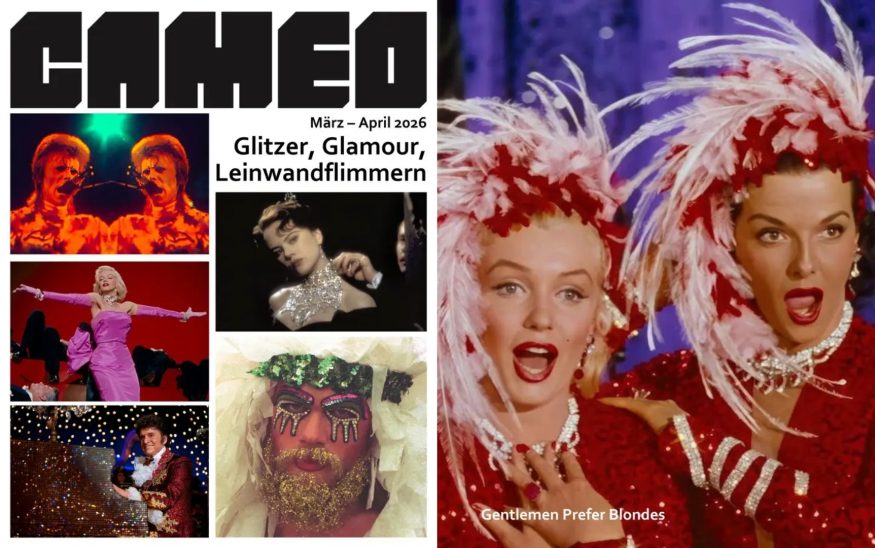
And at 6pm on Saturday, March 28, Gentlemen Prefer Blondes is coming to Kino Cameo in Winterthur, Switzerland, as part of an ongoing film series, Glitter, Glamour, Screen Flicker – Too Much is Just Enough.
“Glitter sparkles and shimmers, empowers and outrages. To coincide with the Glitter exhibition at the Gewerbemuseum Winterthur, which runs until mid-May, the Cameo cinema is showing films on the theme … On their way to Paris, two nightclub dancers glide across the deck of a luxury liner. Gentlemen Prefer Blondes captivates with opulent productions and dazzling sequins … Dorothy (Jane Russell) is searching for true love, while Lorelei (Marilyn Monroe) is looking for a good match. In glittering, colourful musical numbers, they showcase their seductive skills. Both relish navigating the sexually driven world of men. That they both find what they’re looking for at the end of this screwball comedy goes without saying.”
‘The film reaches its visual climax in a final stage sequence, a furioso finale that only Technicolor was capable of at the time. Monroe, in pure, shimmering pink, conquers a bright red stage, whose color shifts between light red and deep reddish-black depending on the lighting. Technicolor, at its technical and aesthetic peak in 1953, lends this extreme colour composition a special quality due to the sharp contrasts and clarity of the hues. From a visual aesthetic perspective, the great Technicolor musicals often demonstrate such experimental set and costume designs, in which colour is used as an end in itself and even chromatic disharmony is employed to stimulate the audience.’
– Susanne Marschall (Stadtkino Basel, 2012)
 The Marilyn Report