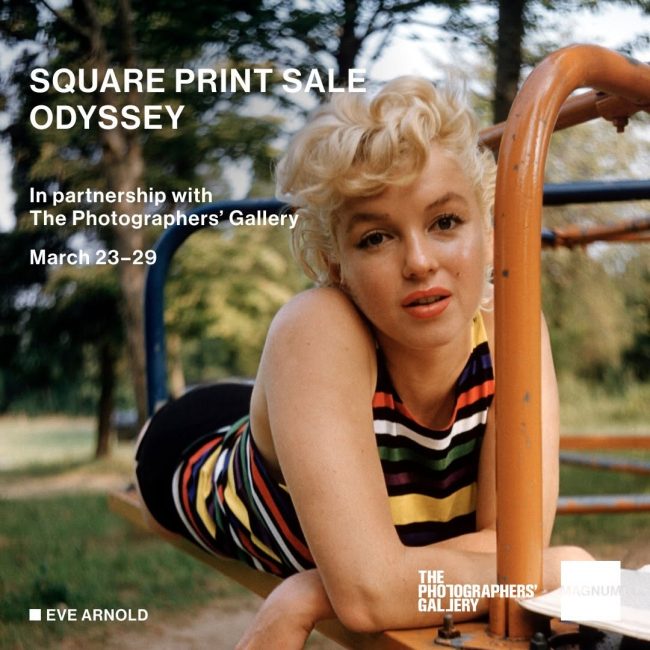
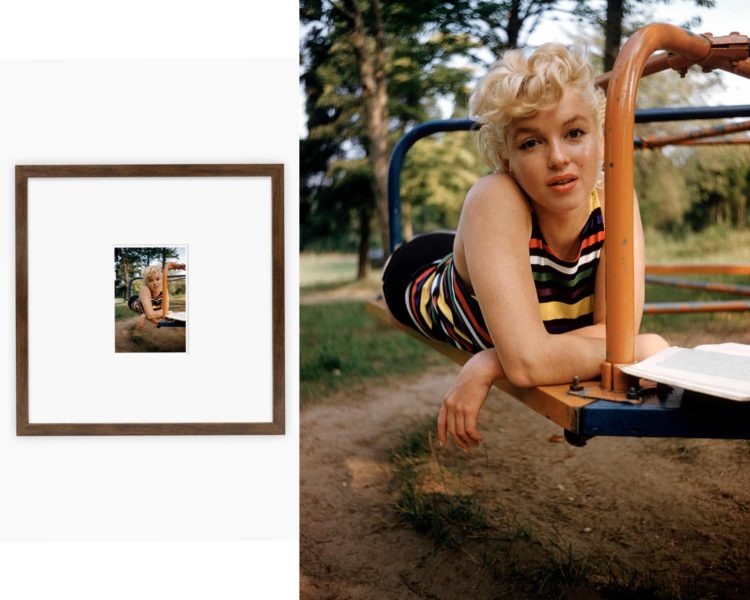
Here’s one for the Londoners: this week, Magnum Photos is offering an Eve Arnold portrait of Marilyn for £110 – stamped by the Arnold estate, and with framing options also available.
“Magnum is partnering with The Photographers’ Gallery for the upcoming Square Print Sale, titled Odyssey. Odyssey is more than a journey. It is a search for meaning, a crossing of thresholds, a story of growth and resilience. Bringing together a wide range of work from over 100 photographers, this Square Print Sale traces the paths we take across borders, through memory, and into the unknown. The collection offers work by artists including Martin Parr, Daidō Moriyama, Eve Arnold, Nadav Kander, Steve McCurry, and more.
Over 110 photographs are on offer as 6×6″ prints, hand-signed by the photographers or estate-stamped. Outside of the week-long sale window, they will never be made available in this format again. Odyssey is only available to collect until Sunday, March 29.”
Selected by The Guardian among other highlights from the sale, this image shows Marilyn in a children’s playground at Mount Sinai, New York during the Labour Day weekend in September 1955, reading James Joyce’s Ulysses – a novel inspired by Homer’s epic poem, The Odyssey.
And finally, some thoughts from the Arnold estate (via Instagram)…
“People often ask whether this image was staged. Eve answered that herself: ‘When we stopped at a local playground to photograph she got out the book and started to read while I loaded the film.’
That spontaneity is part of what makes the photograph so powerful. Over the course of ten years, Eve made some of the most intimate and revealing photographs ever taken of Marilyn. At a time when her image was so often controlled and mythologised, Eve saw something far more human: a woman who was thoughtful, vulnerable, curious and complex.
In this photograph we glimpse that inner life. Eve recalled that Marilyn kept Ulysses in her car and had been reading it for some time, drawn to the sound of Joyce’s language and reading passages aloud to herself. Far from a publicity construction, this was a genuine moment, and that is what gives the image its lasting force.
It shows us not Marilyn Monroe the legend, but Marilyn Monroe the person.”
 The Marilyn Report