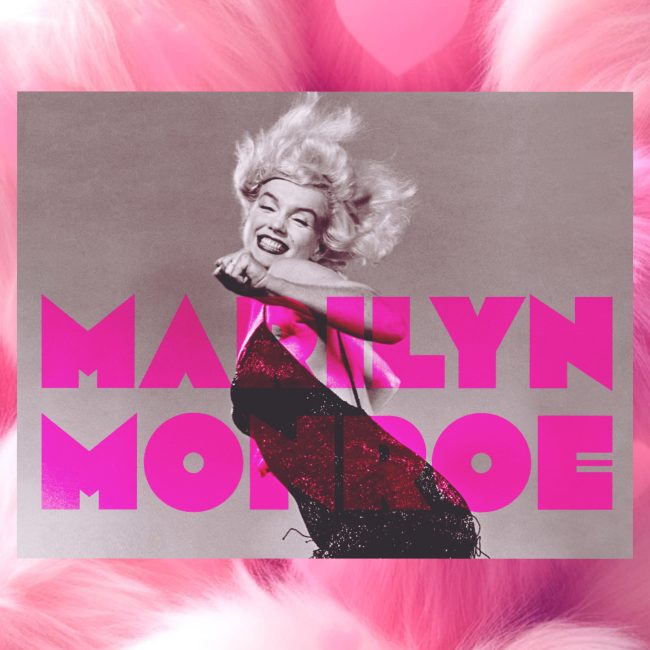
Marilyn Monroe: 100 Years, an exhibition and film retrospective, has opened at the Cinémathèque Française in Paris, and is on display until July 26.
“‘I can be smart when it matters, but most men don’t like it.’ The famous line from Howard Hawks’s Gentlemen Prefer Blondes (1953) could, in a way, sum things up well: Marilyn Monroe confronted the ruthless studio system during her short acting career in Hollywood (1946–1962) and remains today as much disparaged as an actress as she is adored as a star. Thanks to its scenographic possibilities, the exhibition is particularly well-suited to the visual opulence that Monroe embodied in the 1950s.
Her trajectory during the era of Technicolor and the widescreen is illustrated by glamorous publicity materials, a sexy wardrobe, portraits by renowned artists (Eve Arnold, Richard Avedon, Andy Warhol, etc.), and also newsreels analyzing every decision the celebrity made. Or commenting on her passing, which at the age of 36 opens the spectacular chapter of her posthumous ‘life’. This legacy is celebrated in an installation inspired by ballroom culture , which Madonna – the embodiment of pop culture in her ability to appropriate trends and make them shine – popularised long before Drag Race.
Monroe is primarily known as a cultural phenomenon, remembered more through her photographs than her films. She is less frequently considered as an actress who embodies and creates roles on screen. One of the exhibition’s aims is to refocus attention on her cinematic performances and invite visitors to view them differently. For to this day, it’s as if her roles are merely a reflection of emotional states experienced on chaotic film sets, closer to neurosis than to the mysterious psychological depth of other actors who trained at the Actors Studio.
The celebration of her centenary rests on a second observation: Monroe is shrouded in all sorts of legends, and her abundant biographical exegesis converges on the irresolvable question: who is the ‘real woman’ behind the sex symbol? However, what we know of Monroe is largely documented by contradictory accounts, and these interpretations themselves seem to be based on certain preconceptions, both of Hollywood icons and of women in general. The exhibition thus proposes to examine not only the actress, but also the beliefs that contributed to the star’s rise within the studios and accompanied her throughout her career.”
– Florence Tissot
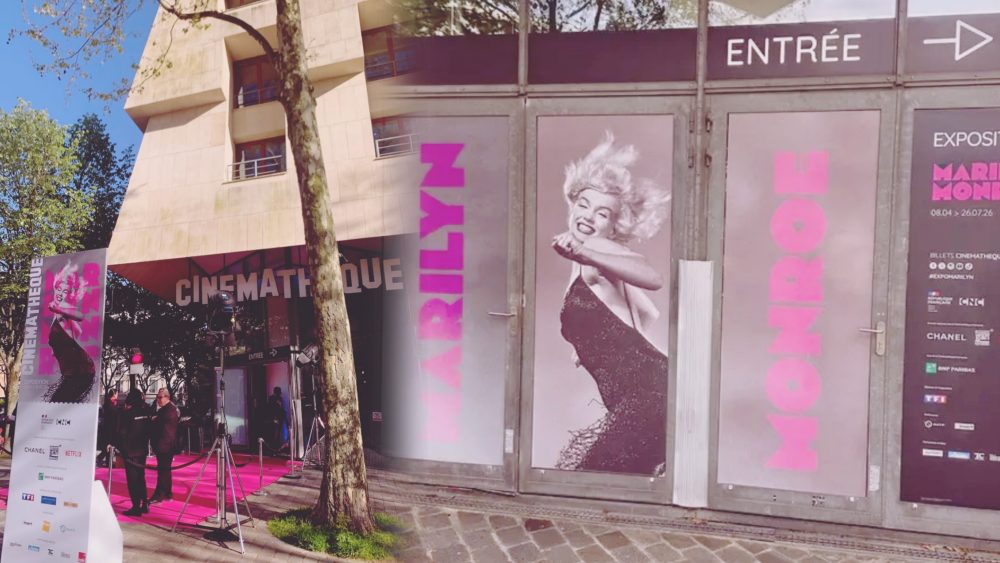
An outtake from Marilyn’s 1959 ‘Jump’ shoot with LIFE photographer Philippe Halsman is featured in posters for the exhibition. (A rare print of the original image was sold for $2,125 at Heritage Auctions in 2022.)


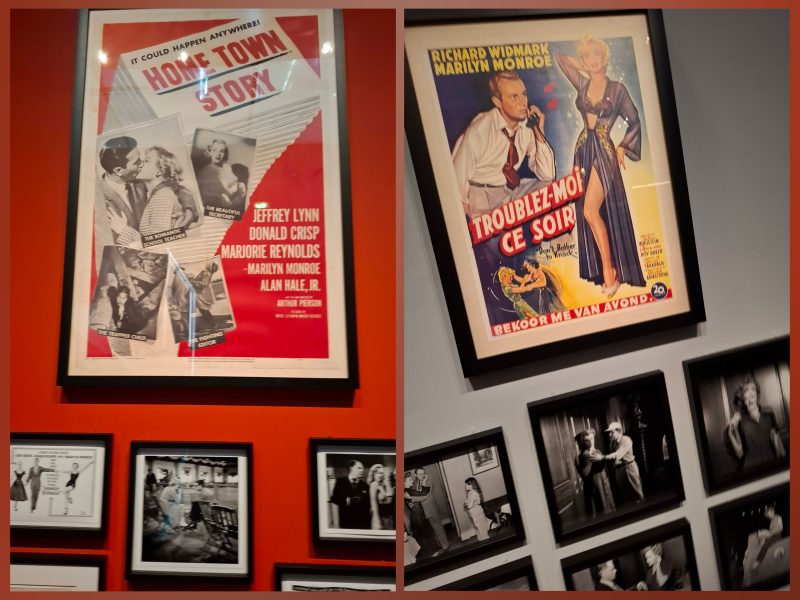
Marilyn’s transition from model to starlet is documented with posters and stills from films including Love Happy (1949), Hometown Story (1950), Monkey Business and Don’t Bother to Knock (1952.)
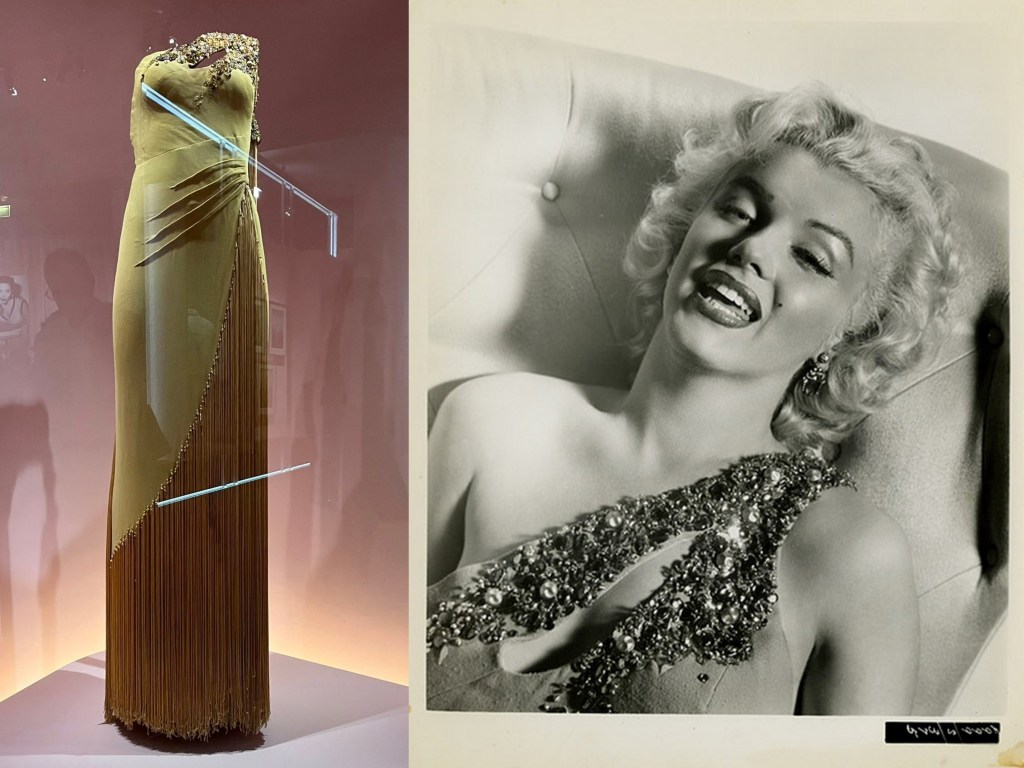
Marilyn poses for John Florea in a Charles LeMaire gown, previously worn by Hildegarde Knef in The Snows of Kilimanjaro (1952.)

A glamour shot for Frank Powolny – this negligee set is now part of the Hollywood Collection owned by Marilyn Remembered founder Greg Schreiner.
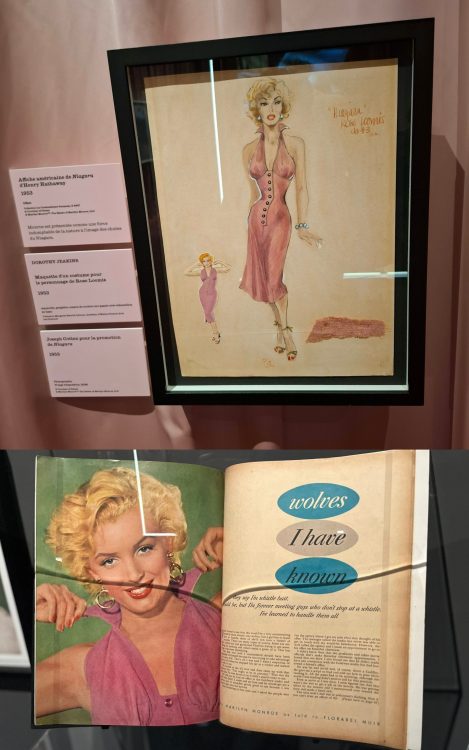
Costume sketch by Dorothy Jeakins – Marilyn wore the dress for Carlyle Blackwell Jr.’s photo accompanying ‘Wolves I Have Known,’ her 1953 article for Motion Picture magazine.

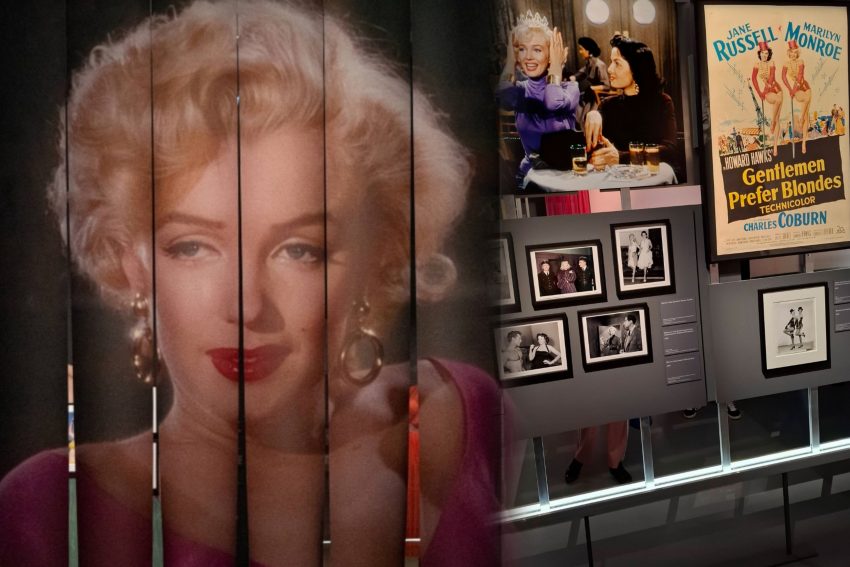
Marilyn went from ‘femme fatale’ to comedienne in her next film, Gentlemen Prefer Blondes.
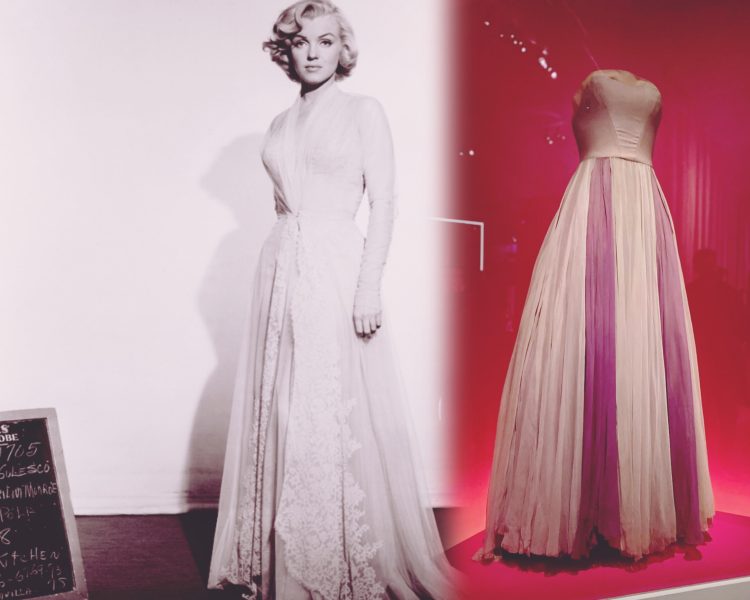
This flowing purple gown was part of an ensemble designed by Travilla for a deleted scene from How to Marry a Millionaire.
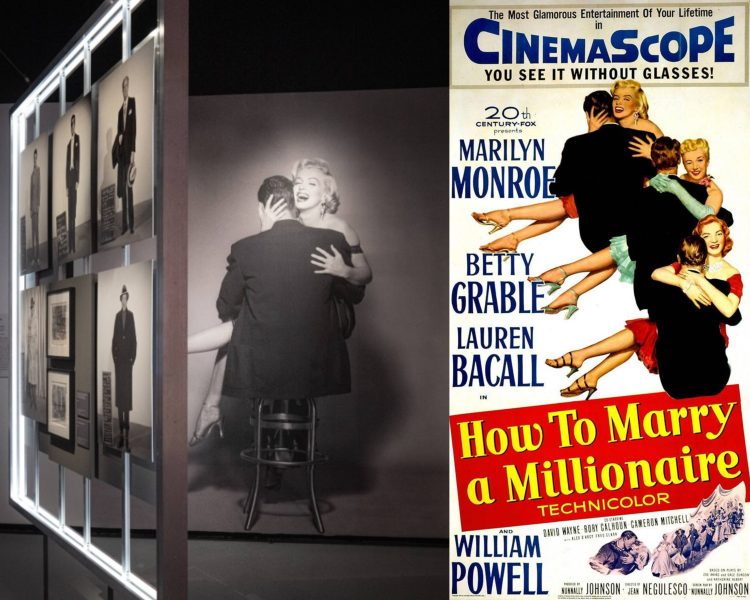
Marilyn laughs for photographer John Florea while embracing a mystery man. The image was used in posters for Millionaire, with co-stars Betty Grable and Lauren Bacall shown in similar poses.
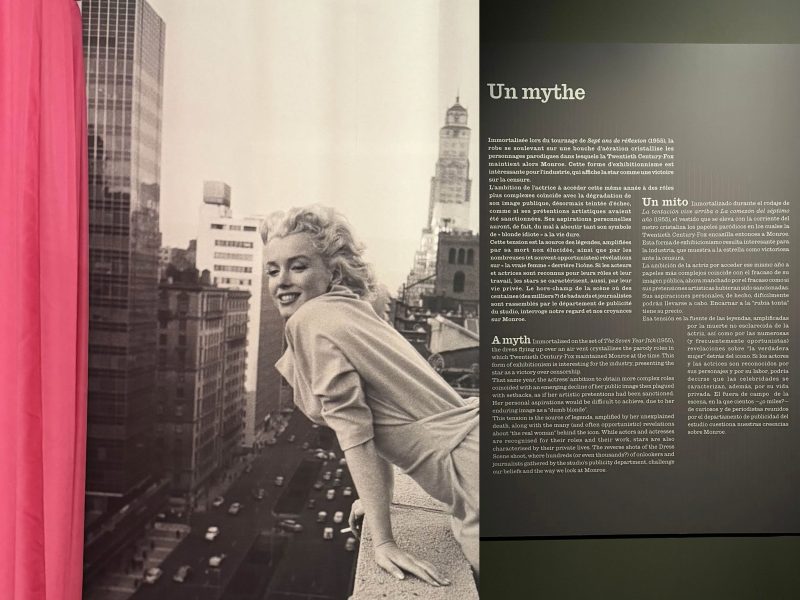
After her success in The Seven Year Itch (1955) – which gave us the ‘mythic’ image of Marilyn’s dress blowing as she stands over a subway grate – she moved to New York.

This silk evening cape, worn at the premiere of East of Eden, is now part of the Marilyn Monroe Collection, owned by Scott Fortner, co-president of Marilyn Remembered.

A pink silk blouse and black wool pants from Marilyn’s personal wardrobe. Both items were purchased from her favourite Los Angeles boutique, Jax, and are typical of her off-duty style.

A floor-length halterneck evening gown, also designed by Jax, worn by Marilyn in Let’s Make Love (1960.) She also owned several other knee-length dresses in the same style, in red, orange, grey, and white.

Marilyn’s white fox fur, worn at several public events and in her last completed film, The Misfits (1961.)
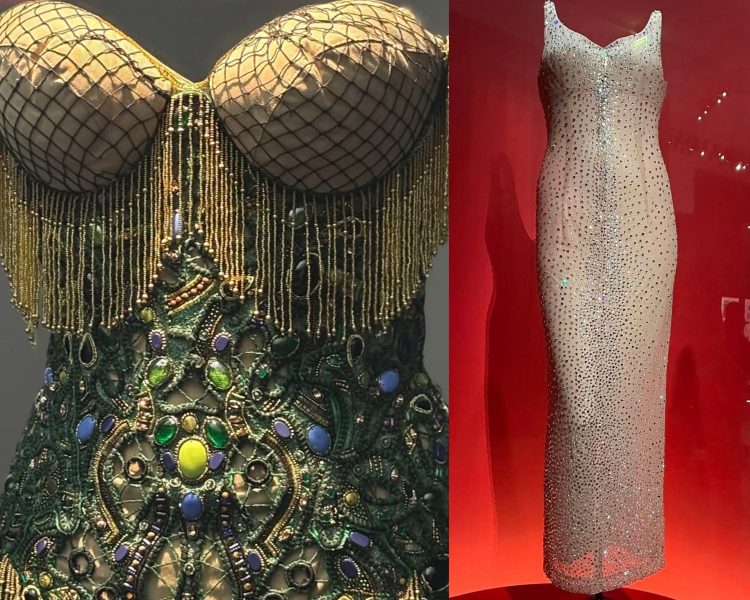
Her influence is evident in this beaded corset, inspired by a costume from Bus Stop (1956); and a replica of her ‘Happy Birthday Mr President’ gown, designed for a TV miniseries, The Women of Camelot.
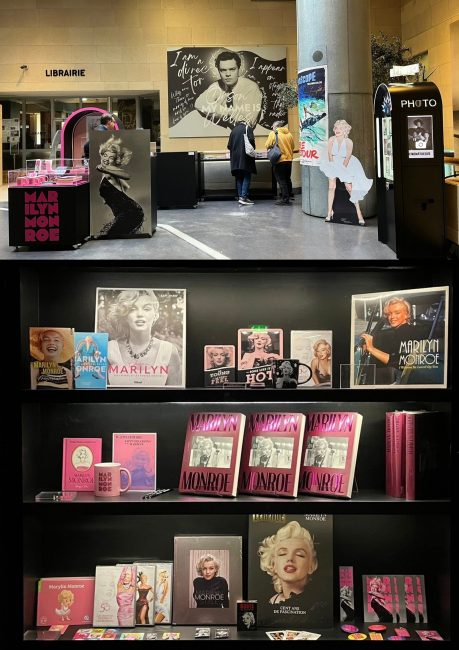
A selection of Monroe memorabilia is available from the Cinémathèque Française, including an exhibition catalogue, Marilyn Monroe: 100 Years (also available via Amazon in the UK.)

“The official exhibition catalogue, unique in its kind, invites readers to rediscover the Hollywood star from a new perspective: that of her acting talent. In addition to numerous photographs of an iconic, Hollywood, and photogenic Marilyn, curator Florence Tissot has selected previously unseen stills of striking colour and density, created from Technicolour films in the collections of the Cinémathèque Française. These rare images, meticulously reproduced here, and the accompanying essays offer a little-known portrait of Monroe: that of an actress and performer of undeniable talent, all too often overshadowed by the myth of the sex symbol.”
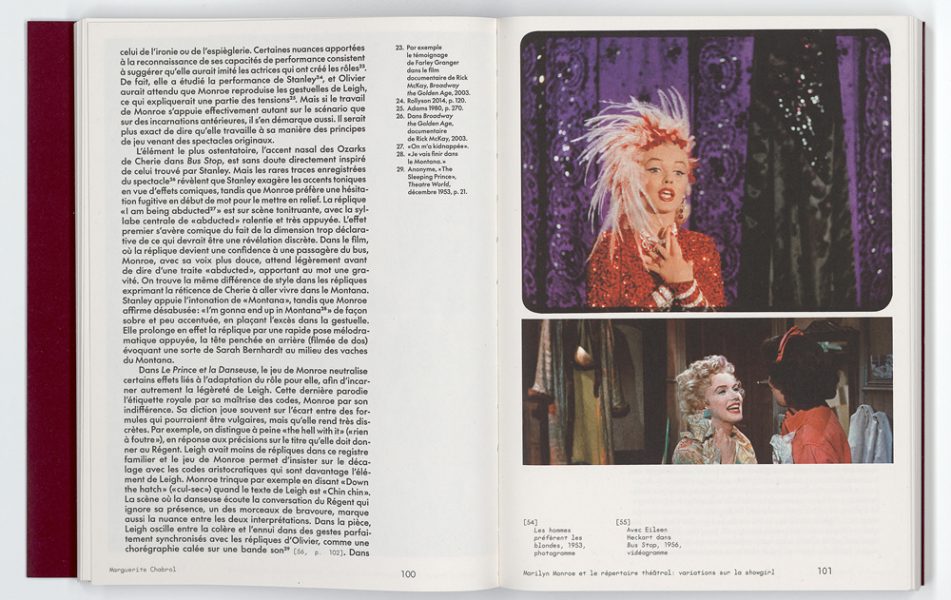
A theatrical retrospective is also now underway at the Cinémathèque, with 23 of Marilyn’s films ranging from early bit parts to her iconic starring roles.
- A series of special events began last week with a lecture from Marguerite Chabrol on Marilyn’s key influences, from choreographer Jack Cole to the Actors Studio; and a post-screening discussion of Bus Stop with film scholar Richard Dyer.
- Marilyn Monroe: The Last Days, Patty Ivins’ 2001 documentary featuring extensive footage from the unfinished Something’s Got to Give (1962), is also on the roster. This event is sold out, but return tickets may be available 30 minutes prior to the 3:00 pm screening on Sunday, April 19.
- Niagara, showing on Saturday, April 18, will be followed by a discussion with Florence Tissot; and while Marilyn Monroe: The Last Days, Patty Ivins’ 2001 documentary featuring extensive footage from the unfinished Something’s Got to Give (1962), is sold out, return tickets may be available 30 minutes prior to the 3:00 pm screening on Sunday, April 19.
- Murielle Joudet will discuss The Seven Year Itch on Thursday, April 23; and on Monday, April 27, Elias Hérody takes a closer look at one of Marilyn’s minor roles in Hometown Story, ‘a moral fable transformed into a pro-industry plea … a politically interesting film with effective direction, a reflection of the era …’

 The Marilyn Report