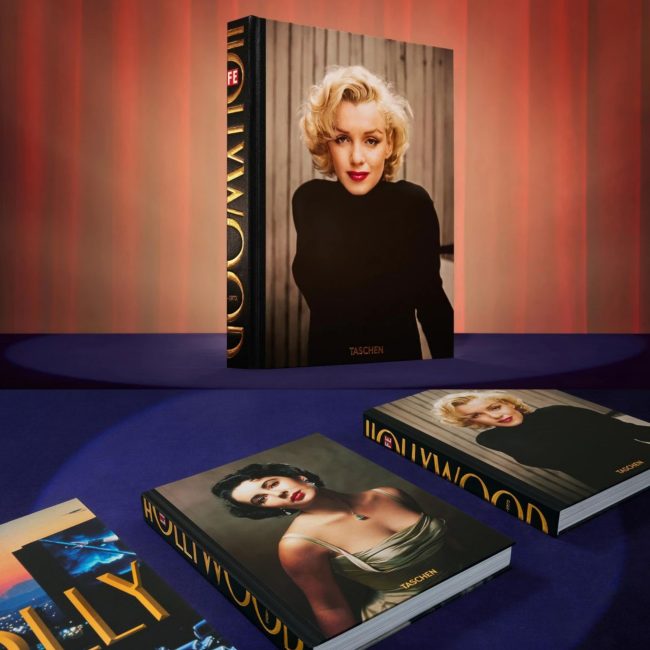
LIFE: Hollywood is a two-volume boxed set celebrating the American weekly magazine and how it chronicled the movie industry’s highs and lows through the medium of photojournalism. A 1949 portrait of Elizabeth Taylor by Philippe Halsman covers the first book, which explores cinema’s ‘golden age’, from the mid-1930s to the 1950s; and Alfred Eisenstaedt’s 1953 photo of Marilyn covers the second volume, continuing through to the early 1970s.
“One of the many things to love about the incalculably lovable LIFE: Hollywood is that it makes this lost world real with irrefutable evidence of candid glamour and creative labour. As Lucy Sante writes in her introduction, this is what set the LIFE Hollywood photographer apart: given the magazine’s audience, ‘it was necessary to impress readers with the fact that Hollywood was an actual industry …’
Poring over these images, printed in such vivid colour that I wanted to lick the paper, I gasped on every page … They are alive here: not interrogated or exposed, as it flatters us to regard the ‘real’ Marilyn Monroe, sad, exploited, and scared, but in their habitat, a life of personality and success, lived their way.
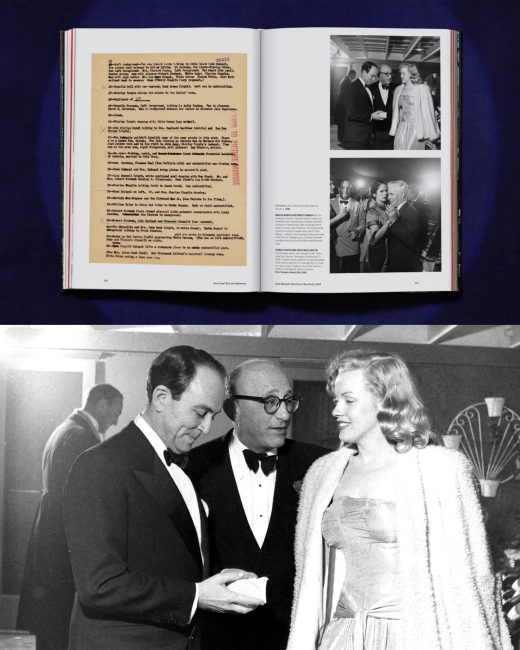
Our guide through the soundstages, restaurants, parties, offices, and private homes of this dream world that was not a dream is top-notch film historian Justin Humphreys, whose captions are as carefully considered as a Vincente Minnelli frame. Of Monroe, appearing at a party hosted by producer Sam Spiegel, Humphreys tells us, ‘On the cusp of stardom, she was graduating from bit parts to larger roles, like in Love Happy—notably, she’s wearing a dress she wore in that film at Spiegel’s party.’ Now, that’s a fellow who knows exactly what he’s looking at.
Sante, writing about the pictures of breathtakingly beautiful leading ladies, disapprovingly invokes ‘the male gaze’ … It wasn’t the image-making technology that left us awestruck; if it were, anyone could be made a star but the stars themselves. Nor were stars merely ‘eye candy,’ as Sante scolds, but box-office titans with their own hearts and minds, numinously alive to men and women both. Anyone with this book, a pulse, and two open eyes can see for themselves. There really was a Hollywood.”
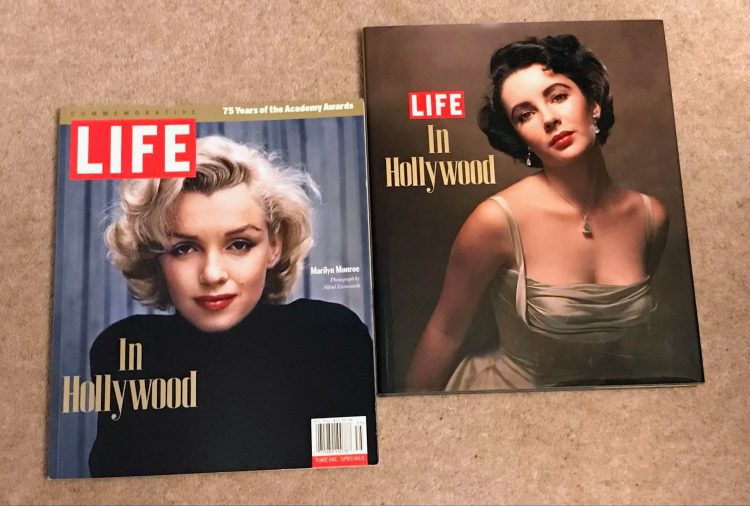
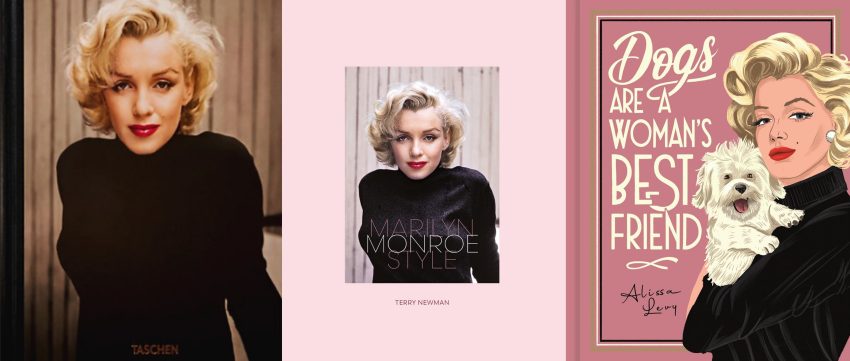
Back in 2003, a series of LIFE in Hollywood magazine specials used the same images, with Taylor also covering a composite hardback edition. While underused in Marilyn’s time, the Eisenstaedt photos are ubiquitous today, gracing three book covers in this year alone.
LIFE: Hollywood is published by Taschen, the world’s leading luxury art book house, at a price of £200 (or £160 via Amazon.) Perhaps, as with their Marilyn-related titles by De Dienes and Lawrence Schiller, a budget version will follow?
Among the hundreds of archive images to be found within its pages is this photo by Peter Stackpole, showing Marilyn with Sam Spiegel (centre) at his New Year’s Eve party in 1948. At Spiegel’s left is Jean Negulesco, who would direct Marilyn in How to Marry a Millionaire (1953.)
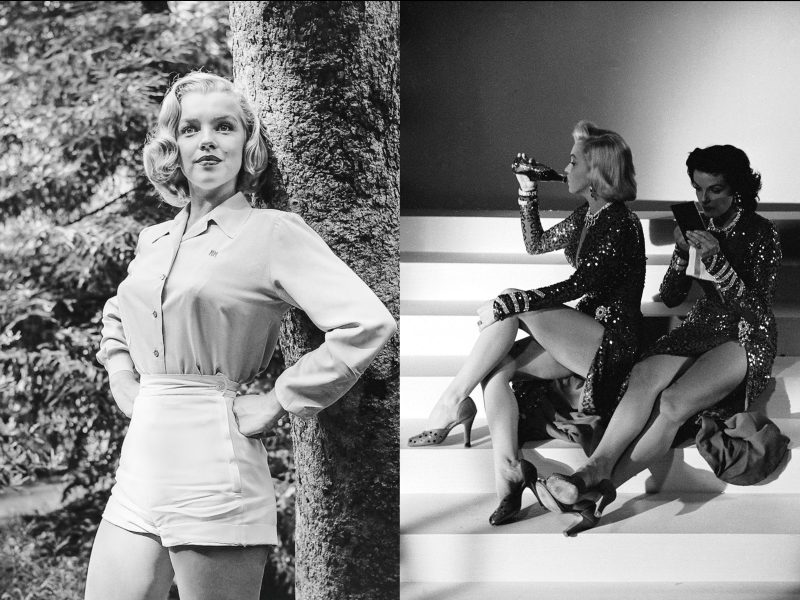
At left: Marilyn in Griffith Park, 1950. Ed Clark’s photos were rejected because his editor had never heard of the actress, and were lost until the LIFE archive went online. And at right: By 1953, Marilyn was a full-blown star when Clark took this candid photo on the Gentlemen Prefer Blondes set with Jane Russell, repurposed for a Coke ad in 2015.
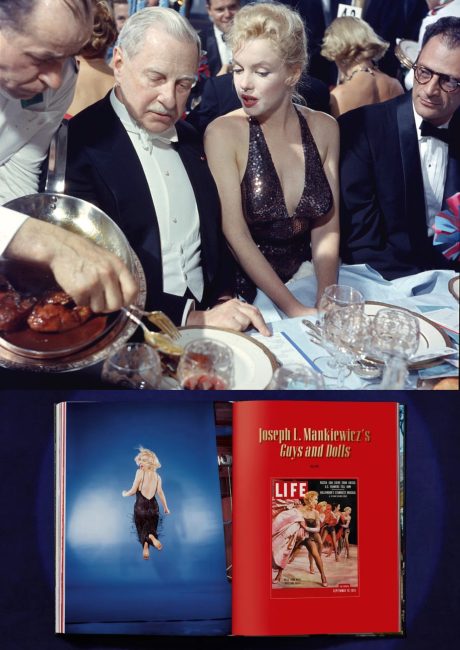
Above, at top: Peter Stackpole photographed Marilyn and husband Arthur Miller dining alongside financier Winthrop W. Aldrich – formerly the US Ambassador to Great Britain – during the April in Paris ball at the Waldorf-Astoria Hotel, NYC, in 1957. At bottom: Philippe Halsman‘s famous portrait of Marilyn jumping made the cover of LIFE in 1959. (Halsman also shot her first LIFE cover story in 1952.)
And below, Marilyn photographed by John Bryson in her dressing room at Twentieth Century-Fox during filming of Let’s Make Love (1960), with hairstylist Sydney Guilaroff, makeup artist Allan ‘Whitey’ Snyder, and wardrobe mistress Marjorie Plecher all in attendance.

 The Marilyn Report