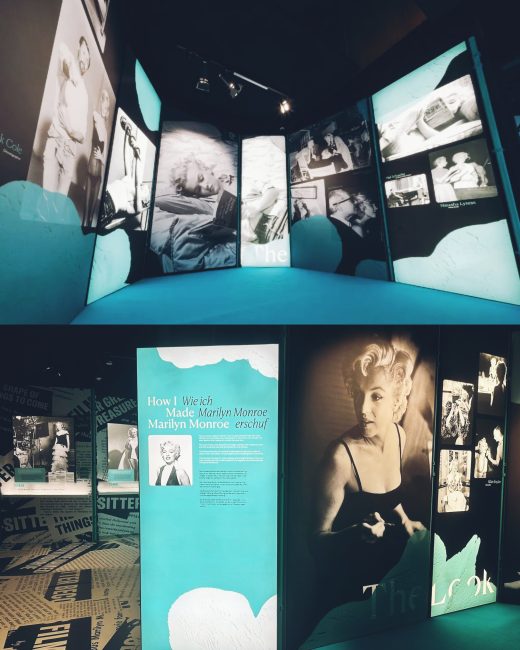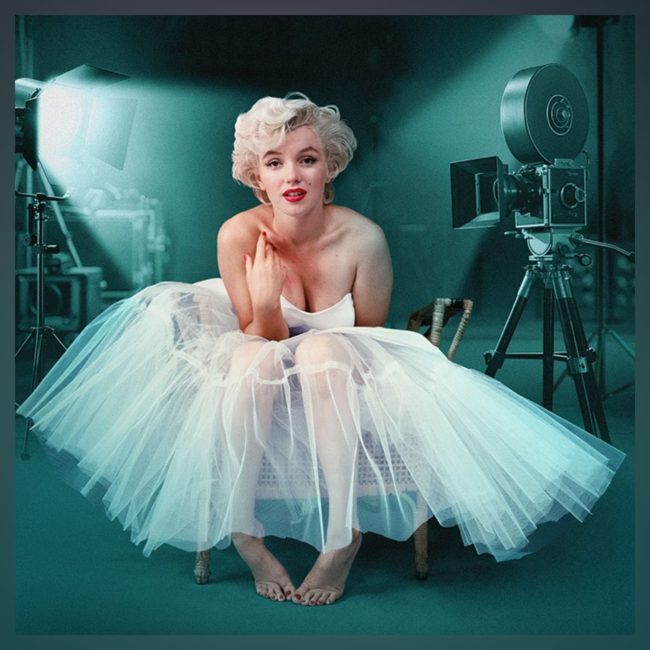
Becoming Marilyn Monroe: An Official Immersive Experience is now open at Lichthalle MAAG in Zurich, Switzerland until June 28.
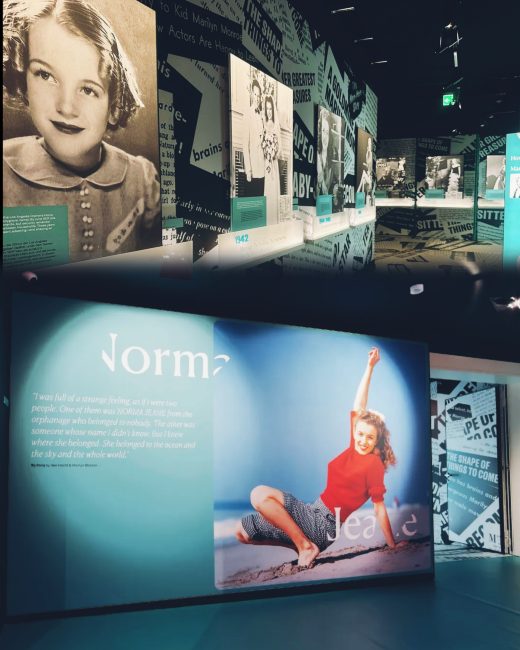
“In honour of Marilyn Monroe’s 100th birthday/centenary, BECOMING MARILYN MONROE was created. The world’s first immersive exhibition dedicated to this legend. Discover who Norma Jeane really was and how she became Marilyn Monroe.
This interactive exhibition is an emotional journey in the footsteps of an icon. It reveals the woman behind the myth and sheds light on a side of her life that many people are unaware of. A strong woman – brave and radically honest. Visitors are immersed in glamour and vulnerability, in public adoration and private doubts. They discover how Norma Jeane became a legend and why Marilyn Monroe continues to inspire generations to this day.
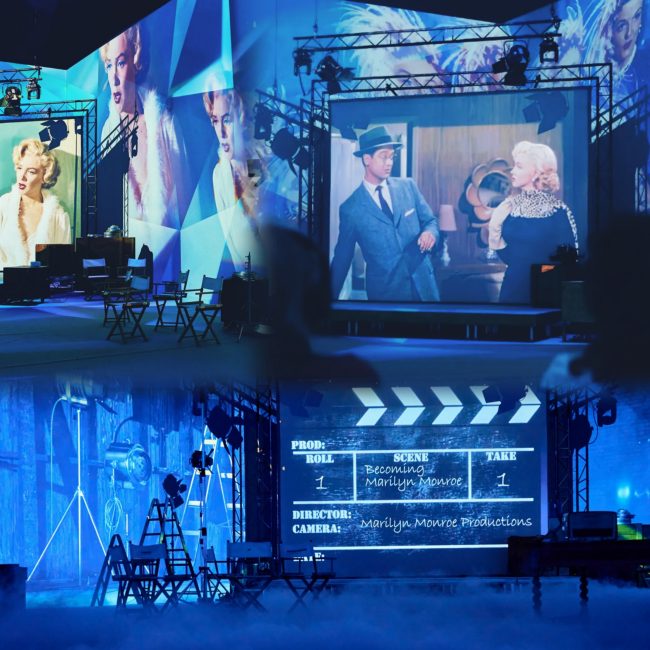
Featuring stunning visual productions, interactive elements and never-before-seen perspectives – all in the style of a 1950s film studio – this world premiere celebrates the 100th birthday of a woman who shaped culture and refused to be defined.
An exhibition about fame and freedom. About strength and self-determination. About a woman who was far ahead of her time.”
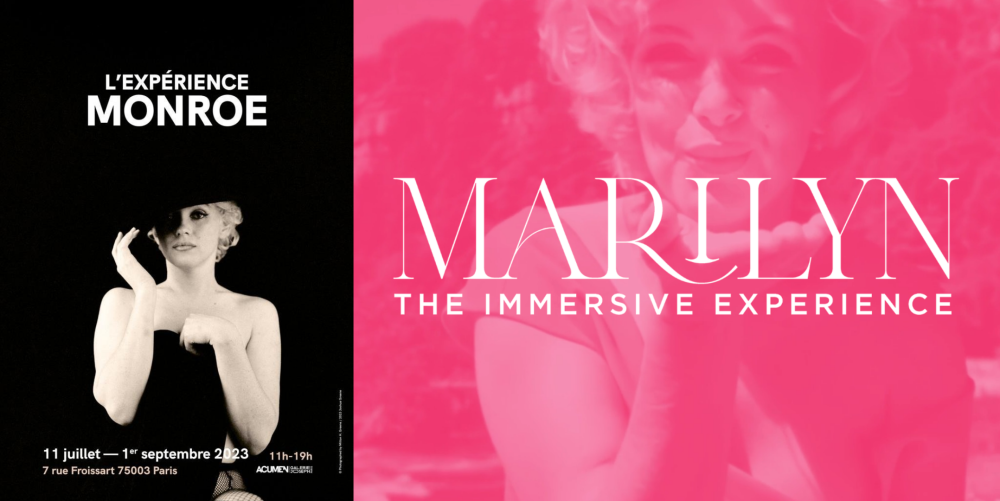
Back in 2023, L’Experience Monroe – a virtual reality installation on a smaller scale – was exhibited in Paris; while Marilyn: The Immersive Experience – originally set for a summer 2026 opening in Los Angeles – has now been postponed.
Becoming Marilyn Monroe was recently featured in AV Interactive magazine…
“Rather than retelling a familiar story, Becoming Marilyn Monroe looks at how that story was constructed, from Norma Jeane Mortenson through to the making of Marilyn Monroe. The resulting experience, which has been created by The Storytelling Company, sits somewhere between exhibition and film.
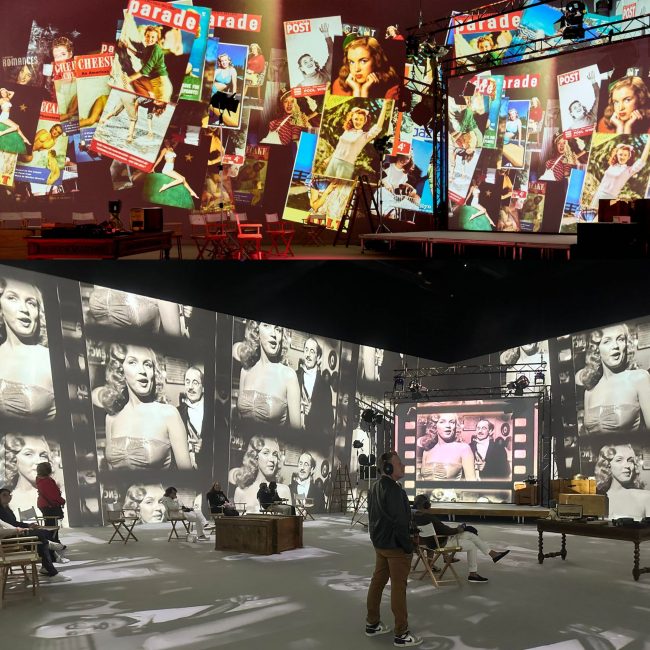
Visitors move through a sequence of environments that shift in scale and tone, from intimate, reflective moments into a large-format immersive sequence, before opening out into a series of spaces that explore the mechanics of film-making and celebrity.
One of the first conversations centred on how the story should be heard. Much of the narrative is drawn directly from Monroe’s own words, including material from her personal diaries, which shaped the direction of the audio design.
Joe Callister, technical director at Auditoria, says: ‘It felt important that the voice stayed close to the listener. If you move that out into a shared loudspeaker system, you lose the intimacy of Marilyn’s voice. The audio guides gave us a way to keep it more personal, which suits the tone of the exhibition.’
That decision introduced a different set of challenges. The exhibition runs in English, German and French, with visitors moving through the same spaces at the same time. ‘You’ve got people experiencing the same moment in different languages, but it still needs to feel like a shared experience,’ says Callister. ‘A lot of the work is making sure that stays in sync.’
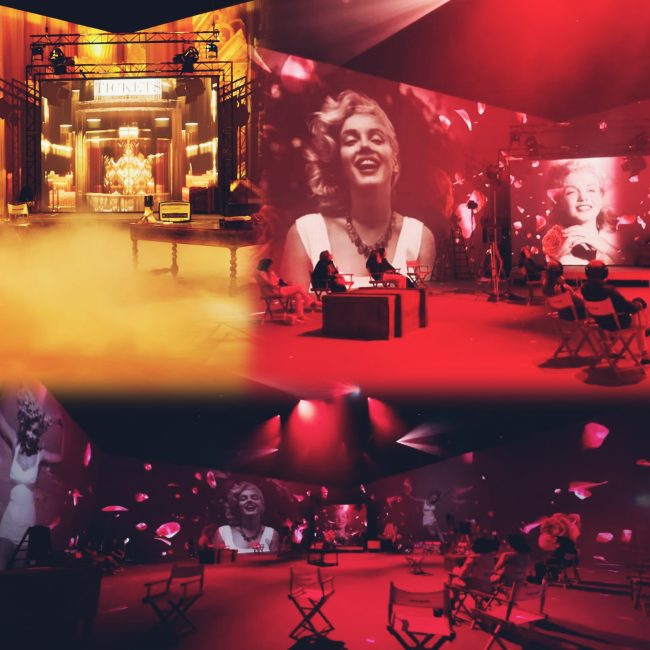
Alongside the audio system, the exhibition brings together a substantial projection and media infrastructure. About 18 projectors are deployed across the space to create an immersive environment across the walls and floor, as well as additional high-resolution surfaces, and a holographic sequence.
The result is a technically layered installation, but one that remains deliberately understated in how it presents itself. ‘There’s quite a lot going on behind the scenes,’ adds Callister. ‘But the aim is that none of that is what people notice. If it’s working properly, you’re just following the story.'”
Monroe fan Peter Denlo shared his thoughts on the exhibition with the Marilyn Remembered Facebook group.
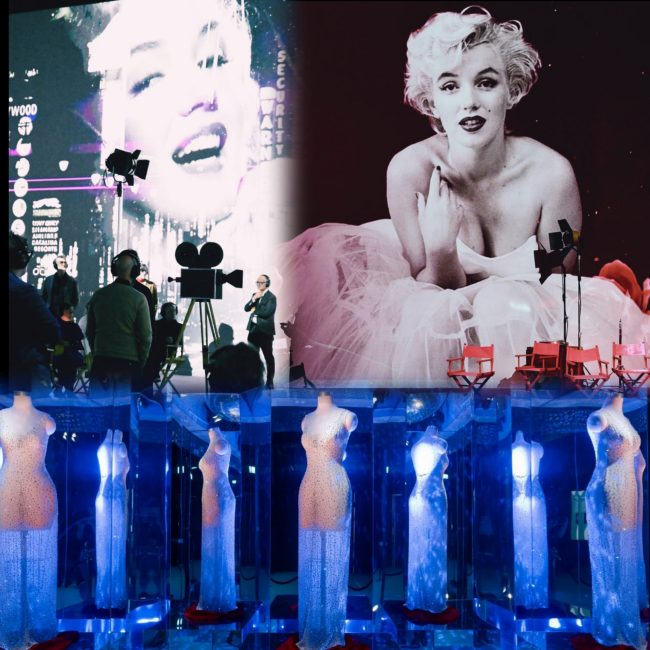
“It’s a neatly assembled show featuring mostly well-known photographs, but notably lacking in original artefacts — no dresses, no personal items, no memorabilia, and not even books or magazines on display.
Visitors are guided through Marilyn’s early life: her childhood, her discovery at the Radioplane munitions plant, her modelling years, and her transition into acting, ultimately becoming Marilyn Monroe. The exhibition more or less concludes with her rise to stardom in 1953, even though a handful of later milestones are briefly mentioned, such as the founding of Marilyn Monroe Productions (MMP), The Seven Year Itch subway scene, or the JFK gala.
The exhibition is structured in three parts. First, you walk through a corridor and rooms that trace her journey from infancy to stardom. The second part leads into a large immersive space where a 30-minute audiovisual show plays. Technically, this segment is well executed, and the looks are beautiful … In the third section, visitors move through stylised recreations: An imagined MMP office, a wardrobe department, or a sidewalk scene where you can pose for photos next to Marilyn as her dress billows upward. The experience ends with Marilyn singing ‘Happy Birthday’ … Overall, the exhibition remains firmly on the surface and rarely ventures into deeper or more nuanced territory.
The narrative leans heavily into portraying Marilyn as a feminist trailblazer, while much of her personal life is left out. Apart from her childhood and her marriage to Jim Dougherty, her private life and relationships are entirely omitted. Strikingly, neither Joe DiMaggio nor Arthur Miller are mentioned at all. That said, the exhibition does stay focused on her career and her rise to fame. Perhaps unsurprisingly (and fortunately), it also avoids any engagement with conspiracy theories. Her death is referenced only in passing, in a single line.”