Amid all the fanfare surrounding the 100th anniversary of Marilyn’s birth, her private struggles have inspired two mental health initiatives in the United States.
In 1935, when her mother Gladys suffered a nervous breakdown, nine-year-old Norma Jeane was admitted to the Los Angeles Orphans Home. As noted in a Hollywood Archivist post for Instagram, she lived there for eighteen months.
Now known as Hollygrove, the former residential facility now offers mental and behavioural healthcare to children and families. An appeal for donations has been launched in honour of Marilyn’s centenary.

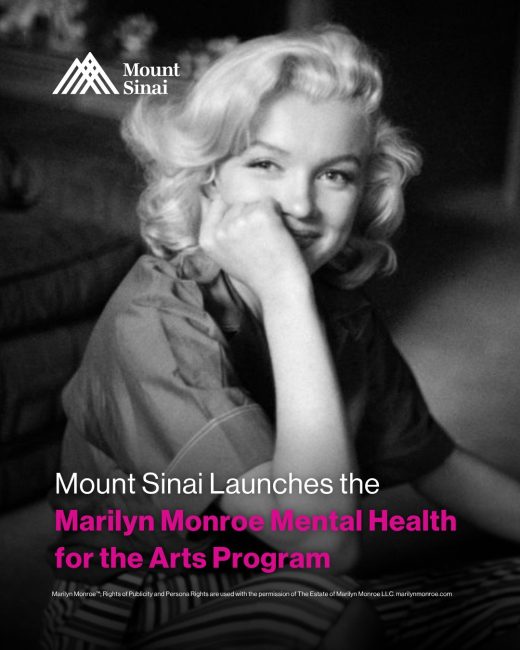
And in New York, the Mount Sinai Health System has launched Marilyn Monroe Mental Health for the Arts, in partnership with the Samuel J. Friedman Health Centre for the Performing Arts in the heart of Manhattan’s theatre district.
“The programme honours a star who understood the pressures of the performing arts and of living both in and out of the spotlight. During her lifetime, she championed greater understanding and support for mental health, and she set aside a portion of her estate to advance that cause. Over time, that bequest diminished—but its purpose remains deeply relevant today.
Under the direction of Shilpa R. Taufique, PhD, Chief of the Division of Psychology for the Mount Sinai Health System, the initiative provides dedicated mental health services for artists at the Friedman Health Centre while connecting them to Mount Sinai’s broader network of care.
The new programme was made possible through an initial $100,000 gift from Lori Hall, a cultural steward and mental health advocate working to advance Marilyn Monroe’s humanitarian legacy.
‘I am honored to help close the circle on Marilyn’s final bequest. Marilyn Monroe remains one of the most widely recognised and misunderstood figures in modern history,’ said Ms. Hall. ‘I can think of no better way to celebrate her 100th birthday than by fulfilling this wish.'”
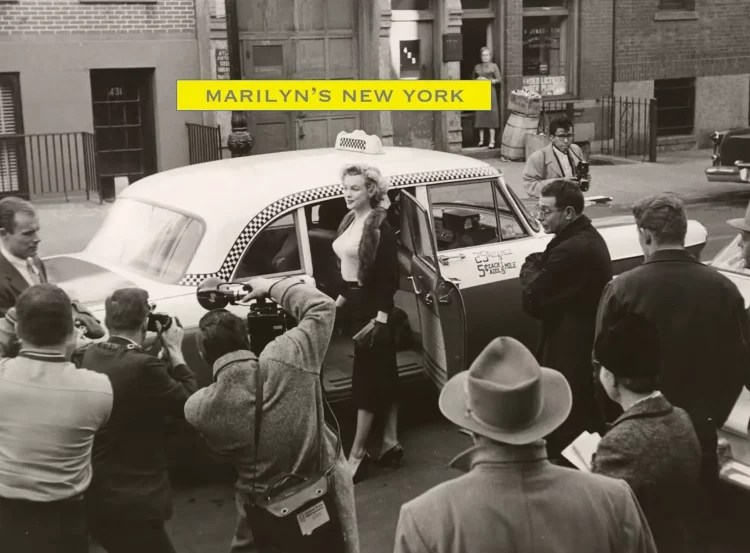
Raising public awareness for the programme, ‘Marilyn’s New York‘ – a pop-up exhibit focusing on her life in the city – has been on display at Grand Central Terminal this week, closing today.
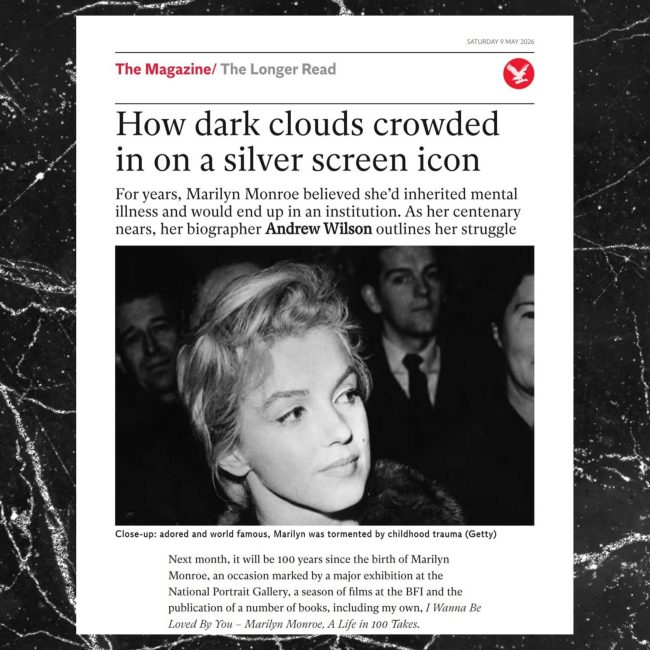
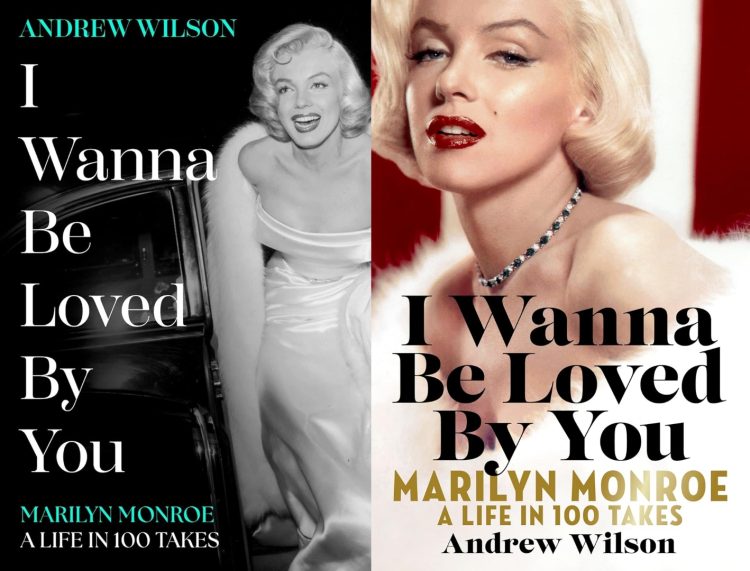
And finally, the British author Andrew Wilson – whose new biography, I Wanna Be Loved By You, reaches US shores in June – has written about Marilyn’s childhood trauma and lifelong struggle with mental illness for The Independent.
“Fame was fickle, Monroe said in her last interview, which she gave to Life magazine. ‘It’s like caviar,’ she observed. Although a little bit of it was delicious, if you had it ‘every damn day’, it was too much. ‘It’s nothing I’m counting on,’ she said, reflecting on her status as a global star and the prospect of a future lived away from the public eye. ‘And I would say, gee, it was a painful time when I was famous.’
Marilyn’s interest in the issue of mental health was deeply personal. Her maternal grandfather, Otis, suffered from general paresis, a condition brought about by syphilis of the brain, and died in an institution at the age of 43 in 1909. Her maternal grandmother, Della, suffered from ‘manic-depressive psychosis’, a serious condition that resulted in an attempt to smother the baby Marilyn, then known as Norma Jeane, in her cot.
After this, Della was committed and died in a state hospital in California in 1927. Otis and Della’s daughter, Gladys – Marilyn’s mother – also showed signs of mental illness; she was diagnosed as having schizophrenia and just 12 days after she gave birth in June 1926 she placed her illegitimate daughter in foster care.
For years, Marilyn believed she had inherited the mental illness, thinking her bloodline was cursed. ‘For a long time I was scared I’d find out that I was like my mother and end up in the crazy house,’ she said. ‘I wonder when I break down if I’m not tough enough – like her.’
At the age of eight, when Norma Jeane was living with one of her foster families, she was sexually abused by a man who boarded in the same house … Experts who studied Monroe’s case concluded that there was a clear connection between the young girl’s experience of sexual abuse and her future emotional difficulties. ‘The result is a child in a woman’s body,’ observed Pamala Klein and Zsuzsanna Adler in a 1986 article, ‘portraying a certain innocence by needing to play the seductress in the long and painful process of trying to come to terms with her abuse, and with her perception of men.’
One of the other consequences of the trauma she experienced in early life was Marilyn’s increasing dependence on drugs. Although it seems she first turned to painkillers and sleeping pills as a way to cope with endometriosis, a chronic condition in which cells similar to those lining the womb grow outside the uterus, the lure of the drugs also eased her psychological distress.
In an unpublished letter, Marilyn’s last psychoanalyst, the Los Angeles-based therapist Dr Ralph Greenson, wrote that the star’s dependence on sleeping pills ‘was her way of escaping the miseries of life.’ In the same letter, which Dr Greenson wrote after Marilyn’s death, he concluded that ‘Marilyn was a bottomless well: one could not fill her, with all the deep, deep holes her lack of family had left her with.’
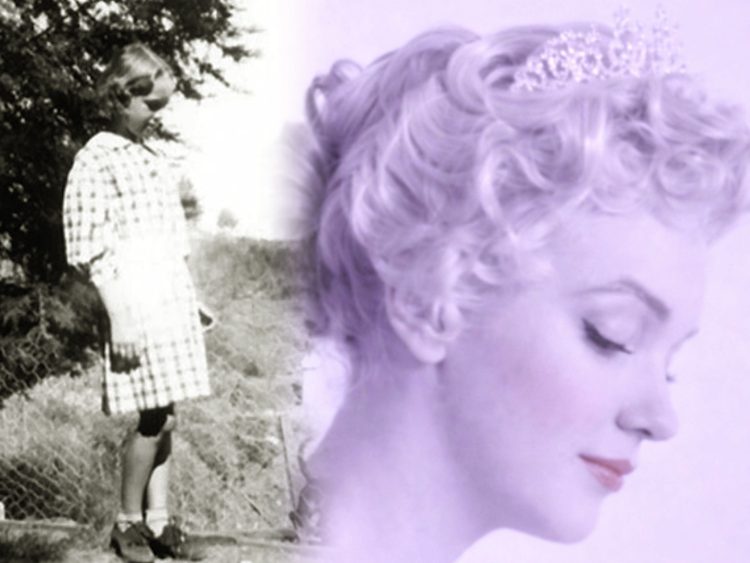
Marilyn was always searching for a way to understand the source of her problems. She first underwent psychoanalysis in 1951, and was encouraged to take it seriously by her New York acting coach and promoter of ‘the Method’ technique, Lee Strasberg.
In the summer of 1956, when Marilyn was in England filming The Prince and the Showgirl, she underwent a week of therapy with Anna Freud, Sigmund Freud’s daughter, at her house in Hampstead, north London, now the Freud Museum.
She told Anna Freud that she had first read Freud’s classic work The Interpretation of Dreams when she was 21. After the sessions, Anna Freud diagnosed Marilyn with ’emotional instability, exaggerated impulsiveness … tendency to depression in case of rejection, [and] paranoid with schizophrenic elements’. Another of her doctors believed the star suffered from bipolar disorder.
From 1960, Marilyn began to see Dr Greenson, often for daily sessions. But when she didn’t respond to traditional analysis – 50 minutes on the couch and therapy, which involved strict boundaries – the doctor tried a more unconventional approach. After sessions at his house, he encouraged Marilyn to socialise with his wife and two adult children. ‘Marilyn was always looking for a family,’ said her publicist, Pat Newcomb.
By December 1961, according to Dr Greenson, Marilyn exhibited all the signs of a ‘borderline paranoid addict’. He was so worried about her state of mind – she talked about retiring from the movie business and even suicide – that, for a time, he placed nurses in her apartment to watch over her day and night. Marilyn had become dependent on drugs that, in her words, gave her a ‘womby-tomby’ feeling. In the last two months of her life, she was prescribed 830 units of medication, enough to kill someone several times over.
On 4 August 1962, Marilyn died from an overdose of Nembutal and chloral hydrate. The coroner ruled it a probable suicide, but many others believe it to be an accidental death; some even claim she had been murdered. She was 36 years old. ‘I could not defeat all the destructive forces that had been stirred up in her by the terrible experiences of her past life, and even of her present life,’ Dr Greenson wrote to Anna Freud.
Since Monroe’s death over 60 years ago, we’ve learned a lot about both mental distress and how we talk about it. While she was working within the confines of the studio system – a system that tried to control every aspect of a star’s life – she was speaking out about ‘uncomfortable’ issues such as mental health and the trauma of childhood sexual abuse.
In 1959, Monroe had asked her lawyer to investigate organisations ‘that provided psychiatric assistance to children’ as she was thinking of setting up her own foundation. Although the bequest – which was likely to have gone to the Anna Freud Foundation in New York – was never fulfilled during her lifetime, Marilyn did leave a quarter of her estate to her New York psychoanalyst, Dr Marianne Kris, who in turn left that share to the Anna Freud Centre for the Psychoanalytic Study and Treatment of Children in London.
In spite of those who have written her off as a ‘dumb blonde’ or a trivial Hollywood actress, I believe we should see Monroe as an incredibly modern – and quietly subversive – figure. And so, as we remember Marilyn for her acting talents and luminous beauty, it’s also time to acknowledge this important legacy too.”


1 Comment
Comments are closed.