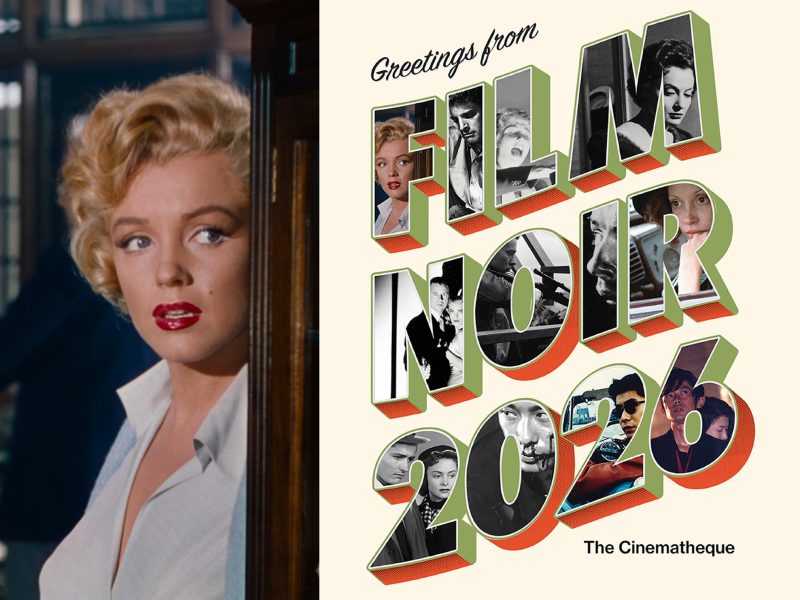
Niagara is showing at The Cinematheque in Vancouver, Canada, on Thursday, July 30 (and again on August 3 and 23), heading up their Film Noir 2026 series.
“Summer brings its usual dose of darkness to The Cinematheque courtesy of film noir, that irresistibly unsavoury school of mid-century American moviemaking defined by its emblematic aesthetics and obsession with bad behaviour.
This season, we’re drawing from the postwar catalogue to assemble a murderers’ row of eight gripping crime thrillers, each haunted in its own way by the tremors of WWII … We also pay tribute to Marilyn Monroe, born a century ago this year, with screenings of her Technicolor noir Niagara, famous for elevating MM to Hollywood’s A‑list.
Marilyn Monroe and Joseph Cotten are a maniacally mismatched couple vacationing on the Ontario side of Niagara Falls in Henry Hathaway’s delectably tawdry thriller, a lurid Technicolor noir brimming with dark deeds and ’a raging torrent of emotion,’ per the tagline. Monroe, in a rare bad-girl role, is slip-clad Rose, a scheming vamp with murder on the mind. Cotten is her jealous older husband George, a shell-shocked war vet. Jean Peters and Max Showalter are the honeymooners next door. Niagara, as one contemporary review duly noted, makes full use ’of both the grandeur of the Falls and the grandeur that is Marilyn Monroe!’ Frequent Billy Wilder collaborator Charles Brackett co-wrote the script. The film’s runaway success helped propel Monroe, here in her first top billing for a major studio, to bonafide stardom. 2026 marks her centenary—count this as a tip of the hat to her juiciest noir performance.”
‘Marilyn Monroe’s eroticism [in Niagara] is an act of violence, a distortion of the natural and expected heterosexual order so extreme as to appear destructive.’ – Philippa Snow, Artforum
‘Ravishingly shot by Joseph MacDonald in eye-popping Technicolor … Elevated by Hathaway’s distinctive aesthetic choices and exemplary use of the eponymous location.’ – Matthew Thrift, BFI
‘Hathaway’s hypnotic contemplation of two American monuments … He gives it his all, most famously in the Freudian rampage that climaxes the film … [The] Technicolor photography makes a key contribution to the general tone of hysteria.’ – Dave Kehr, Chicago Reader
 The Marilyn Report