“Everything is about Marilyn Monroe,” the American filmmaker David Lynch told Vanity Fair in 2017, reflecting on his shelved biopic based on Anthony Summers’ Goddess, and how Marilyn became an influence on Laura Palmer, the small-town homecoming queen whose demise is the starting point of Lynch’s Twin Peaks.
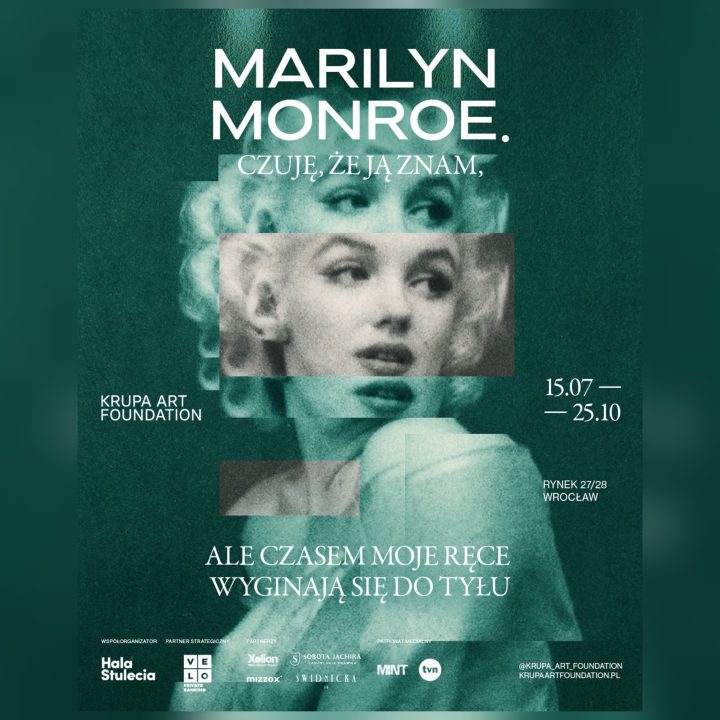
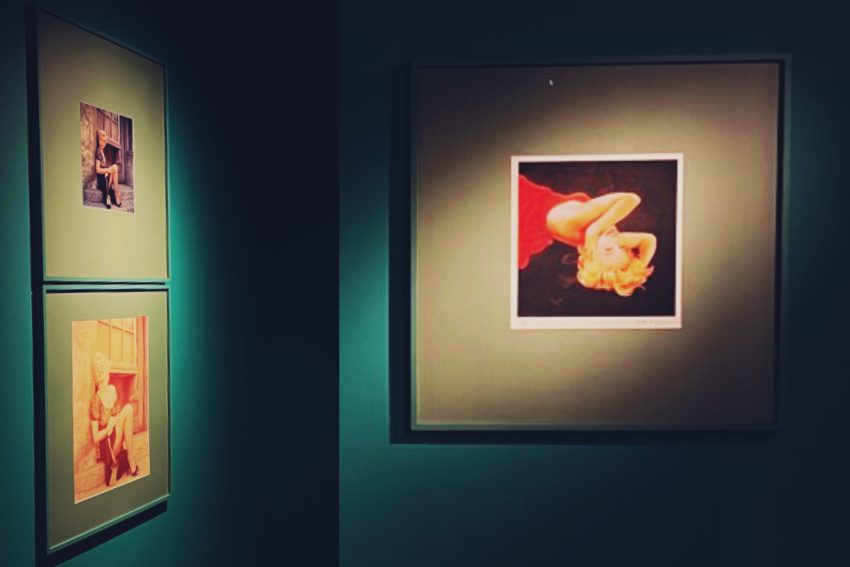
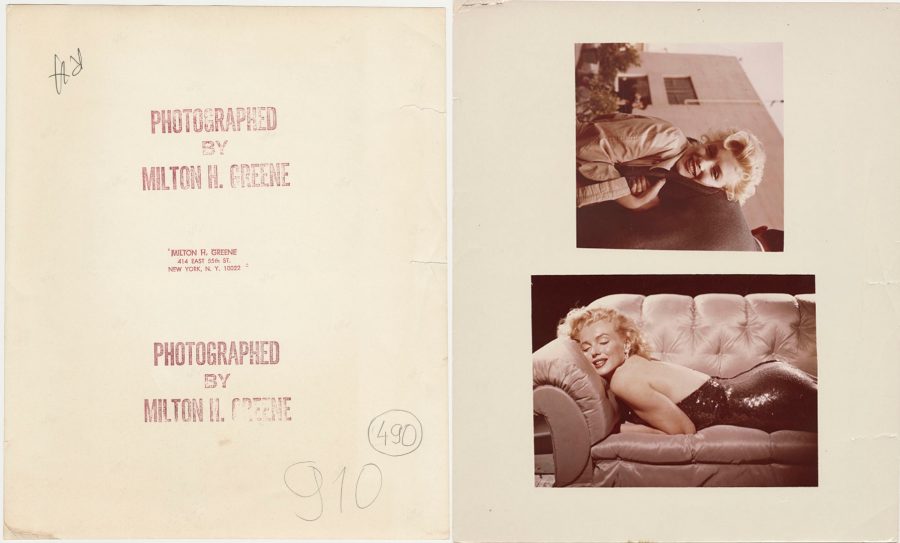
A line from the surrealist TV drama has inspired a new exhibition, Marilyn Monroe: I Feel Like I Know Her, But Sometimes My Arms Bend Back. On display until October 25 at the Krupa Art Foundation in Wroclaw, the exhibition draws upon a large archive of photographs by Milton Greene.
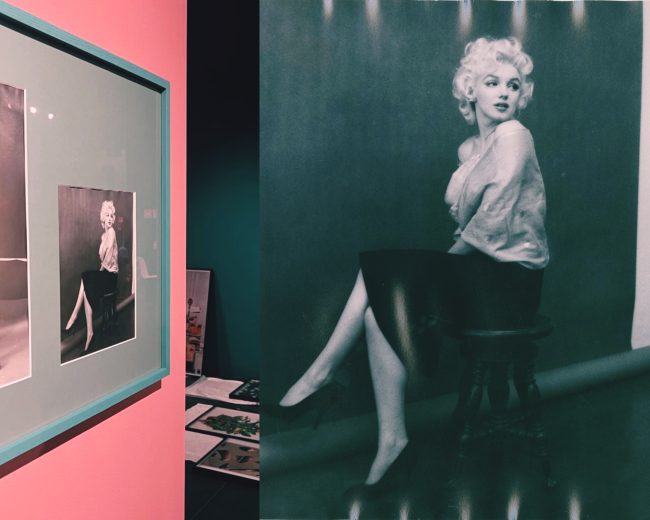
“The collection of photographs by Milton H. Greene consists of images of stars of American cinema. Portraits of iconic figures from the first half of the 20th century— now increasingly less recognisable, increasingly distant. And yet at the center of the collection one star still shines with such intensity that it is commonly believed to be an archive of her photographs. Everyone else dissolves in her light. Everyone — including the author of the photographs—fades in the presence of Marilyn Monroe.
The hypnotic charm of vulnerable, almost childlike innocence combined with shameless and ostentatious seduction. She ignited the collective imagination so effectively that even today she remains the heroine of its most intimate fantasies. The story of Monroe’s life and mysterious death unfolded somewhere between misfortune and scandal, and is submerged in contradictions that make certainty impossible. She embodies the archetype of the beautiful, dead young girl full of secrets—someone about whom the more we learn, the more new layers of an unsolvable mystery emerge. The original prototype of the enigmatic Laura Palmer. An entanglement recurring in a complicated story, as a result of which some of the photographs presented, featuring Monroe and other celebrities, eventually found their way into the Wrocław archive, raising questions about value, ownership, and political turmoil surrounding the image.
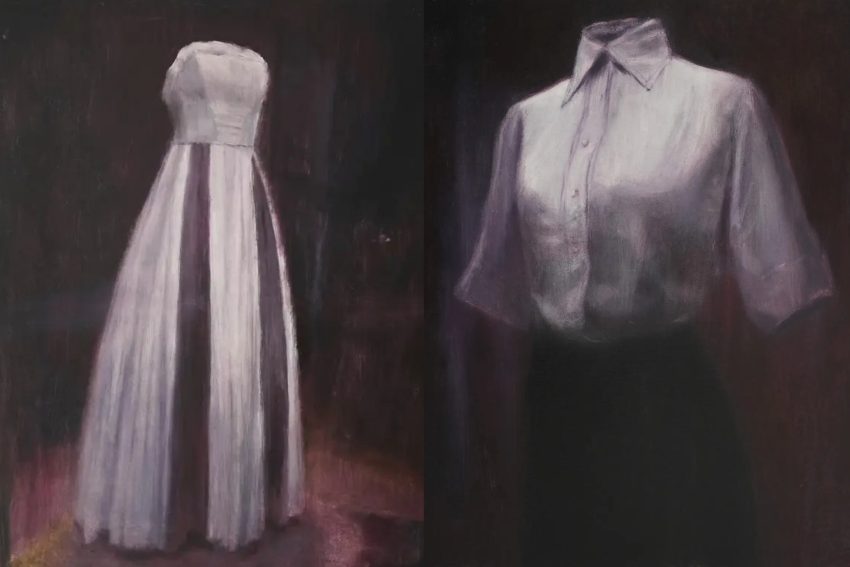
In dialogue with Greene’s photographs, we present works by contemporary artists working across different media, who experiment with the theme of the image—also its new forms emerging within internet culture—the boundaries of intimacy, and the tension between authenticity and performed identity. Their practices also address the individual’s entanglement in social constructs, relations of influence and power, the dynamics of product and capitalism, and the archive as a resource in relation to the system it simultaneously helps to produce. In their work they employ contemporary tools and aesthetics, as well as fluid and experimental digital forms. By commenting on Greene’s photographs, they inscribe new contexts and readings into the story of Monroe.”
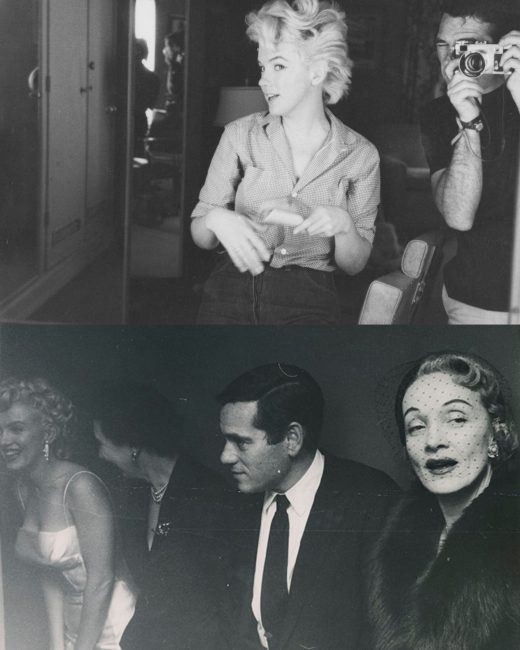
The collection was donated to the Polish government in 2012 by a Chicago businessman as partial repayment for his involvement in a 1990s embezzlement scandal. The same businessman had purchased the images from Greene prior to the photographer’s death in 1985. (You can read more about the collection here.)
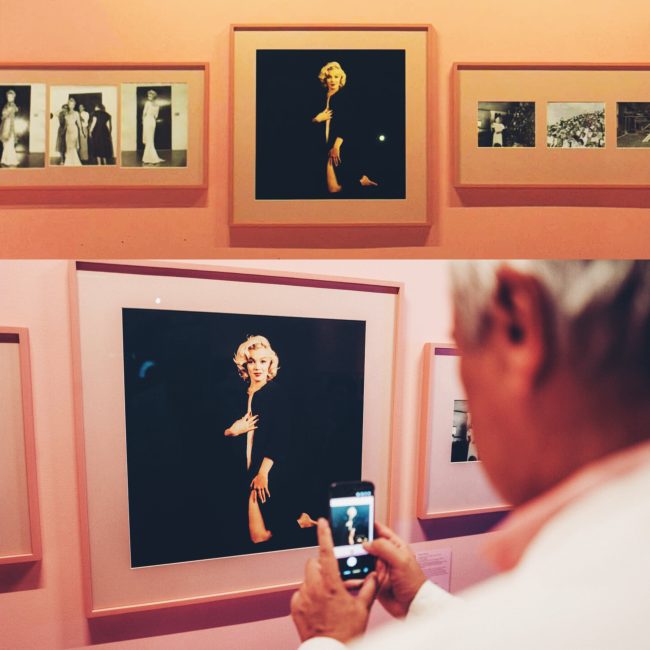
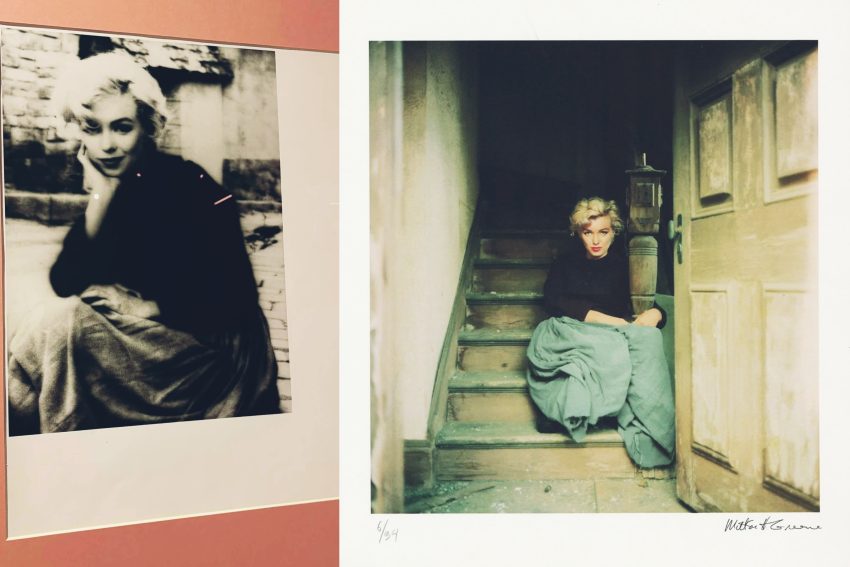
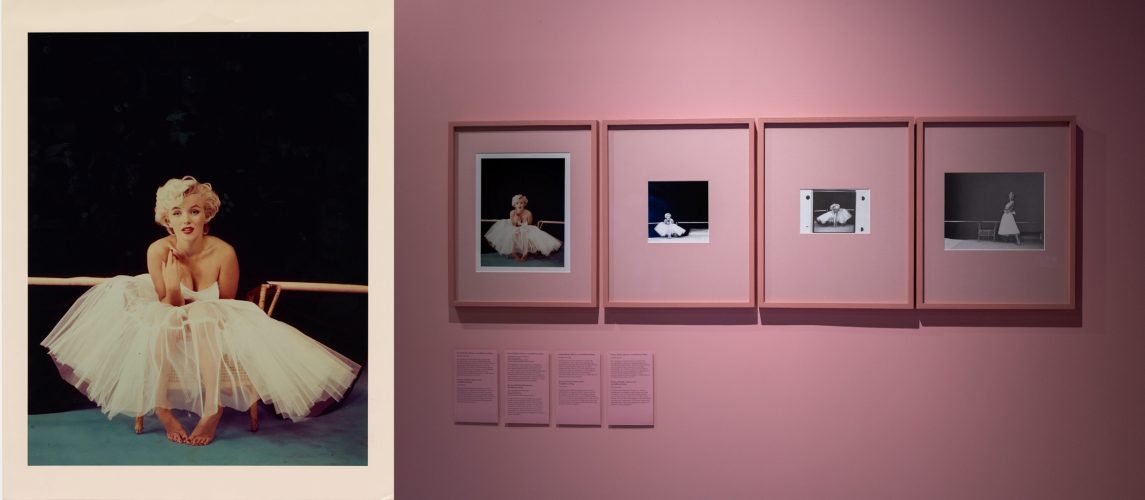
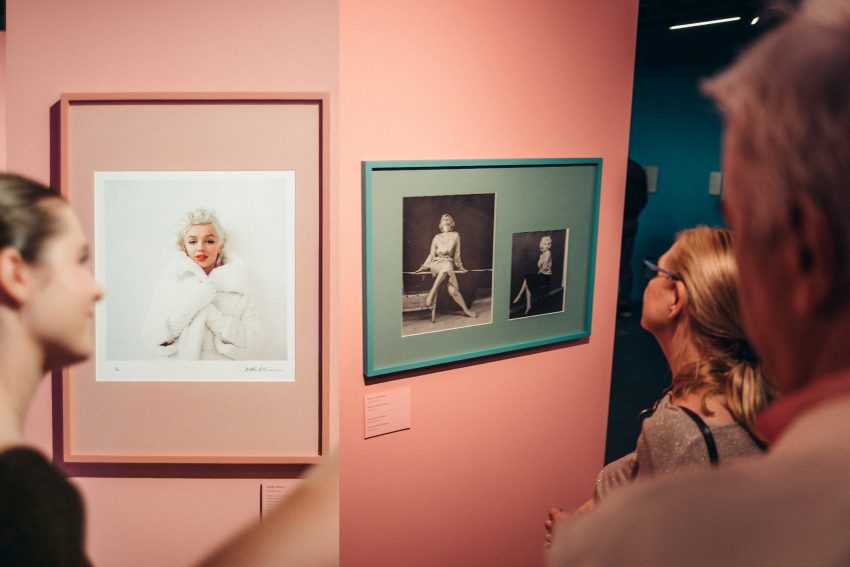
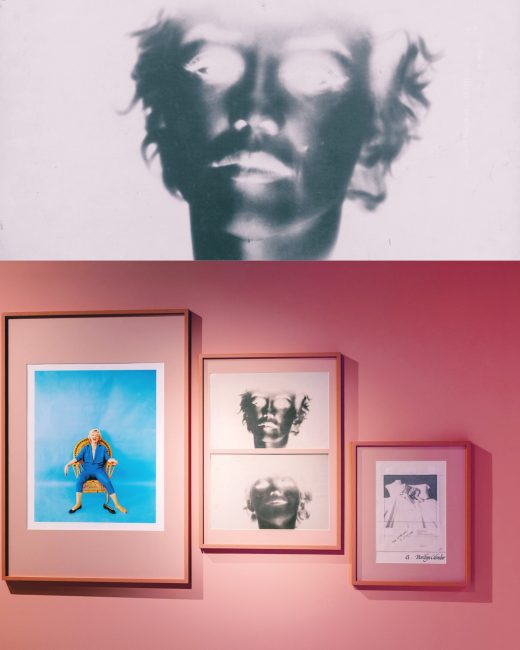
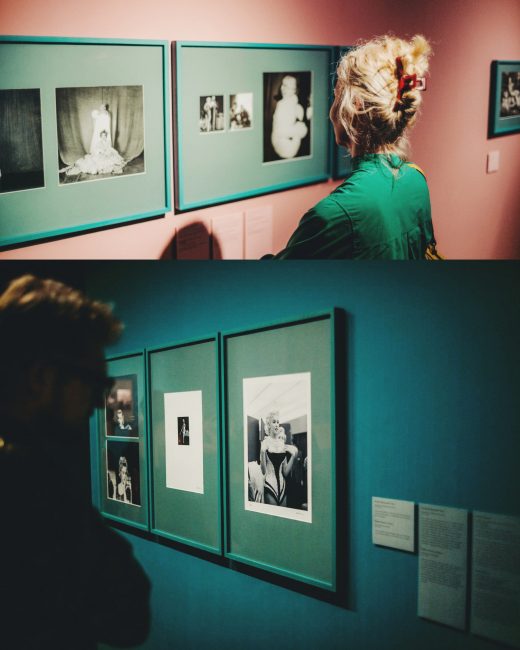
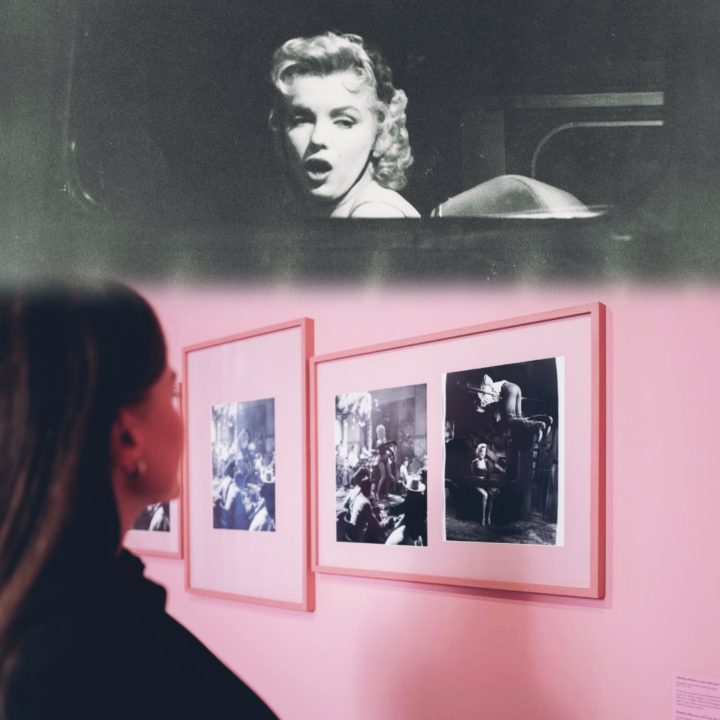
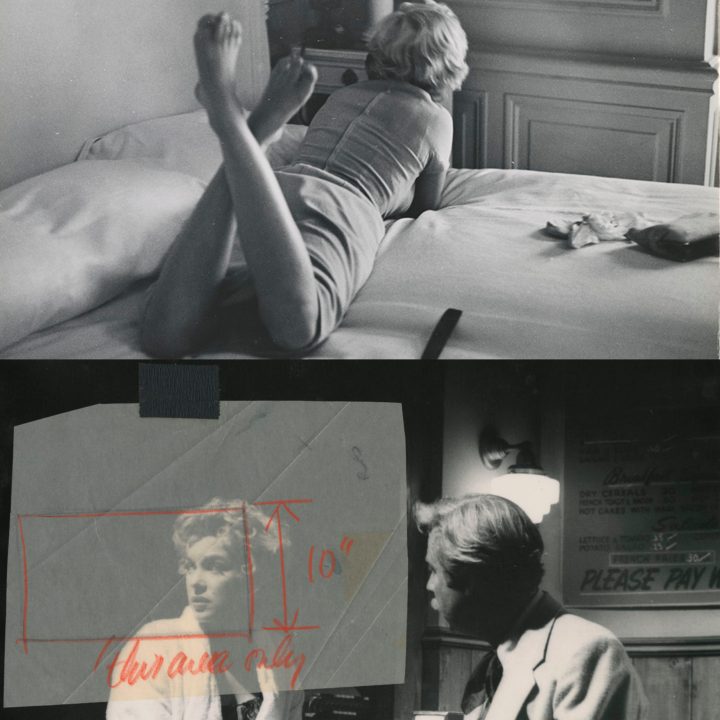
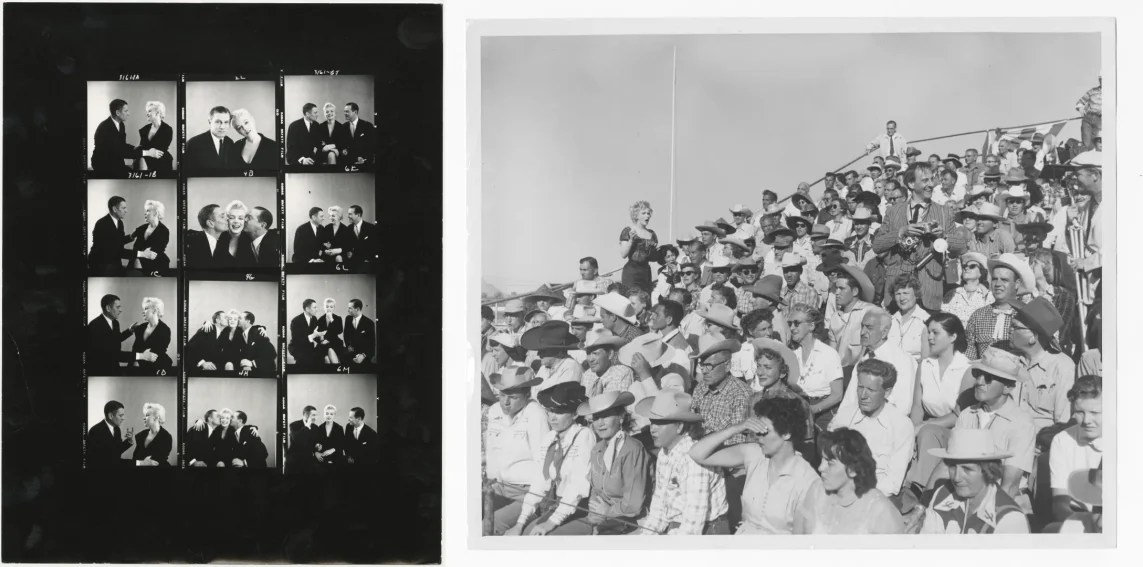
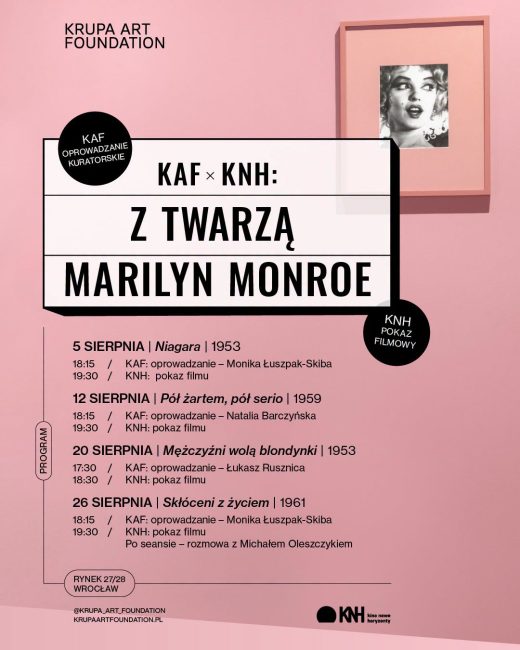
A series of Marilyn’s movies is showing concurrently at the New Horizons Cinema in Wroclaw, with each screening preceded by a guided tour of the exhibition.
- SOME LIKE IT HOT: Wednesday, August 12
- GENTLEMEN PREFER BLONDES: Thursday, August 20
- THE MISFITS: Wednesday, August 26
Elsewhere in Poland, another Marilyn film series is coming next week to Letnia Film Academy in Zwierzyniec.
“Starting with her well-known portrayal in the comedy Gentlemen Prefer Blondes (1953), we’ll guide viewers through the actress’s less obvious and more complex roles. In the film noir Niagara (1953), she plays a typical femme fatale, planning to murder her husband and build a new life with her lover. It was this role that catapulted Marilyn into movie stardom. In Bus Stop, she proved she was also adept at dramatic roles – as an ambitious singer, she dreams of a Hollywood career, not just being a cowboy’s adornment. While critics mired in praise of her performance, River of No Return (1954) was moderately received by critics, who nonetheless appreciated Marilyn’s performance. It was an exercise in a different genre – a Western and a musical all rolled into one. Her most striking dramatic role was also her last onscreen appearance. In The Misfits (1961), art intertwines with the actress’s privacy, having arrived on set straight from a psychiatric hospital. The unhealthy atmosphere carried over to the screen: this black-and-white film about the romance between a divorcee and an aging cowboy is permeated with sadness, a sense of defeat, and loss. Monroe plays a little bit of Roslyn, a little bit of herself – a woman who attracts all eyes when she enters a room, but remains lonely.
The film screenings will be accompanied by the promotion of Katarzyna Czajka-Kominiarczuk’s book Marilyn Monroe. All the Faces of the Goddess.”
- GENTLEMEN PREFER BLONDES: Thursday, August 13
- RIVER OF NO RETURN: Friday, August 14
- BUS STOP: Saturday, August 15
- THE MISFITS: Sunday, August 16
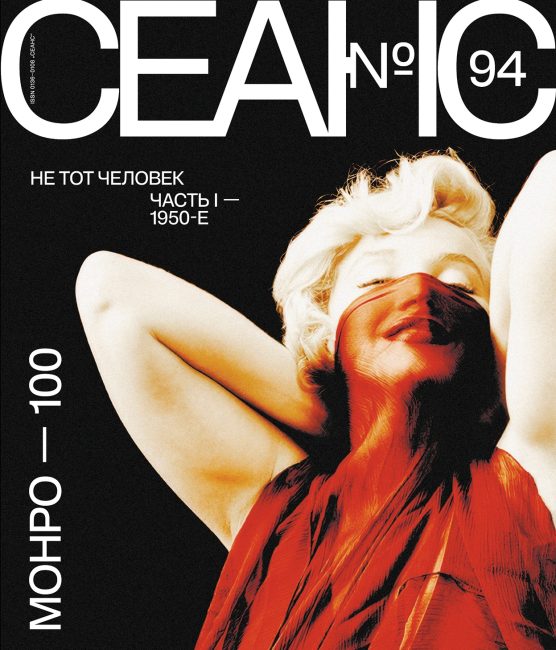
And finally, an image from Milton Greene’s final shoot with Marilyn – the red dress sitting, 1957 – graces the cover of Russian film journal Seance.
“Norma Jeane Baker was born on June 1, 1926. Aka Marilyn Monroe. Aka the world’s greatest film icon. The embodiment of Hollywood’s Golden Age. A star whose death seemed to sum up a glorious era.
‘Session No. 94’ explores the cinema and historical context of the 1950s, a decade of transition. A time of new global crises, spy mania, paranoia, and double-dealing. It was also a time of conservative myth and beautiful films. While enemy images were being formed on both sides of the Iron Curtain, the institution of ‘stardom’ flourished in cinema. This era created the cult of the Blonde and then destroyed Marilyn Monroe.
Under the cover are all our main authors: Lyubov Arkus, Vasily Stepanov, Liliya Shitenburg, Mikhail Yampolsky, Stanislav Zelvensky, Egor Sennikov, Mikhail Shchukin, Mikhail Trofimenkov and many others.”

