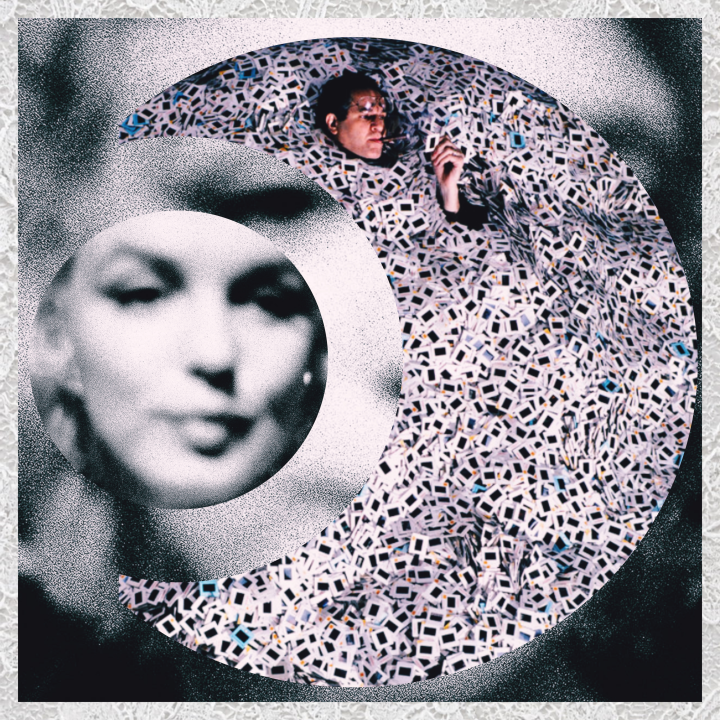
The American photographer, Jay Maisel, has died aged 95, the New York Times reports.
He was born in Brooklyn in 1931, son of a clothing salesman. He graduated from Yale University in 1953 with a degree in painting, and began his career as a freelance photographer in New York.
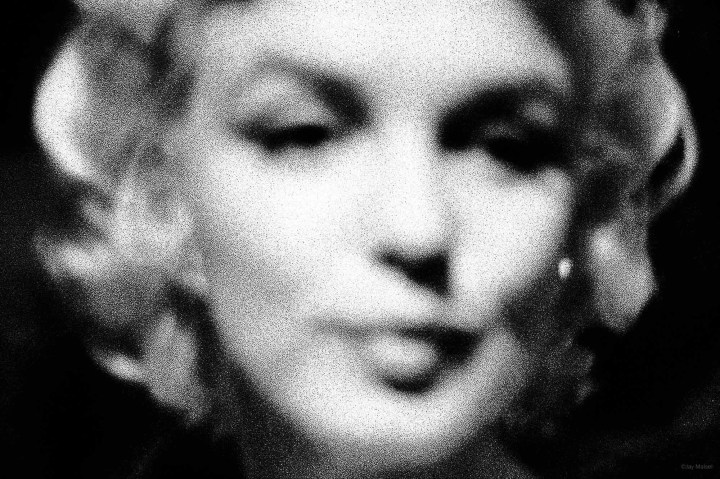
His sole encounter with Marilyn is described in his 2015 book, It’s Not About the F-Stop. (Although he dated the event to 1954, it actually took place in March 1955.)
“This picture was taken on my first assignment for a national magazine.
I want to set the scene: It was [1955] and I was [24] years old. Marilyn Monroe was at the zenith of her career. Sammy Davis Jr. had come back from having lost an eye and was dancing, singing, and acting his way across the color line and into America’s heart.
My assignment was a simple one: go to an after-party. The event was the premiere of East of Eden with James Dean. Cover the party; come back with pictures of people at the festivities. Make ’em look good, and kid…don’t f*¢% up.
When I got there, the first thing I was aware of was I was the only photographer there! The second thing was Sammy Davis Jr. playing the piano with Marilyn Monroe sitting next to him.
They were delighted with each other. He was trying to get her to sing with him, she was all little girlish in her refusal, both flirting obviously and happily with each other. And me? I was so excited, I was amazed I didn’t wet my pants.
There were no motors back then so it was shoot, wind, shoot, wind, and all the time I’m thinking, ‘Oh my God, this is the best.’ I shot over 100 frames and the small, still voice (that overrides your lack of intelligence) said to me, ‘There aren’t 100 frames on that roll of film.’
Oh s#[†! I knew what that meant. I checked the take-up spool (for those of you under 40, that was the gizmo that took up the slack when you wound the film— you do remember film, don’t you?) and it wound freely. Of course that meant I was shooting with no film going through the camera. I was suicidal. I reloaded the camera, but by then Marilyn and Sammy were gone.
There is an emotional seesaw on perceiving what you think is a great image. It moves between glee and trepidation. The more excited I am, the better the image, the more naked emotion I feel, the more exhilaration there is, the more it is counterbalanced by the certainty that something is going to f*¢% this up.
This anxiety never happens with pictures that are less compelling or less emotional. It never happens with pictures that are intellectually motivated or studies, or with pictures that are about information, history, or pure documentation.
These favourites have stood the test of time, even though they’re mine they still work for me, and I do love them.”
Maisel’s close-up image is somewhat different to the many press shots of a smiling Marilyn captured that evening, and seems to anticipate more starkly realistic portraits by Roy Schatt and Bert Stern. While she looked pensive in that moment, it was a happy occasion and one can only wish Maisel’s other images weren’t lost in time.
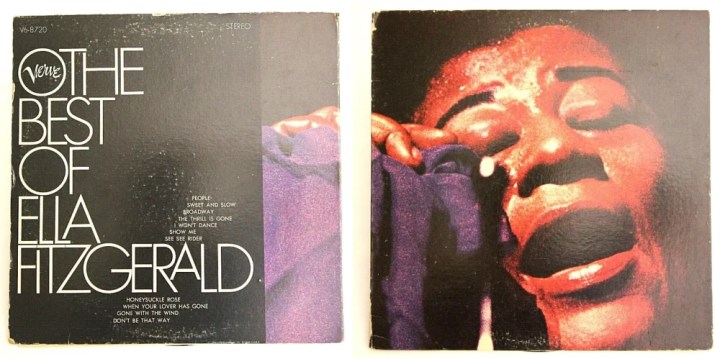
He went on to photograph many jazz legends, and is perhaps best-known for the cover shot from trumpeter Miles Davis’ classic 1959 album, Kind of Blue. Another of Maisel’s photographs was chosen for the cover of The Best of Ella Fitzgerald (1966.)
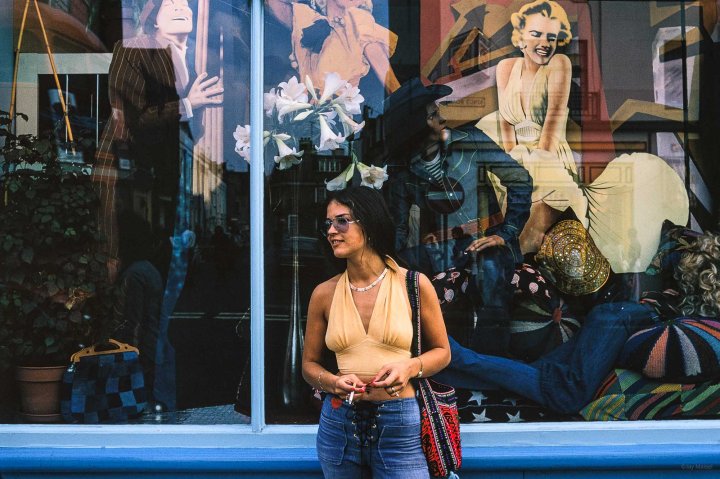
Marilyn is featured tangentially in another photograph by Maisel taken three years after her death, where an image of the iconic ‘skirt-blowing scene’ from The Seven Year Itch, shot on a New York subway grate and later reproduced as a life-size cutout, showed up as part of a shop window display across the Atlantic.
“In the mid 1960s I had an assignment from Holiday Magazine to shoot people of Paris. It worked out fine. I got eight pages, and that was that. So I got the idea to do it in London. One of the reasons was that I was impressed with the many faces that obviously were not English: Moroccan, Nigerian, Asian, etc. But as I got into the assignment I realised that most of my images were of the English.
To me, they were exotic as anyone else. I find the English wonderfully eccentric, colourful, individualistic, and wholly without subterfuge. They are what they are. They’ve been this way forever and they wouldn’t think of changing. It also helped that I almost speak the language.
Some time ago I tried to classify people’s reaction to being photographed … I always thought of the English reaction: they look behind their back to see who you’re really photographing. They’re not self-conscious nor did they show off, pose, mug for the camera or otherwise dilute what I was trying to do. It was a gas.”
– From London People, 1965
In 1966, Maisel purchased the abandoned Germania Bank on the Bowery in lower Manhattan for $102,000, using the 35,000 square-feet, six-storey, 72-room building as a family home, studio, gallery, archive, workshop, and basketball court. The building was sold for $55 million to property developer Aby Rosen in 2015, reportedly the largest private real estate deal in New York history.
Although he would shoot the first New York Magazine cover and five swimsuit issues for Sports Illustrated, Maisel’s greatest work was in street photography, and his inventive use of light and colour. In 1995, he left the commercial sphere behind to focus on teaching and chronicling his career in a series of books and documentaries. In 2009, he sued blogger Andy Baio, who had created a pixel-art version of his Kind of Blue cover for a tribute album. The case was settled for $32,500.
Jay Maisel died of cancer at his home in New York on August 20, 2026. He is survived by his third wife, Linda Adam, and daughter, Amanda Maisel.
 The Marilyn Report