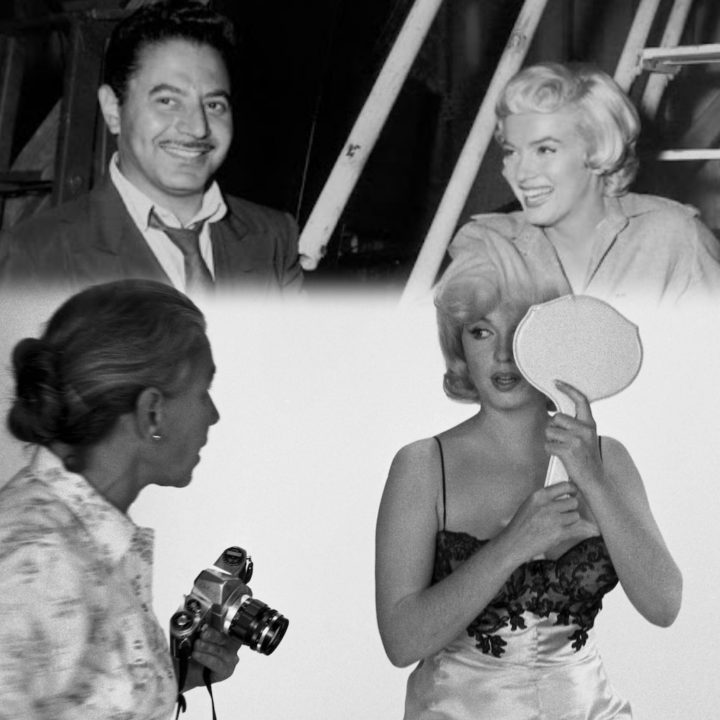
Marilyn Monroe 100, the recently published tribute from Marilyn’s estate, is featured in the current issue of the UK magazine, Amateur Photographer (dated June 16.) Steve Fairclough’s six-page article highlights Marilyn’s collaborations with Sam Shaw and Eve Arnold, while further images from MM100 – by Joseph Jasgur, John Florea, Elliott Erwitt, Cecil Beaton and Allan Grant – are also featured.
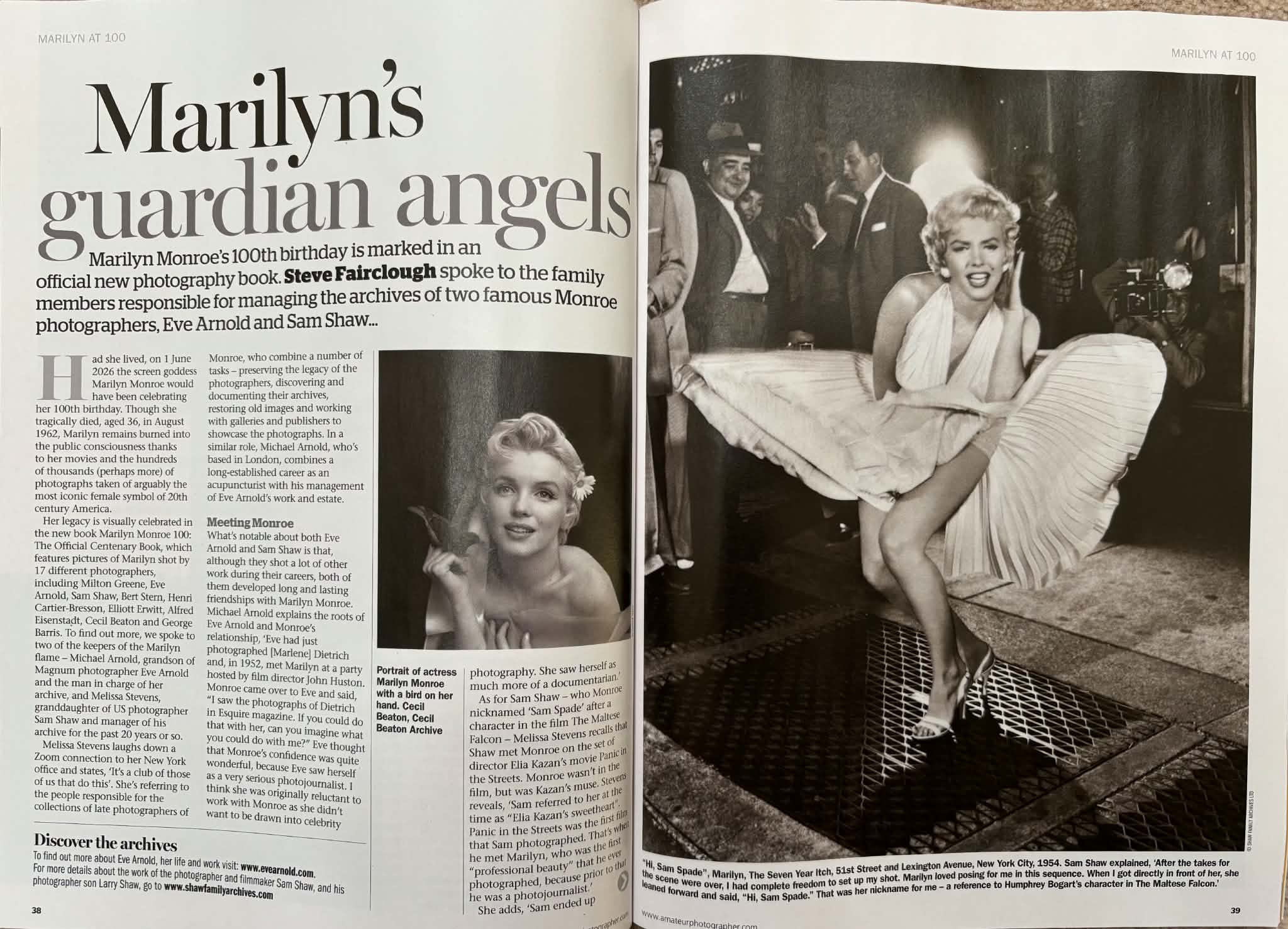
“To find out more, we spoke to two of the keepers of the Marilyn flame – Michael Arnold, grandson of Magnum photographer Eve Arnold and the man in charge of her archive, and Melissa Stevens, granddaughter of US photographer Sam Shaw and manager of his archive for the past 20 years or so.
Michael Arnold explains the roots of Eve Arnold and Monroe’s relationship … ‘Eve thought that Monroe’s confidence was quite wonderful, because Eve saw herself as a very serious photojournalist. I think she was originally reluctant to work with Monroe as she didn’t want to be drawn into celebrity photography. She saw herself as much more of a documentarian.’
As for Sam Shaw – who Monroe nicknamed ‘Sam Spade’ after a character in the film The Maltese Falcon – Melissa Stevens recalls that Shaw met Monroe on the set of director Elia Kazan’s movie Panic in the Streets … Sam ended up spending more time with Marilyn Monroe on the next film for Elia Kazan that he photographed, Viva Zapata! … ‘I think the reason Sam and Marilyn connected, and it maintained throughout their relationship, is because they were both artists, both came from humble origins and they were trying to support themselves. In Sam’s case it was supporting his family and Marilyn was [supporting herself] on her own.’
That first Eve Arnold/Marilyn Monroe shoot was in colour – an unusual medium for Arnold, but one required by Esquire. ‘This was actually Eve’s earliest foray into colour and she used Kodachrome film,’ says Michael Arnold. ‘It has that kind of technicolour, vibrant feel to it. At the time, and even into the ‘80s, black and white photography was seen as the art photography and colour photography was seen as snaps.’
The shoot took place on Long Island, where Arnold lived at the time and Monroe, coincidentally, was staying at a friend’s house. Notably, Monroe brought a copy of James Joyce’s novel Ulysses with her … Michael Arnold explains, ‘It was completely natural. I think both of them had in mind that it was upending the kind of dumb blonde stereotype. In that sense, you can kind of say it was set up, but she was actually reading the book and had it with her.’
He adds, ‘The films were obviously where people saw Monroe on the big screen, but I think she was very canny and realised that being portrayed in magazines was a big part of creating the myth and the stardom …’
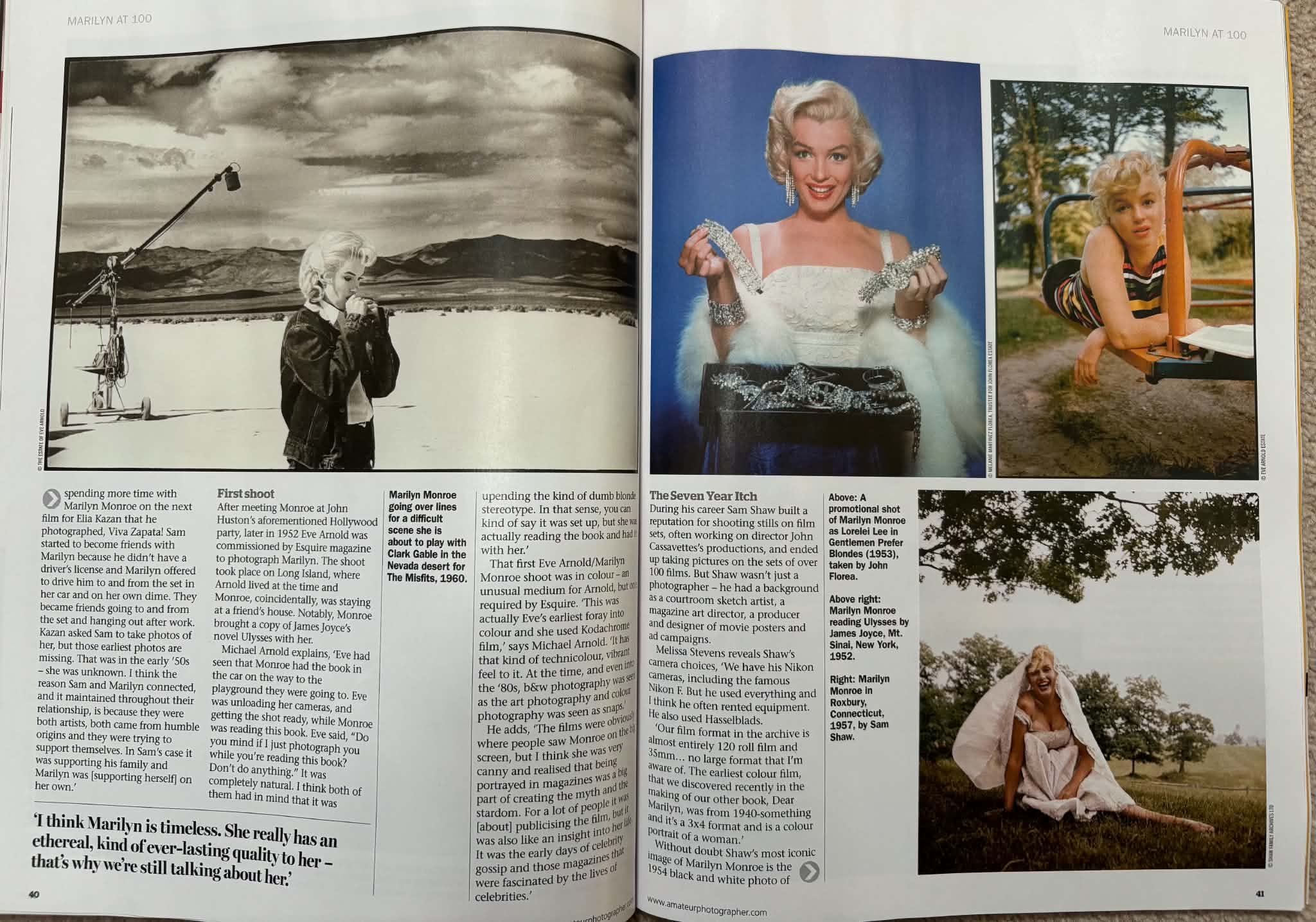
Melissa Stevens reveals Shaw’s camera choices, ‘We have his Nikons, including the famous Nikon F. But he used everything and I think he often rented equipment. He used Hasselblads. Our film format in the archive is almost entirely 120mm and 35mm… no large format that I’m aware of. The earliest colour film, that we discovered recently in the making of our other book, Dear Marilyn, was from 1940-something and it’s a 3×4 format and is a colour portrait of a woman.’
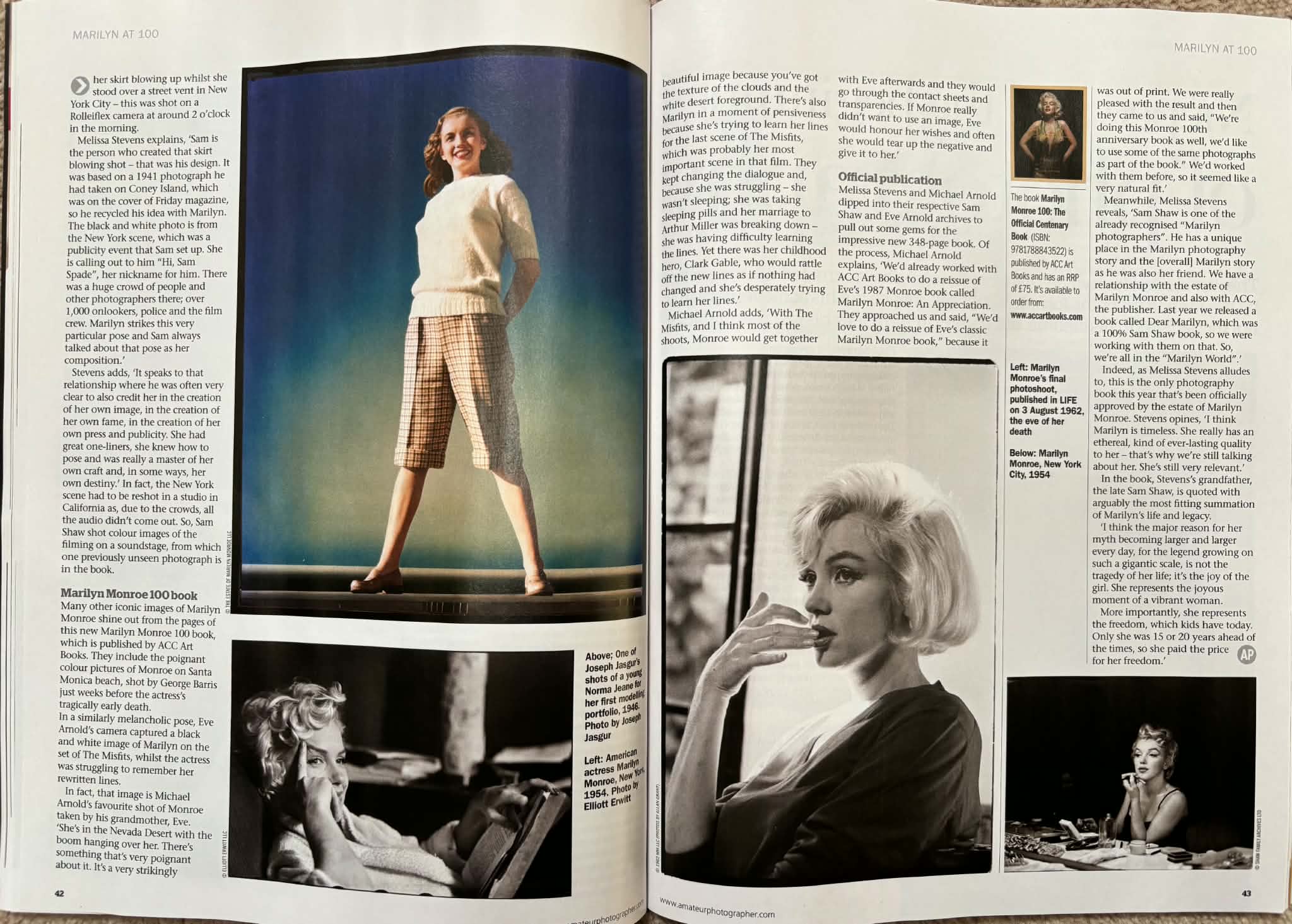
Without doubt Shaw’s most iconic image of Marilyn Monroe is the 1954 black and white photograph of her skirt blowing up whilst she stood over a street vent in New York City – this was shot on a Rolleiflex camera at around 2am in the morning.
Melissa Stevens explains, ‘Sam is the person who created that skirt blowing shot – that was his design. It was based on a 1941 photograph he had taken on Coney Island, which was on the cover of Friday magazine, so he recycled his idea with Marilyn …’
Michael Arnold adds, ‘With The Misfits, and I think most of the shoots, Monroe would get together with Eve afterwards and they would go through the contact sheets and transparencies. If Monroe really didn’t want to use an image, Eve would honour her wishes and often she would tear up the negative and give it to her.’
Stevens opines, ‘I think Marilyn is timeless. She really has an ethereal, kind of ever-lasting quality to her – that’s why we’re still talking about her. She’s still very relevant.’
In MM100, Stevens’s grandfather, the late Sam Shaw, is quoted with arguably the most fitting summation of Marilyn’s life and legacy, ‘I think the major reason for her myth becoming larger and larger every day, for the legend growing on such a gigantic scale, is not the tragedy of her life; it’s the joy of the girl. She represents the joyous moment of a vibrant woman. More important, she represents the freedom, which kids have today. Only she was 15 or 20 years ahead of the times, so she paid the price for her freedom.'”
Thanks to Fraser
 The Marilyn Report