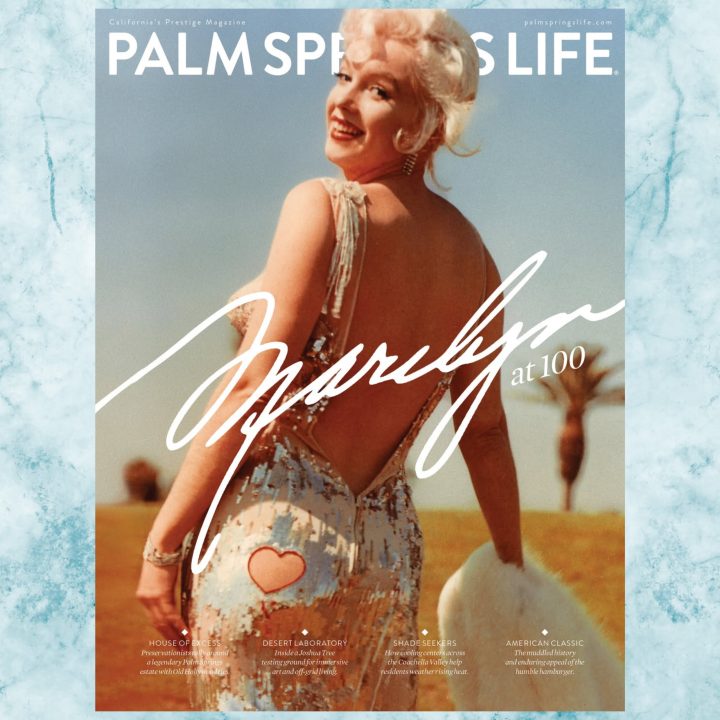
Marilyn spent much of her life in Los Angeles and New York, no city has staked a claim to her legacy as fervently as the California desert oasis she visited a mere handful of times.
For the June 2026 cover of Palm Springs Life, Marilyn is shown casting a backwards glance at Richard C. Miller, a photographer she had known since her modelling days.
However, this photo wasn’t captured in Palm Springs, but a two-hour drive away at the Hotel Del Coronado in the San Diego Bay, where Marilyn filmed parts of Some Like It Hot in 1958. (Her peekaboo dress earned an Academy Award for designer Orry Kelly.)
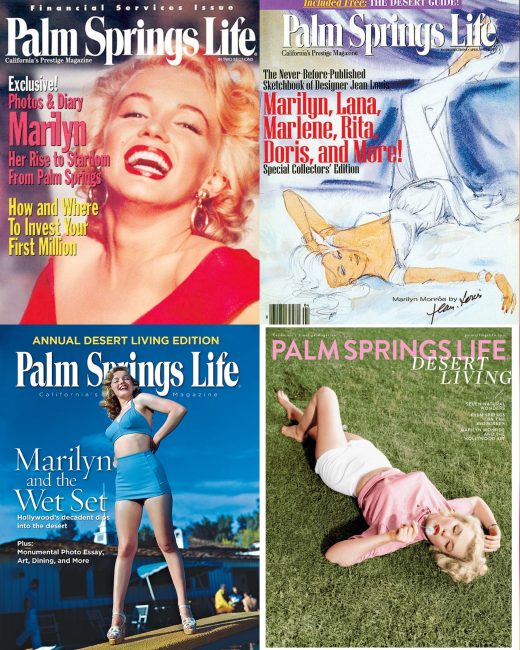
Marilyn has covered Palm Springs Life several times over the years, with the older covers now available as poster prints.
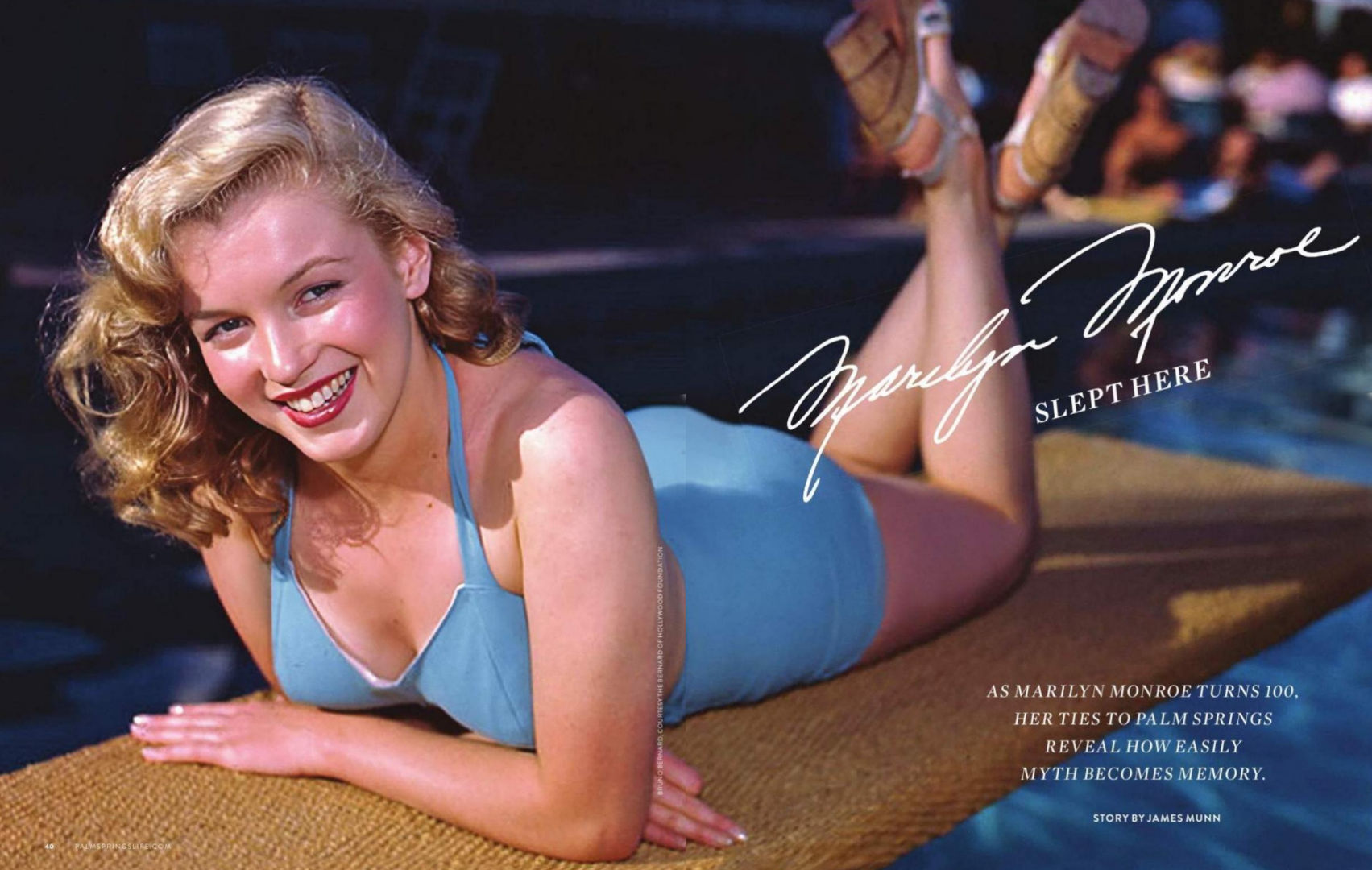
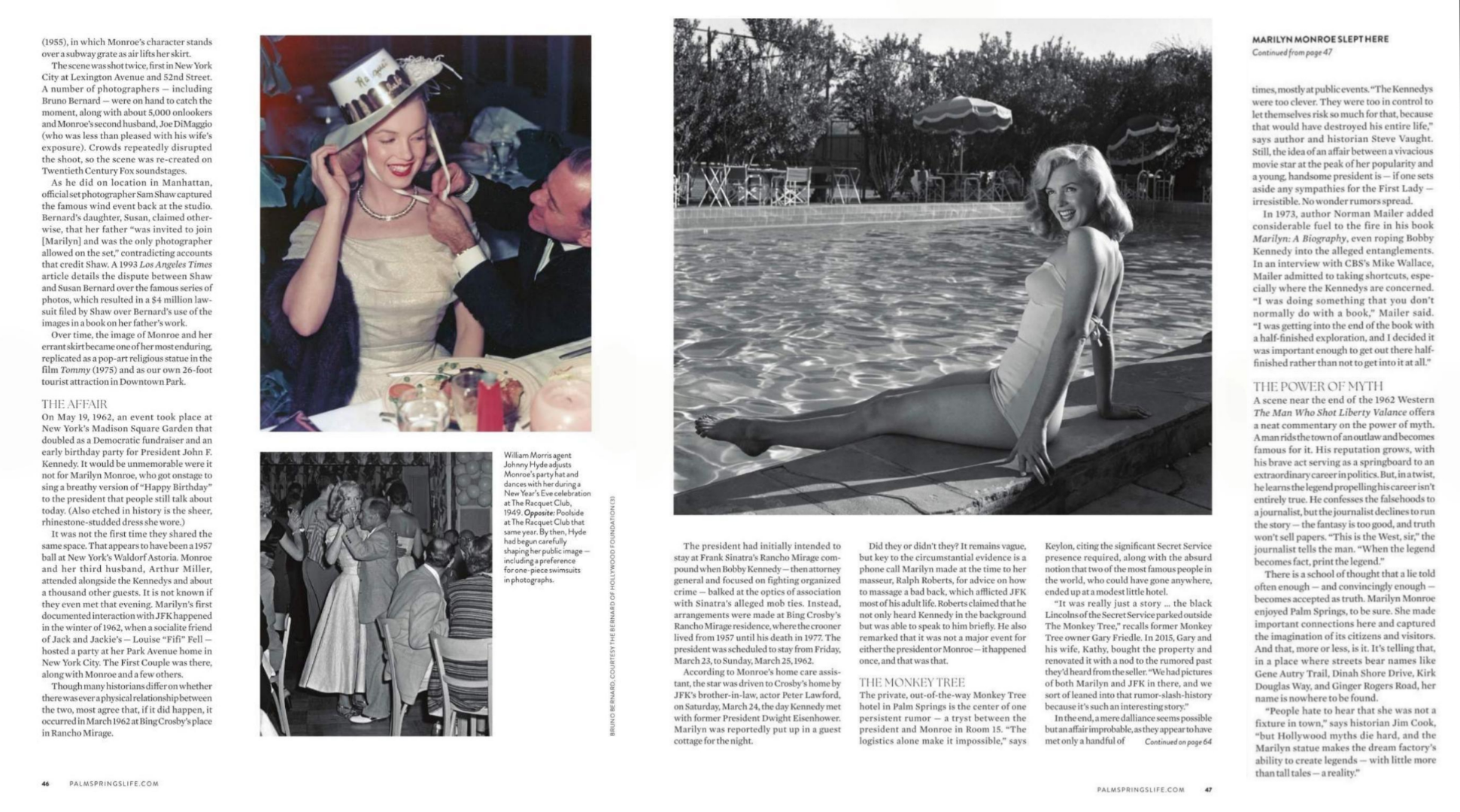
James Munn addresses some Palm Springs myths in ‘Marilyn Monroe Slept Here.’ The feature is illustrated with images from The Marilyn Monroe Century, a new book from the estate of photographer Bruno Bernard – including one captured on a diving board at the Racquet Club during the spring of 1949.
This was Marilyn’s first documented trip to Palm Springs – in the company of her agent and boyfriend, Johnny Hyde, whom she had met at a New Year’s Eve party in Hollywood a few months before.
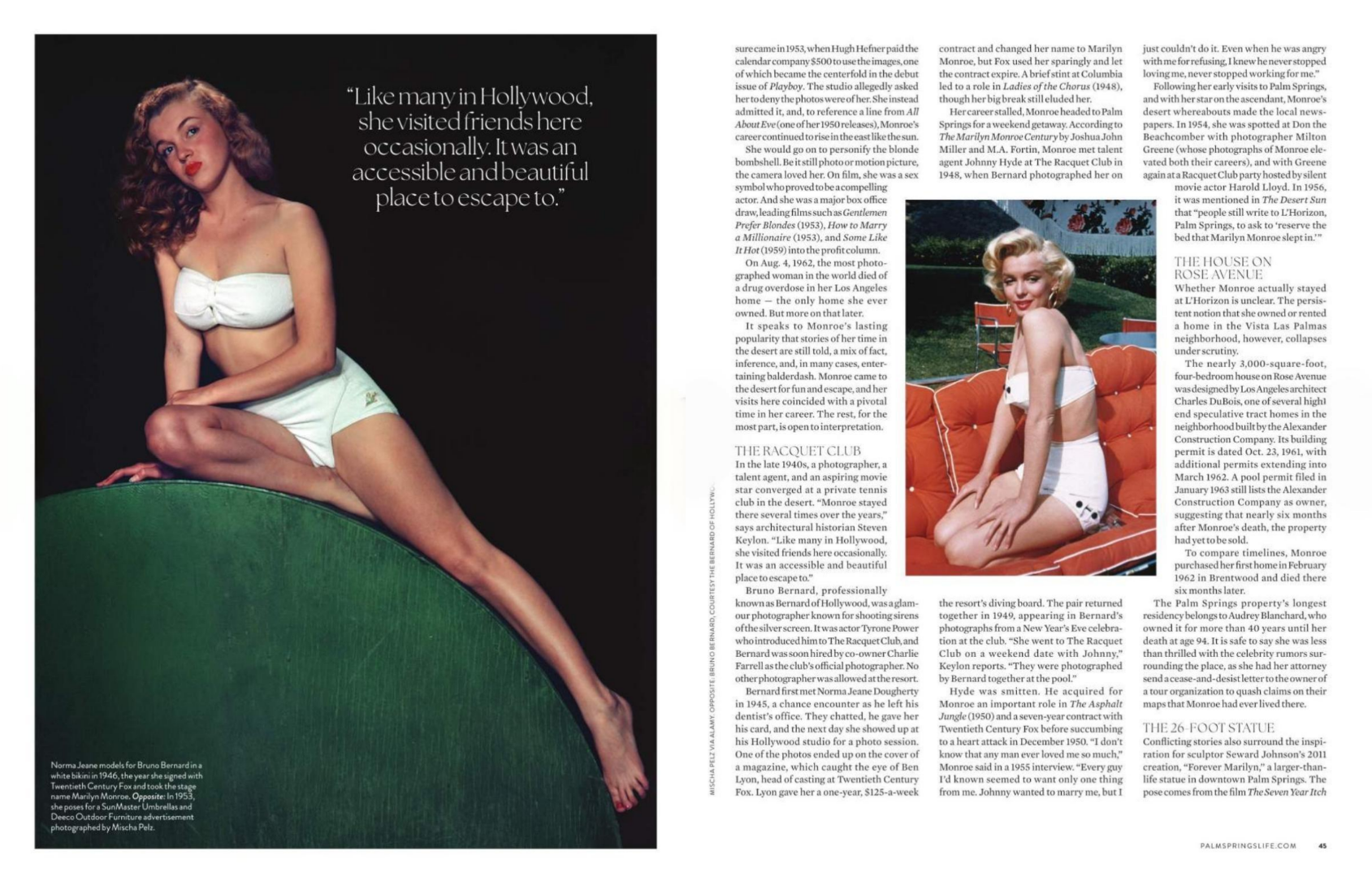
“In the late 1940s, a photographer, a talent agent, and an aspiring movie star converged at a private tennis club in the desert. ‘Monroe stayed there several times over the years,’ says architectural historian Steven Keylon. ‘Like many in Hollywood, she visited friends here occasionally. It was an accessible and beautiful place to escape to.’
Bruno Bernard, professionally known as Bernard of Hollywood, was a glamour photographer known for shooting sirens of the silver screen. It was actor Tyrone Power who introduced him to The Racquet Club, and Bernard was soon hired by co-owner Charlie Farrell as the club’s official photographer. No other photographer was allowed at the resort.
Bernard first met Norma Jeane Dougherty in 1945, a chance encounter as he left his dentist’s office. They chatted, he gave her his card, and the next day she showed up at his Hollywood studio for a photo session …”
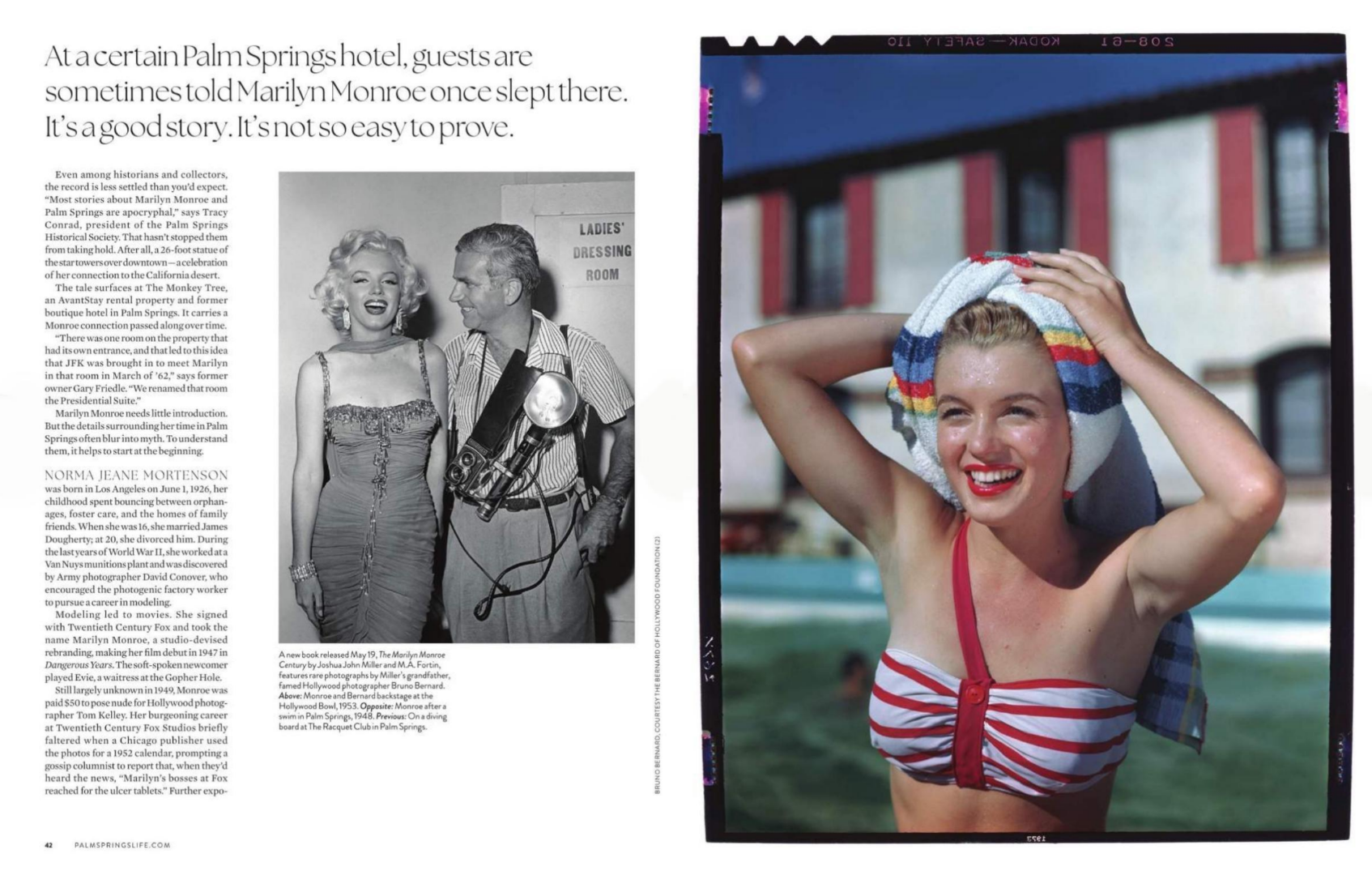
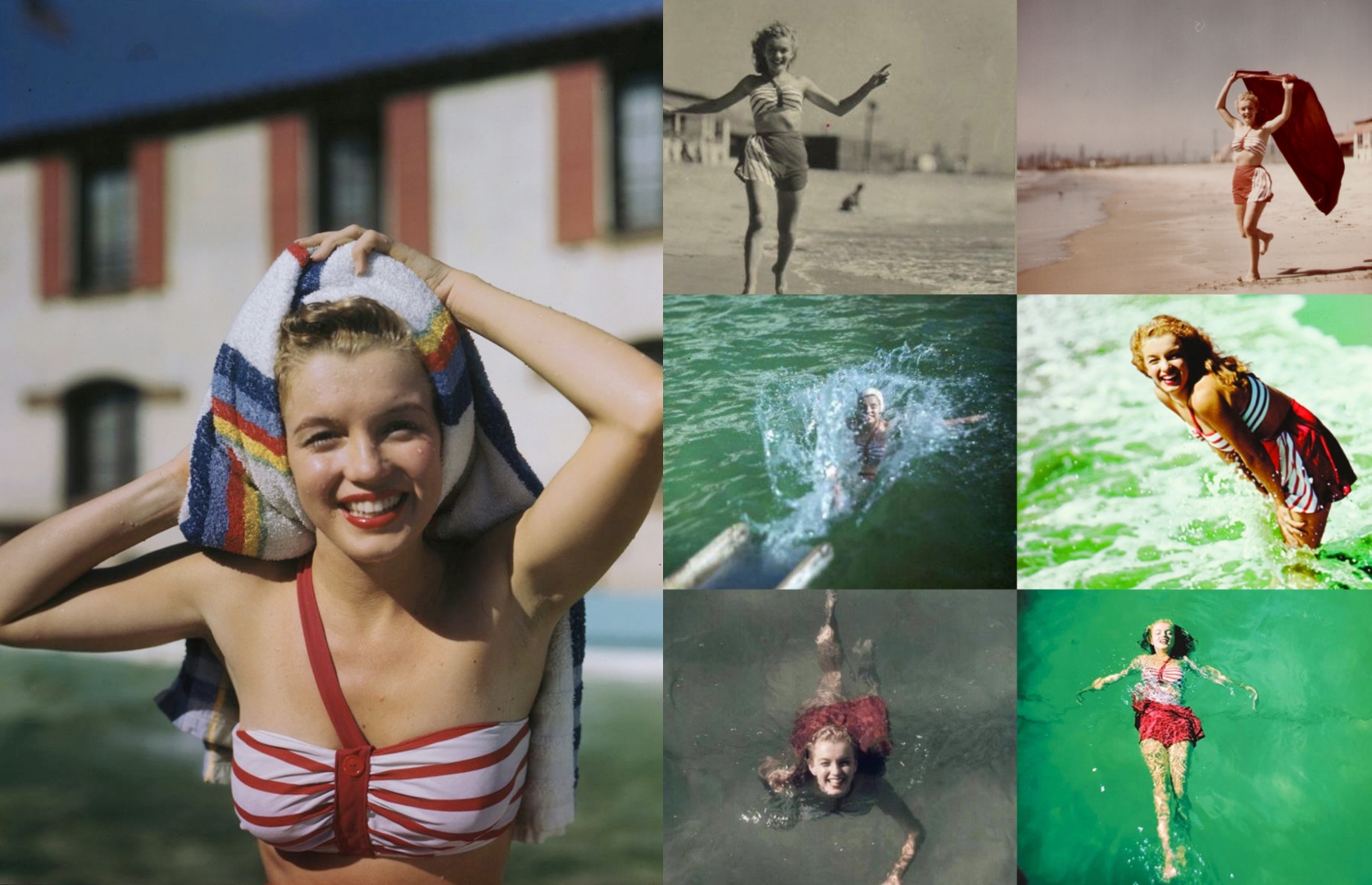
Although credited to Bernard in The Marilyn Monroe Century, the photo shown above right is similar to images shot in Los Angeles by Richard C. Miller in 1946.
After many years of decline, the Racquet Club was destroyed by fire in 2014. Munn traces other locations connected with Marilyn in Palm Springs lore.
“Following her early visits to Palm Springs, and with her star on the ascendant, Monroe’s desert whereabouts made the local newspapers. In 1954, she was spotted at Don the Beachcomber with photographer Milton Greene (whose photographs of Monroe elevated both their careers), and with Greene again at a Racquet Club party hosted by silent movie actor Harold Lloyd. In 1956, it was mentioned in The Desert Sun that ‘people still write to L’Horizon, Palm Springs, to ask to ‘reserve the bed that Marilyn Monroe slept in.'”
 Munn also writes about the Palm Springs house that was recently listed for sale as ‘Marilyn’s secret hideaway …’
“Whether Monroe actually stayed at L’Horizon is unclear. The persistent notion that she owned or rented a home in the Vista Las Palmas neighborhood, however, collapses under scrutiny.
The nearly 3,000-square-foot, four-bedroom house on Rose Avenue was designed by Los Angeles architect Charles DuBois, one of several high-end speculative tract homes in the neighborhood built by the Alexander Construction Company. Its building permit is dated Oct. 23, 1961, with additional permits extending into March 1962. A pool permit filed in January 1963 still lists the Alexander Construction Company as owner, suggesting that nearly six months after Monroe’s death, the property had yet to be sold.
To compare timelines, Monroe purchased her first home in February 1962 in Brentwood and died there six months later.
The Palm Springs property’s longest residency belongs to Audrey Blanchard, who owned it for more than 40 years until her death at age 94. It is safe to say she was less than thrilled with the celebrity rumours surrounding the place, as she had her attorney send a cease-and-desist letter to the owner of a tour organisation to quash claims on their maps that Monroe had ever lived there.”
And then there’s Marilyn’s alleged affair with John F. Kennedy. While some biographers believe Marilyn joined the President for a weekend at Bing Crosby’s Rancho Mirage estate in March 1962, this remains unconfirmed.
Munn mentions another alleged tryst: but like so many Palm Springs stories, it seems less rooted in fact than publicity.
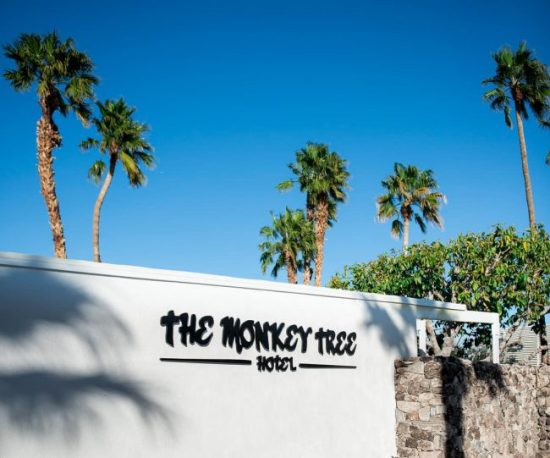
“The private, out-of-the-way Monkey Tree Hotel in Palm Springs is the center of one persistent rumour — a tryst between the president and Monroe in Room 15. ‘The logistics alone make it impossible,’ says Keylon, citing the significant Secret Service presence required, along with the absurd notion that two of the most famous people in the world, who could have gone anywhere, ended up at a modest little hotel.
‘It was really just a story … the black Lincolns of the Secret Service parked outside The Monkey Tree,’ recalls former Monkey Tree owner Gary Friedle. In 2015, Gary and his wife, Kathy, bought the property and renovated it with a nod to the rumored past they’d heard from the seller. ‘We had pictures of both Marilyn and JFK in there, and we sort of leaned into that rumor-slash-history because it’s such an interesting story.’
In the end, a mere dalliance seems possible but an affair improbable, as they appear to have met only a handful of times, mostly at public events. ‘The Kennedys were too clever. They were too in control to let themselves risk so much for that, because that would have destroyed his entire life,’ says author and historian Steve Vaught.”
So why can’t Palm Springs let go of Marilyn? James Munn invokes a famous line from 1962’s The Man Who Shot Liberty Valance: ‘This is the West, sir. When the legend becomes fact, print the legend.’
“There is a school of thought that a lie told often enough — and convincingly enough — becomes accepted as truth. Marilyn Monroe enjoyed Palm Springs, to be sure. She made important connections here and captured the imagination of its citizens and visitors. And that, more or less, is it. It’s telling that, in a place where streets bear names like Gene Autry Trail, Dinah Shore Drive, Kirk Douglas Way, and Ginger Rogers Road, her name is nowhere to be found.
‘People hate to hear that she was not a fixture in town,’ says historian Jim Cook, ‘but Hollywood myths die hard, and the Marilyn statue makes the dream factory’s ability to create legends — with little more than tall tales — a reality.'”
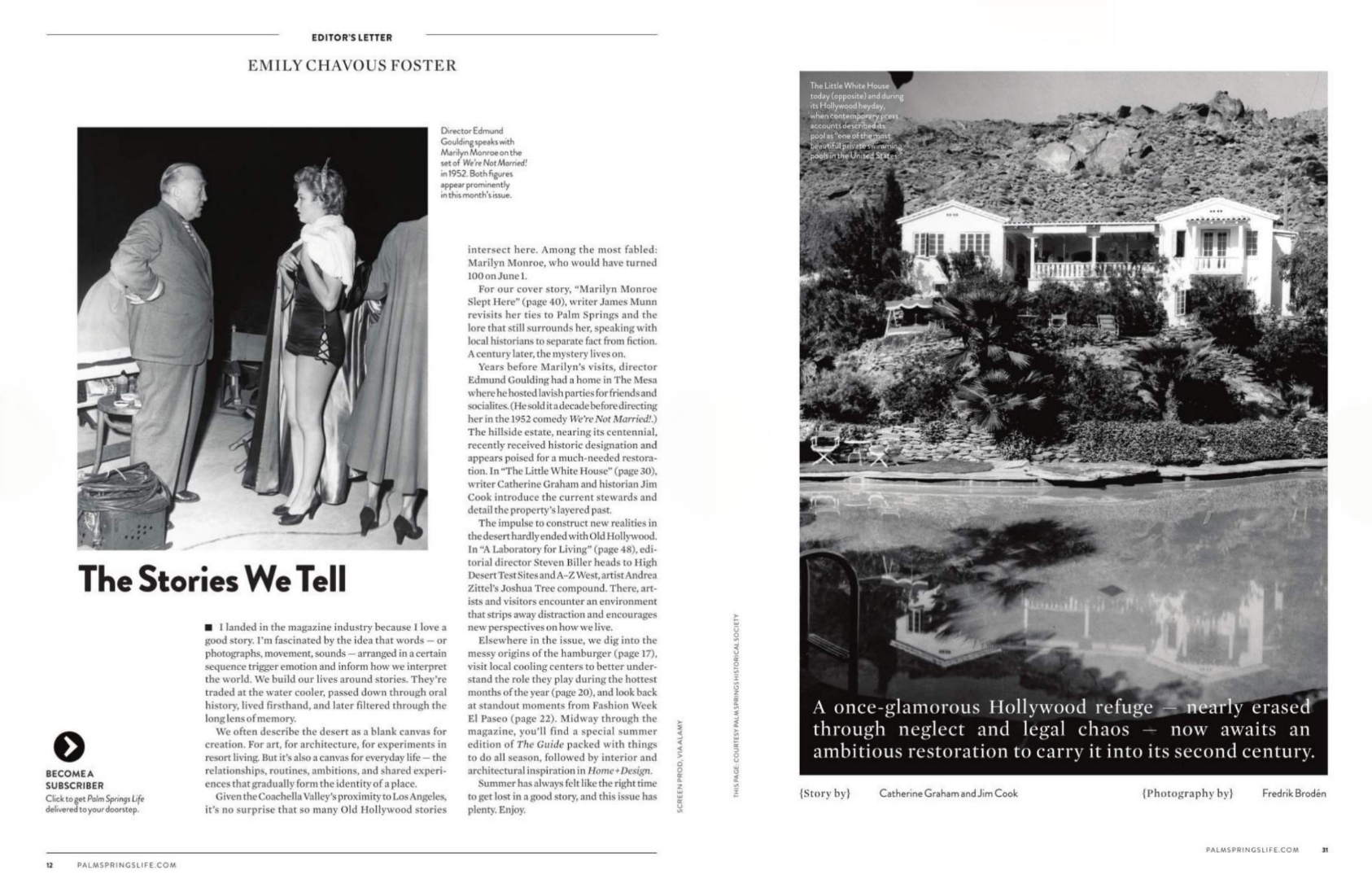
And finally, the restoration of ‘The Little White House‘ – once home to We’re Not Married director Edmund Goulding – is also featured in Palm Springs Life this month.
 The Marilyn Report