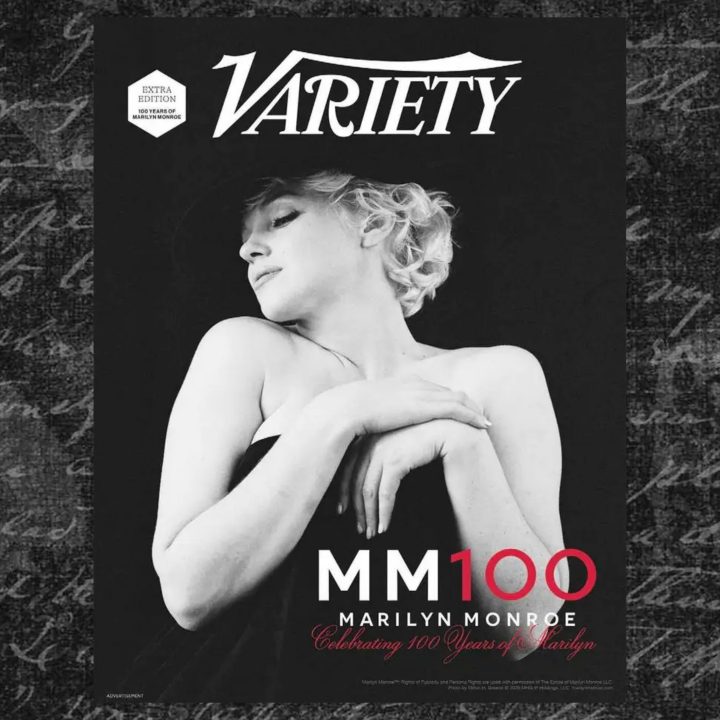
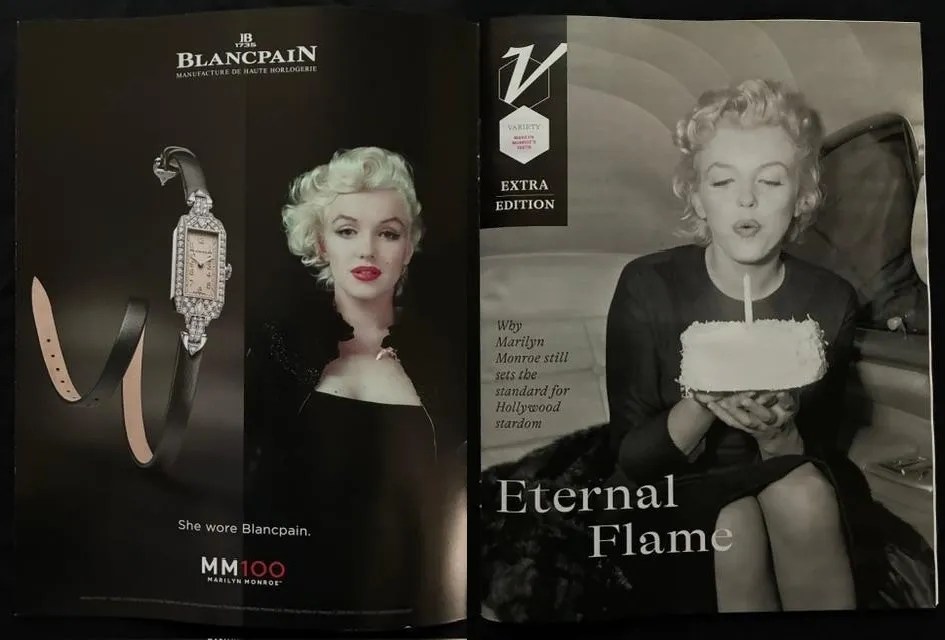
A special ‘extra edition’ of Variety was released online and in print on June 1st, 2026 – Marilyn’s 100th birthday – in partnership with Authentic Brands Group (ABG), the owners of her estate. Copies can now be found via eBay, with an image from the 1956 ‘Black Sitting’ with photographer Milton Greene gracing the cover.
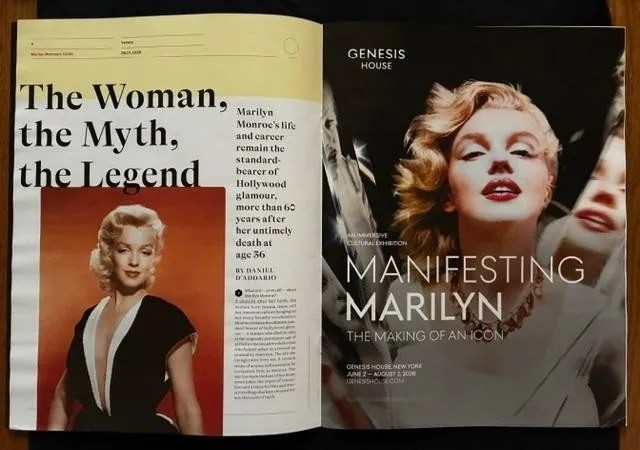
Marilyn Monroe at 100: Reckoning With Her Legend and Legacy
“What is it — even still — about Marilyn Monroe?
A century after her birth, the woman born Norma Jeane still has American culture hanging on her every breathy vocalisation. Monroe remains the ultimate standard-bearer of Hollywood glamour — a woman who died (in 1962, at the tragically premature age of 36) before the sexual revolution but who helped usher in a revved-up sensuality onscreen. The era she inaugurates lives on: A certain stripe of actress will inevitably be compared, first, to Monroe. The star has been the butt of too many mean jokes, the object of veneration and a muse for film and literary retellings that have elevated her into the realm of myth.
We, in the 22nd row and all those around it, can’t help but swoon. In Some Like It Hot, there’s the unforgettable moment when Sugar, frustrated at her poor luck, mopes, ‘I always get the fuzzy end of the lollipop’ — a childlike formulation to which anyone can relate. Monroe can, to those viewing her work uncharitably, get knocked for seeming to project a sort of foolishness, but the sharper read may be that she was a master at calibrating kindness and warmth, and inviting the audience along for the journey. Her seeing her dress blown up by a subway grate in The Seven Year Itch or, perhaps more infamously, her birthday serenade to Kennedy, were shrewd jokes that Monroe herself was in on.
It’s this quality of knowingness that elevates Monroe’s extended come-ons to the audience into the realm of art; Monroe was in control of her instrument even as, sadly, she lacked control over so much else in her life. And we owe it to Monroe not to allow that quality of her work to get lost. The sad fact of her victimisation and her struggles in life can threaten to blot out the subtler, trickier elements of her magic. Hollywood did indeed, as Elton John sang, put Norma Jeane on a treadmill; she emerged from it, though, a legend for reasons beyond her tragic fate.
This alchemical balance between the sorrow of what became of Monroe and the glory of what she was able to achieve may account for why Monroe has no true heir. Many estimable actresses have elements of her fame, or have sought to capture her essence … Part of Monroe’s essential quality is that she seemed to see around a corner, toward a time when sex was not taboo.
The culture has shifted, too, away from a subtle understanding that people contain multitudes. Monroe was pilloried, in her moment, but she was also allowed by Hollywood to test her talents in a manner that, decades later, actresses known for their physicality still struggle to do … This, too, deserves to be part of the Monroe legacy — and a trait that those stars still in her wake might emulate.
But there are plenty of Old Hollywood stars whose names and whose reputations persist. But there’s something about Monroe that’s just special. People don’t feel essentially close to Bette Davis or Lana Turner or Katharine Hepburn in quite the same way. Her tragic fate is a part of the story, but perhaps because it places us all in the 22nd row with Elton John: How might someone so tapped into her humanity have suffered so grievously?
Because that’s the essence of Marilyn — her sorrow and her beauty and her wit and her extensive acting training collide in the form of a woman utterly in touch with her humanity and able to convey it through the screen. She may always have gotten the fuzzy end of the lollipop. But she knew how to share its sweetness with all of us, too.”
– Daniel D’Addario
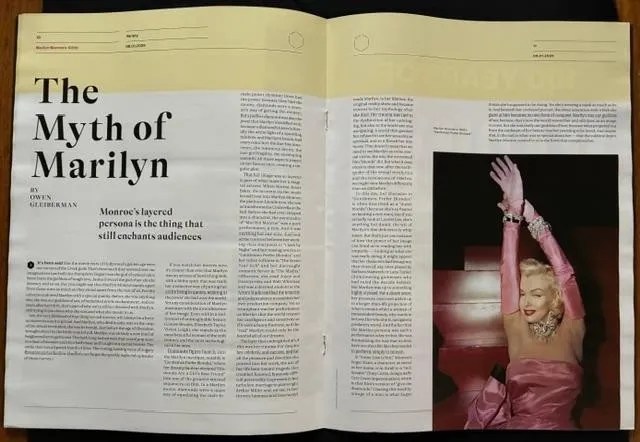
The Myth of Marilyn: Why We’re Still Obsessed With the Goddess of Sex
“It’s been said that the movie stars of Hollywood’s golden age were our version of the Greek gods. That’s how much they towered over our imaginations (and still do). Humphrey Bogart was the god of cynical valour, Bette Davis the goddess of tough love, James Stewart the god of aw-shucks decency, and so on. But you might say that Marilyn Monroe stands apart from those stars as much as they stood apart from the rest of us. For the universe endowed Marilyn with a special quality: Before she was anything else, she was our goddess of sex, of bedazzled erotic enchantment. And 100 years after her birth, that’s part of why we’re still obsessed with Marilyn, still trying to pin down who she was and what she meant to us.
Sex, the very lifeblood of that thing we call movies, will always be a force as mysterious as it is primal. And Marilyn, who died in 1962, was on the cusp of the sexual revolution; she was its herald. Just before the age of liberation brought about by the birth-control pill, Marilyn was already a new kind of heightened erotogenic star. The long-dark-lashed eyes that would pop open in a daze of wonder and then half-close, as if caught in a carnal reverie. The smile that was a lipstick bomb of bliss. The cooing, teasing voice of sugary flirtation and seduction. And let’s not forget the sparkly nightclub splendor of those curves.
If you watch her movies now, it’s clearer than ever that Marilyn was an actress of bewitching skill, with a blithe spirit that was really her instinctive way of putting her entire being in quotes, winking at the power she had over the world. Yet any consideration of Marilyn must start with the incandescence of her image … That her image was so layered is part of what made her a magical actress. When Norma Jeane Baker, the brunette starlet, made herself over into Marilyn Monroe, the platinum-blonde icon, she was as transformed as Cinderella at the ball. Before she had even stepped into a character, the personality of ‘Marilyn Monroe’ was a pure performance, a role. And it was anything but one-note.
The layer that undergirded all of this was her trauma. For despite her celebrity and success, and for all the pleasure and devotion she poured into her work, the arc of her life bent toward tragedy. Her troubled, haunted, famously difficult personality (expressed in her turbulent marriage to playwright Arthur Miller and, on set, in her chronic lateness and insecurity) made Marilyn, in her lifetime, the original reality show, and it became central to her mythology after she died. Her trauma was tied to the dysfunction of her upbringing, but also to the world she was navigating: a world that gawked but refused to see her sexuality as spiritual, and so it forced her into boxes. That doesn’t mean that we need to view Marilyn as some eternal victim, the way the overstated biopic Blonde did. But what it does mean is that now, after the earthquake of the sexual revolution and the revelations of #MeToo, we might view Marilyn differently than we did before.”
– Owen Glieberman
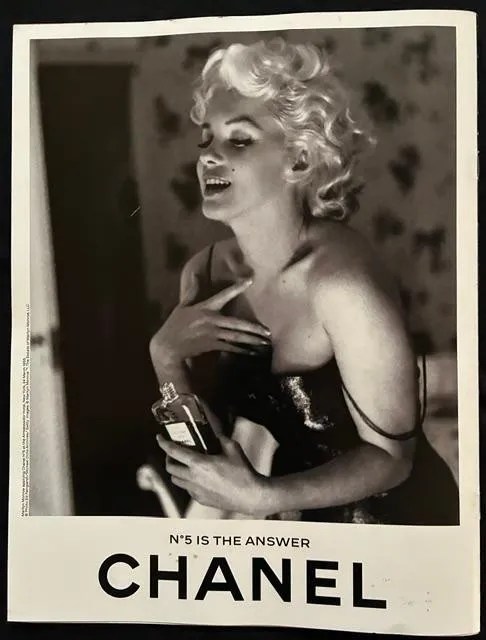
In her column for the Winnepeg Free Press – headlined ‘Marilyn Monroe Cursed to Be Hot Forever’ – Jen Zoratti responded to Glieberman’s article, which (initially at least) seems Norman Mailer-inspired in its analysis of Marilyn’s sex appeal.
“We just can’t seem to quit Marilyn Monroe, and we really can’t seem to quit talking about her in a specific way. Why am I reading a Variety headline calling her, in 2026, the ‘goddess of sex’? The accompanying copy practically leers, describing her smile as ‘a lipstick bomb of bliss’ and noting ‘the sparkly nightclub splendour of those curves.’
Who wrote this, an awooga-ing cartoon wolf?
Monroe didn’t live to be 100. She didn’t even live to see 40. She has the curse of being Hot Forever: forever blonde, forever young, forever synonymous with sex. As such, she remains the subject of ongoing and unrelenting objectification to the point that it doesn’t even feel like she was ever a real person.
Culture made Marilyn Monroe into a poster. A pin-up. An icon. A symbol. An avatar. A costume. A reproduction, copied over and over and over again until it disintegrates. Marilyn Monroe in the white halter dress: an image as American as Coca-Cola, to be consumed in much the same manner.
In the years since her death, there have been plenty of attempts to set the record straight, to try to shed light on the actual woman behind the iconography, the gossip, the myth … But even the well-meaning correctives can fall short. Culture critics will hasten to point out she was smart — did you know Marilyn Monroe read Dostoyevsky? — but almost always with a note of barely concealed astonishment. And it always seems to come back to her face and her body, which reinforces the belief that’s all she had to offer the world.
I’m trying to imagine what Marilyn Monroe would be like if she got to be an old woman and I honestly can’t, so static is her image … Would she have gone under the knife to preserve her singular face? Or would she have been able to shed an image that we just can’t seem to? Would she be lauded for ‘aging gracefully’ or mocked for trying to hold on to the very thing she was told was most valuable?
We don’t need to forget her. Marilyn Monroe is unforgettable. It’s just a shame that the way she is remembered is so often unforgivable.”
 The Marilyn Report