A small exhibition, 100 Years of Marilyn, is now open at the Bill Douglas Cinema Museum in Exeter until November 20th – and admission is free.
“Our new exhibition celebrating the centenary of the birth of cinema’s most iconic star, Marilyn Monroe, is now open in the main reception area of the Old Library.
Marilyn was born on 1 June 1926 as Norma Jean Mortenson before reinventing herself as Marilyn Monroe and beginning her acting career. While her career at the top was only about 12 years from her eyecatching supporting roles in All About Eve and The Asphalt Jungle until her death at the age of just 36 in 1962, her cultural resonance has been extraordinarily powerful ever since.
The museum holds over 800 items on Marilyn, reflecting the ubiquity of her image in popular culture and her impact as a star. The items range from contemporary articles on her way to the top to the vast amount of ‘Marilynalia’ produced in the years since her death, from handbags to prints to household objects.
Marilyn’s image can be used to represent many things, all of which have some truth; she can be a sex symbol, a feminist icon, a victim of abuse, and a warning of the perils of fame. What we really wanted to convey as well though is that Marilyn was incredibly good at her job.
For all the rumours of difficulty on set and lateness, when she is on-screen she is a mesmerising presence, a fantastic film performer with exceptional timing, especially in the comedy roles that are her perhaps best known, such as Gentlemen Prefer Blondes and Some Like it Hot, but also dramas such as Niagara and Bus Stop.”
The exhibition was organised by student volunteers Jean MacCourt and Issie Tween, with assistance from the museum’s curatorial team. A series of videos about the process has been posted on YouTube.
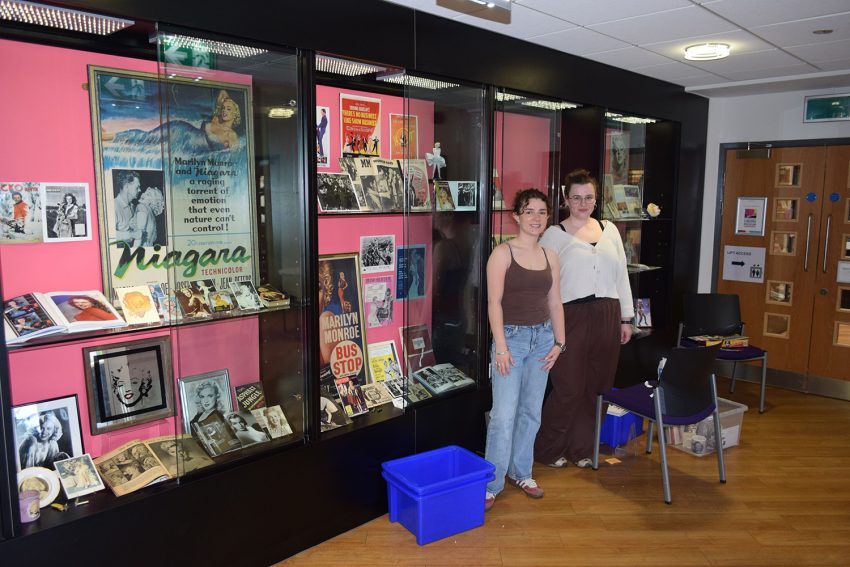
The museum’s Marilyn Monroe Collection is also catalogued online, including vintage ephemera from her lifetime as well as the ‘Marilynalia’ that has proliferated since her death.
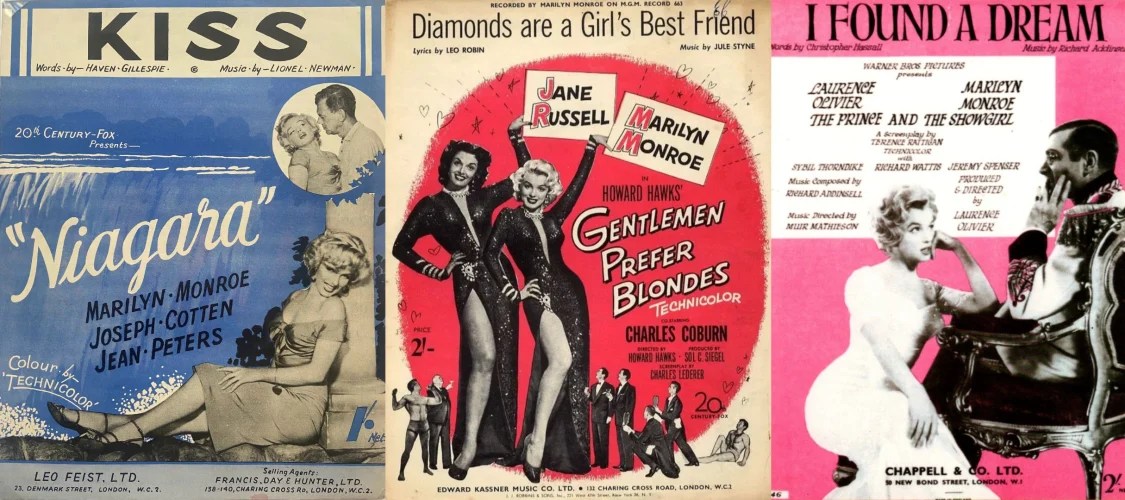
Sheet music for songs from Marilyn’s films: ‘Kiss‘ (Niagara, 1953); ‘Diamonds Are a Girl’s Best Friend‘ (Gentlemen Prefer Blondes, 1953); and ‘I Found a Dream‘ (The Prince and the Showgirl, 1957.)
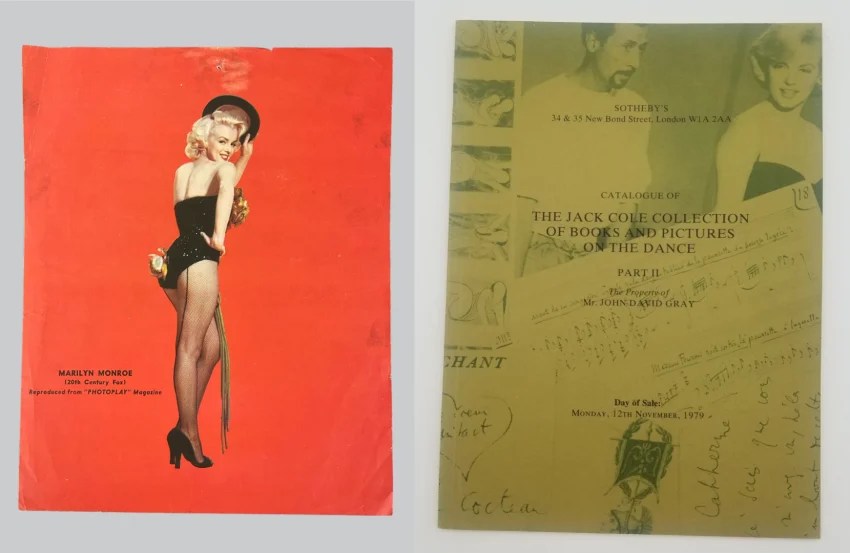
A 1953 pin-up from Photoplay magazine, showing Marilyn in costume for Gentlemen Prefer Blondes; and a 1979 Sotheby’s auction catalogue featuring ‘books and pictures of the dance’ from the collection of Marilyn’s choreographer, Jack Cole.
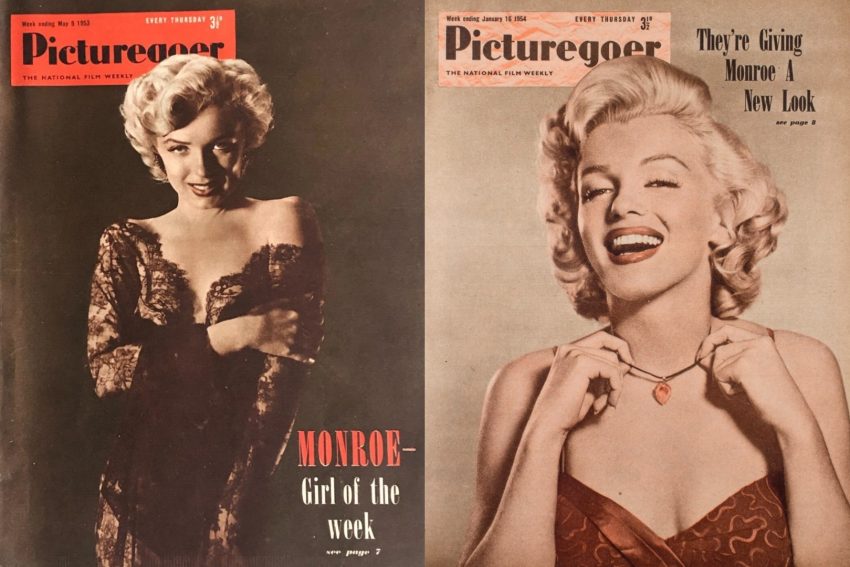
Marilyn was regularly featured in Picturegoer, a weekly magazine for UK film fans that ran for almost fifty years.
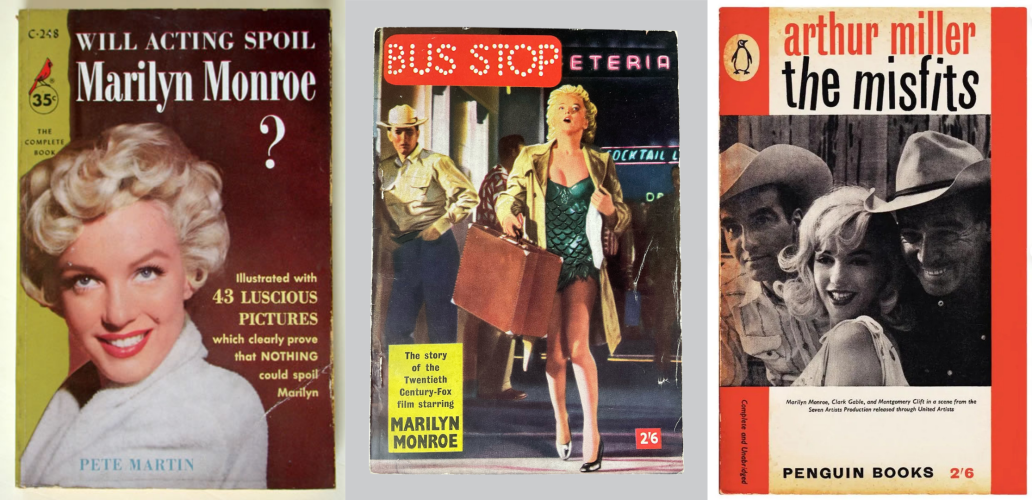
Will Acting Spoil Marilyn Monroe is a book-length version of Marilyn’s 1956 interviews with Pete Martin for the Saturday Evening Post. From the same year, Bus Stop featured photos and a short story based on the movie; and Arthur Miller’s The Misfits was published in tandem with that film’s release in 1961.
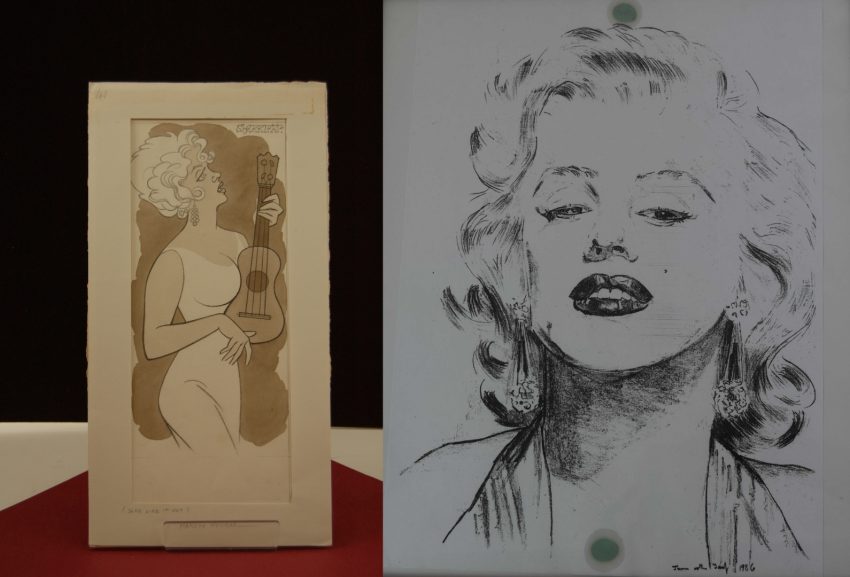
One of the more valuable items from the museum’s collection – an original pencil and ink sketch depicting Marilyn’s role in Some Like It Hot (1959) – was created by Robert Sherriffs, a cartoonist for Punch magazine. Shown here alongside a pencil drawing by James Collin Jones from 1986.
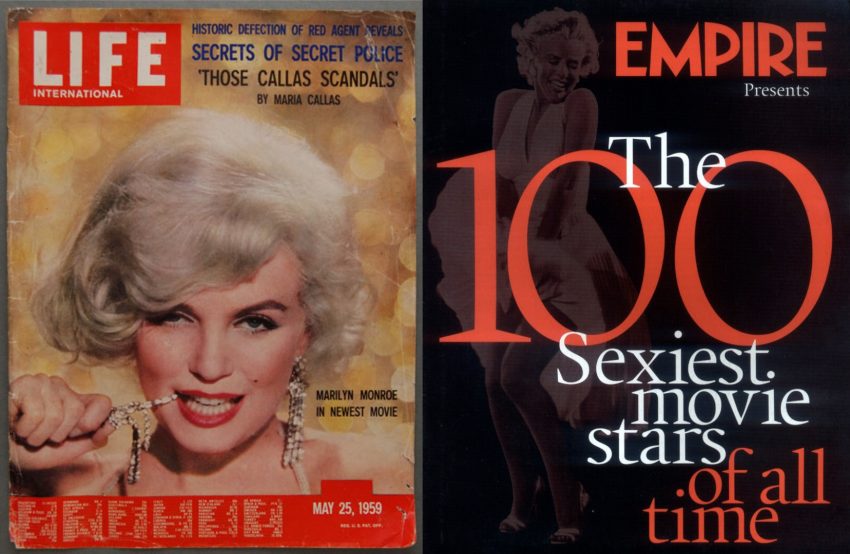
Marilyn photographed by Richard Avedon for LIFE International in 1959; and Sam Shaw’s iconic photo of Marilyn standing over a breezy subway grate in The Seven Year Itch (1955) covered a 2004 Empire magazine supplement, ‘The 100 Sexiest Movie Stars of All Time.’
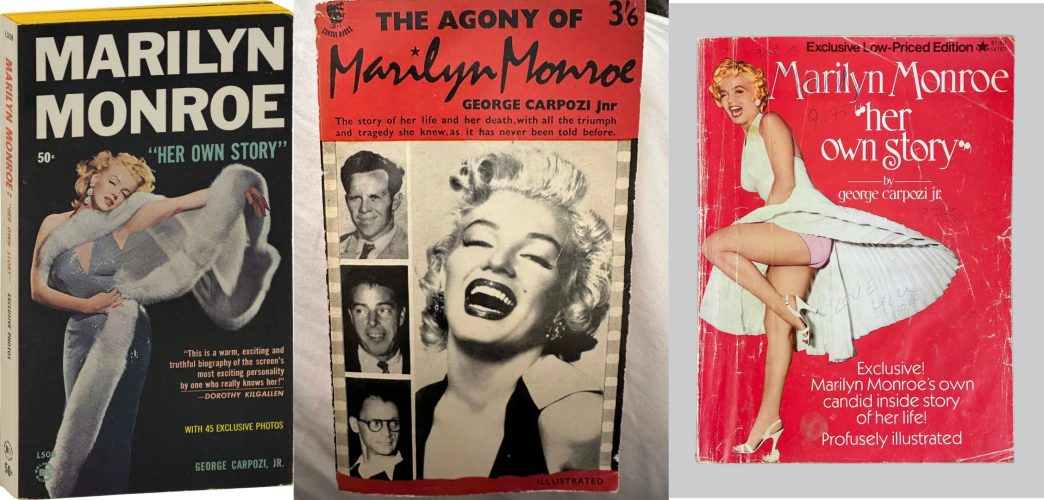
George Carpozi Jr. interviewed Marilyn when she moved to New York in 1955, and published one of the first biographies in 1961. Marilyn Monroe: Her Own Story was later rebranded as The Agony of Marilyn Monroe, reverting to its original title for a ‘bookazine‘ edition in 1973.
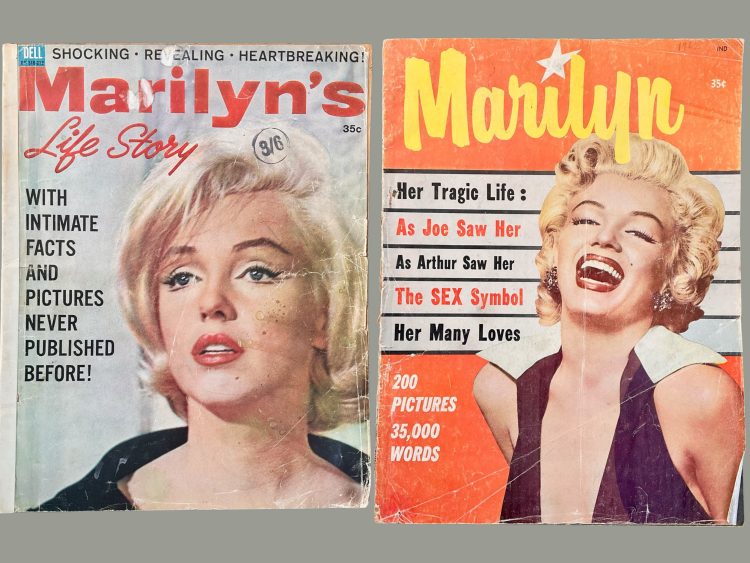
Two magazine specials released after Marilyn died in 1962: Marilyn’s Life Story and Marilyn: Her Tragic Life.
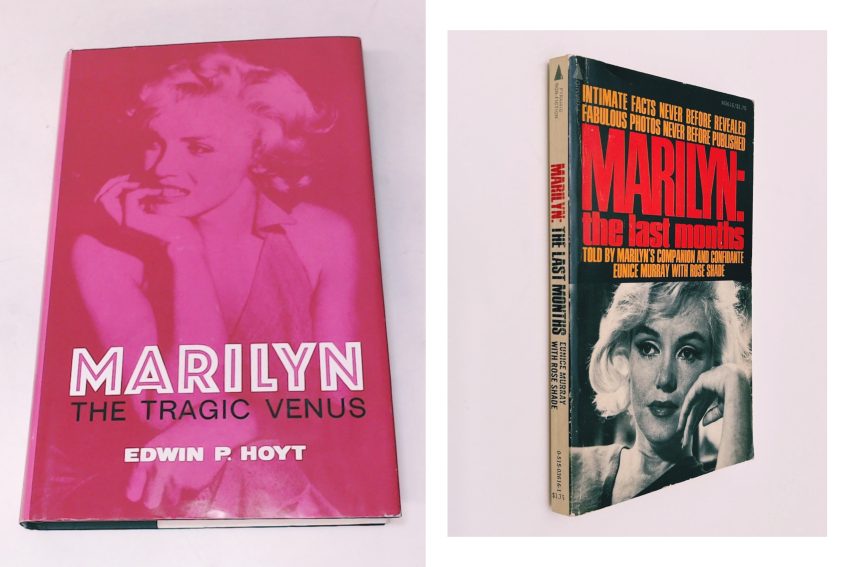
Another early biography, Edwin P. Hoyt’s Marilyn: The Tragic Venus (1965); and Marilyn: The Last Months (1975), a memoir by her homecare assistant, Eunice Murray.
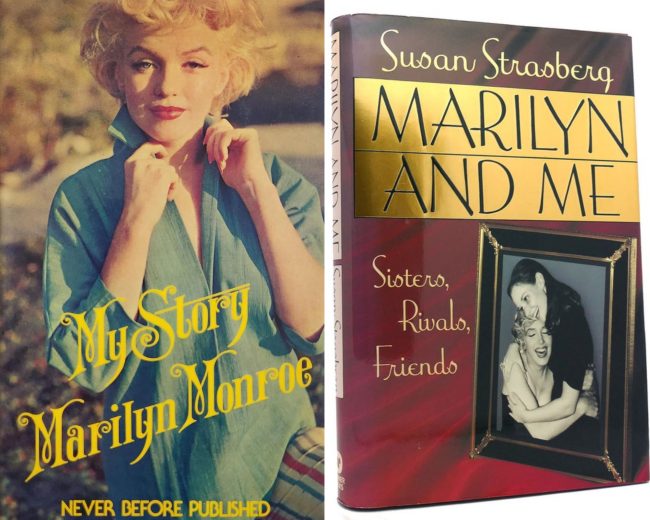
Marilyn’s shelved 1954 memoir, My Story, was finally released in 1974; while Susan Strasberg’s Marilyn and Me: Sisters, Rivals, Friends was published in 1992.
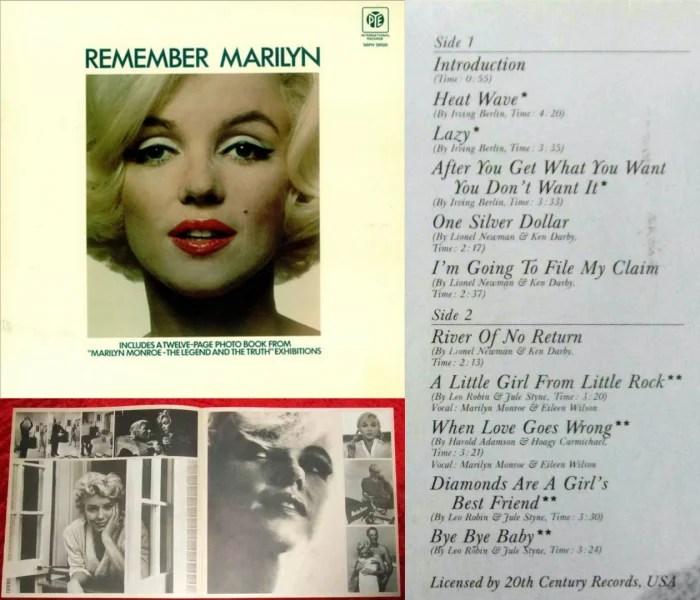
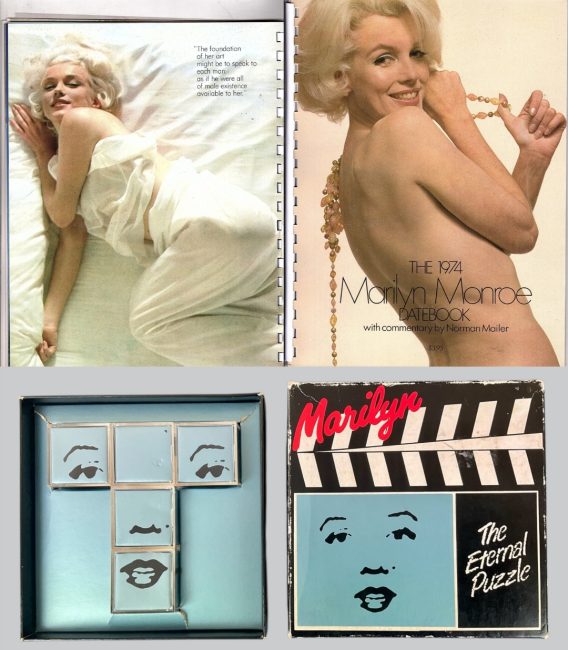
Remember Marilyn, a 1972 album released by Twentieth Century-Fox, including a twelve-page booklet featuring images from the exhibition, Marilyn Monroe: The Legend and the Truth; The 1974 Marilyn Monroe Datebook, featuring photographs and snippets of text from Norman Mailer’s Marilyn; and a 1980s curio – Marilyn: The Eternal Puzzle.
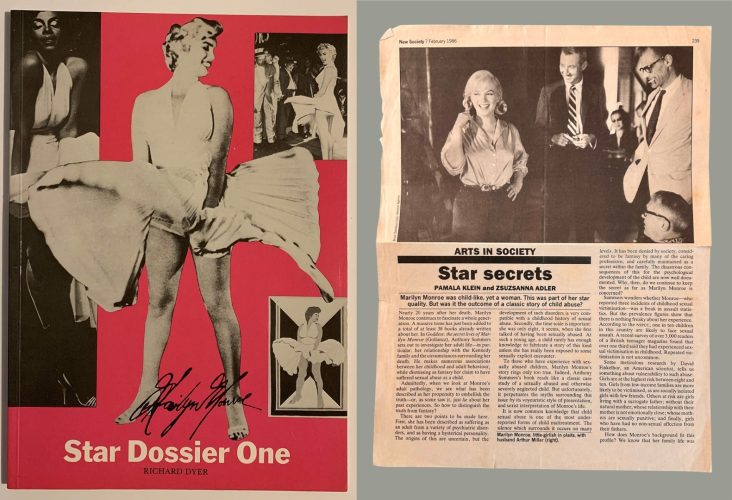
Star Dossier One, published by the BFI in 1980, featured an influential essay by Richard Dyer; and ‘Star Secrets,’ a 1986 article for New Society focusing on Marilyn as a survivor of childhood sexual abuse, which was recently cited by Monroe biographer Andrew Wilson (see here.)
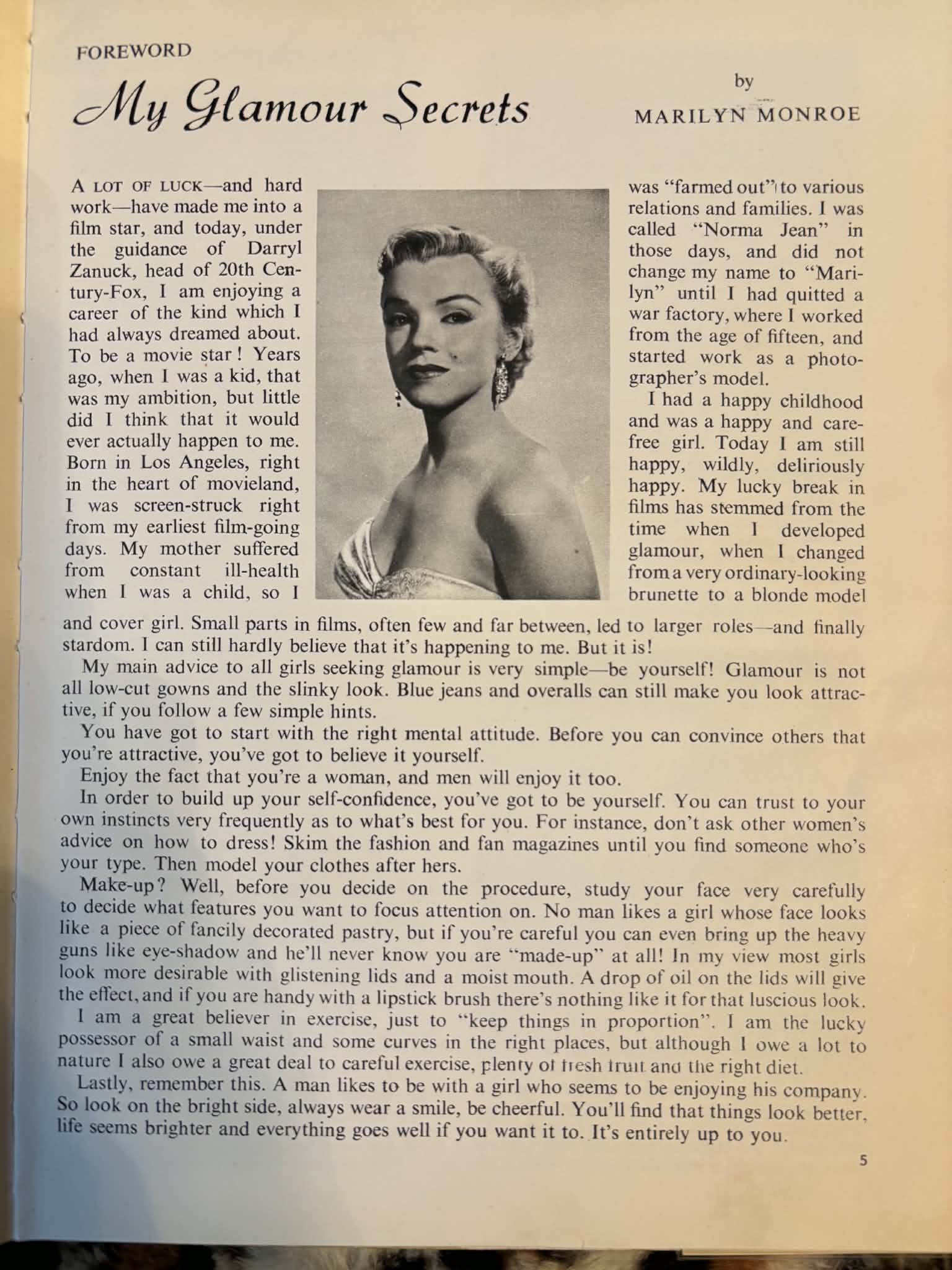
And finally, Marilyn in her own words: back in 1953, she provided a foreword to Glamour: Film Fashion and Beauty, a book edited by British journalists Peter Noble and Yvonne Saxon. (Although signed off by Marilyn herself, the article was probably collated from interviews with the authors.)
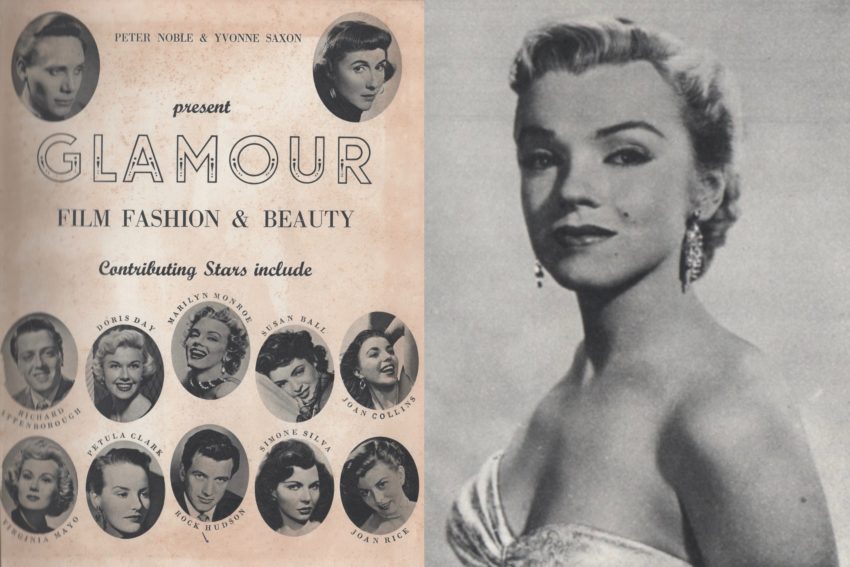
“My main advice to all girls seeking glamour is very simple—be yourself!” Marilyn said. “Before you can convince others that you’re attractive, you’ve got to believe it yourself. Enjoy the fact that you’re a woman, and men will enjoy it too.”
UPDATE:
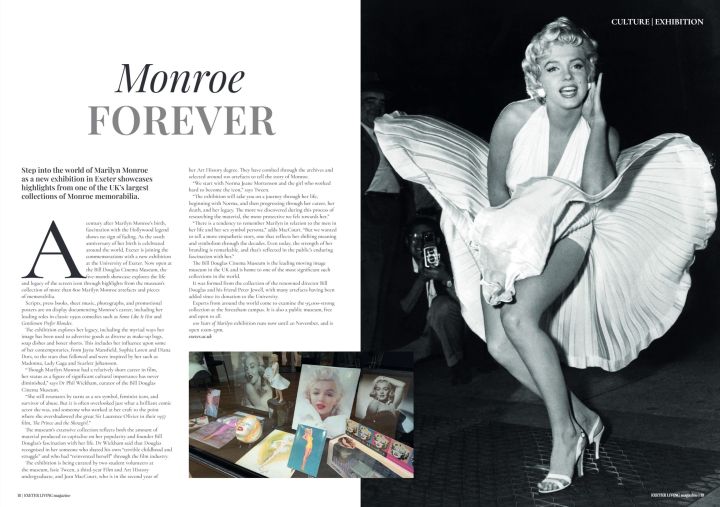
Marilyn is featured in the July issue of Exeter Living magazine…
“Scripts, press books, sheet music, photographs, and promotional posters are on display documenting Monroe’s career, including her leading roles in classic 1950s comedies such as Some Like It Hot and Gentlemen Prefer Blondes.
‘Though Marilyn Monroe had a relatively short career in film, her status as a figure of significant cultural importance has never diminished,’ says Dr. Phil Wickham, curator of the Bill Douglas Cinema Museum.
‘She still resonates by turn as a sex symbol, feminist icon, and survivor of abuse. But it is often overlooked just what a brilliant comic actor she was, and someone who worked at her craft to the point where she overshadowed the great Sir Laurence Olivier in their 1957 film, The Prince and the Showgirl.’
The museum’s extensive collection reflects both the amount of mattherial produced to capitalise on her popularity and founder Bill Douglas’s fascination with her life. Dr. Wickham said that Douglas recognised in her someone who shared his own ‘terrible childhood and struggle’ and who had ‘reinvented herself’ through the cinema industry.”
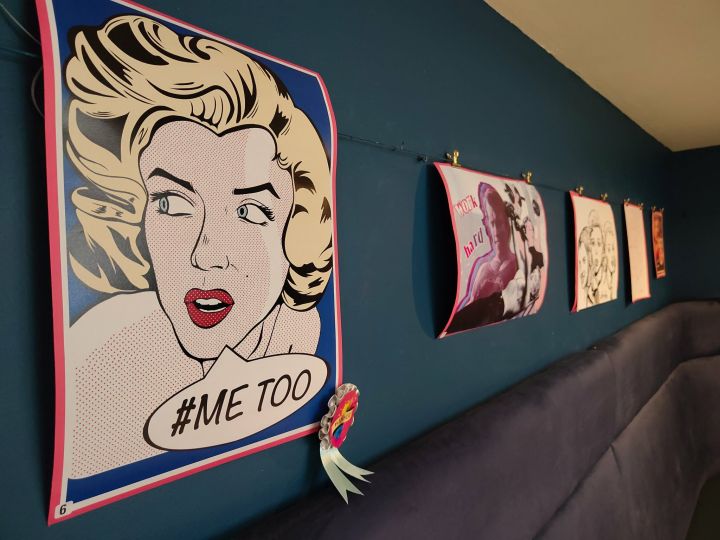
And a selection of Marilyn-inspired artworks is on display at Exeter Picturehouse until September 20, following a summer art challenge organised by the Bill Douglas Cinema Museum.
 The Marilyn Report