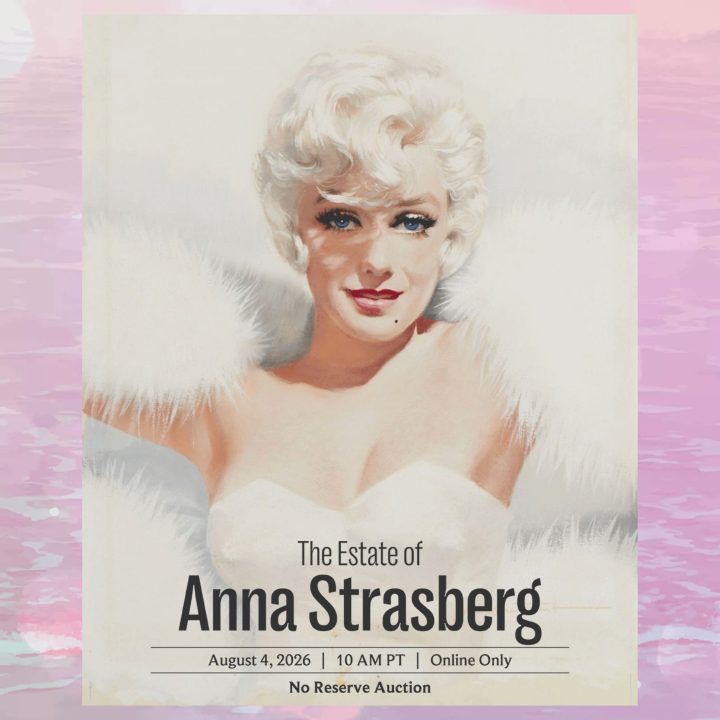
Ahead of the Estate of Anna Strasberg online event at Julien’s Auctions on Tuesday, August 4, I’m looking at some more Marilyn-related items pertaining to her professional career and artistic influences. Previous posts in this series explored Marilyn’s private life, and her relationship with the Strasbergs.
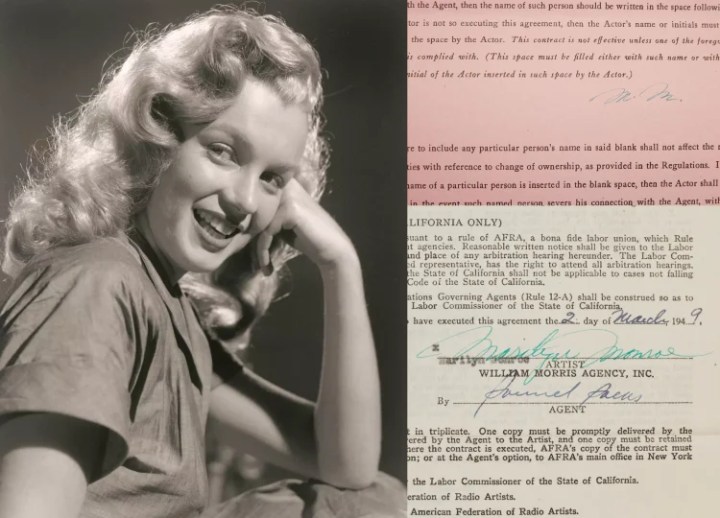
Sold separately, two William Morris Agency contracts signed by Marilyn on March 2, 1949. The first outlines an agreement for a one-year deal, noting four agents who could ‘personally supervise the Actor’s business’ including ‘John Hyde’ (Johnny Hyde, Marilyn’s personal mentor and paramour.) The second, oddly, outlines a six-year agreement. Although Hyde died in 1950, Marilyn remained with the agency until early 1955, chiefly represented by Charles Feldman (who also produced The Seven Year Itch.)
One-year contract SOLD for $22,400; six-year agreement SOLD for $6,400
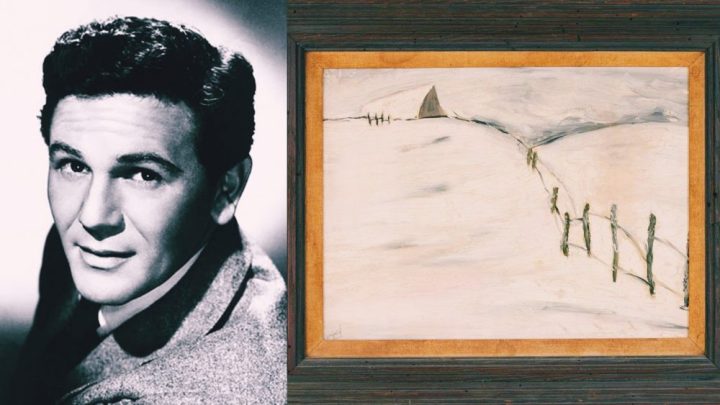
An oil painting by actor John Garfield, possibly a gift from the Strasbergs. Garfield was a member of the Group Theatre before finding fame in Hollywood. In 1949, Marilyn was considered for a role opposite Garfield in John Huston’s We Were Strangers. She didn’t get the part, but Huston cast her in his next film, The Asphalt Jungle (1950.) In 1952, photographer Sam Shaw was developing a screenplay with Monroe and Garfield in mind. After Garfield’s death that year, Shaw abandoned the project. It was later picked up by director Elia Kazan and released to universal acclaim as On the Waterfront (1954), with Marlon Brando and Eva Marie Saint.
SOLD for $2,240
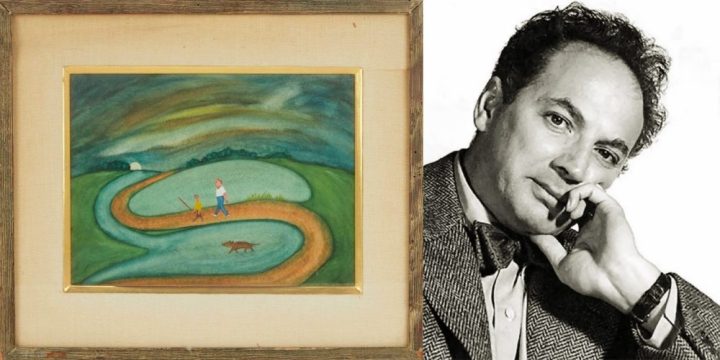
A slightly odd 1947 watercolour by dramatist and screenwriter Clifford Odets. In 1952, Marilyn appeared in Clash By Night, a film adapted from Odets’ Broadway plays; and in 1959, she met with Odets to discuss his screenplay, The Story on Page One. She ultimately passed on the leading role, which went to Rita Hayworth. After Marilyn’s death, Odets was interviewed by Mike Wallace for a short but insightful television documentary, The Marilyn Monroe Story (1963.)
SOLD for $1,920
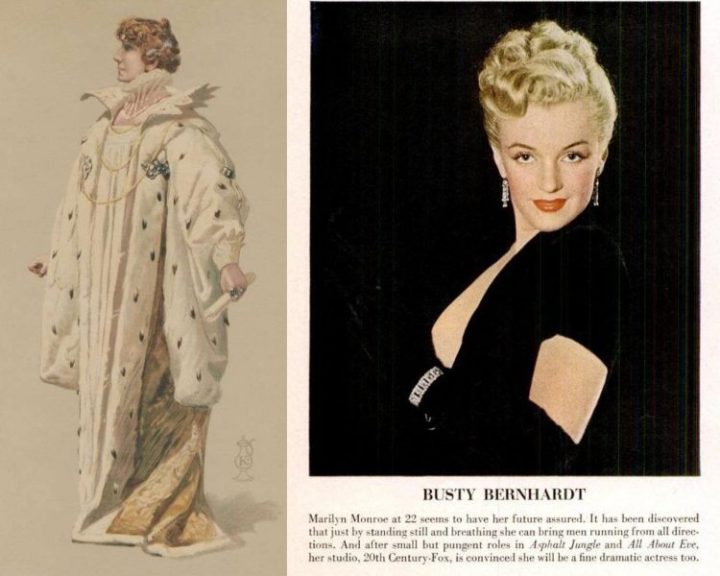
A framed print of Sarah Bernhardt, a French theatre actress of the 19th and early 20th century, often described as the first modern celebrity. In a 1951 profile for LIFE magazine, Marilyn was rather crassly billed as a ‘Busty Bernhardt’; and in The Seven Year Itch (1955), her character naïvely assumes that neighbour Tom Ewell is old enough to have seen Bernhardt on the stage.
SOLD for $1,600
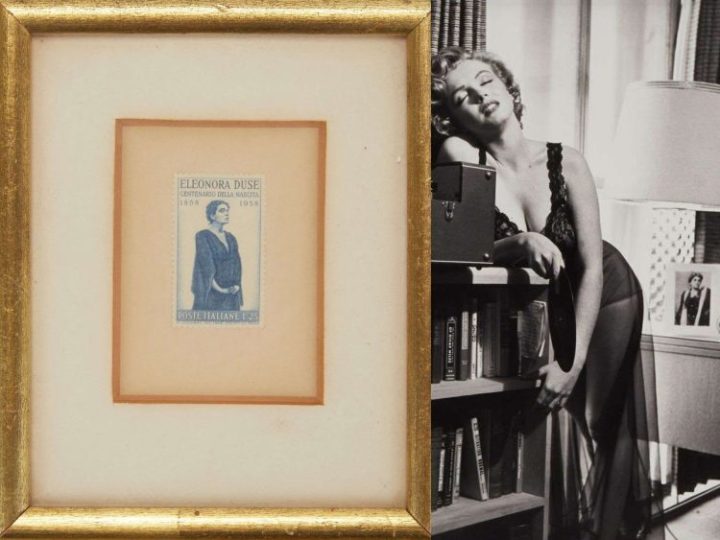
A framed postage stamp featuring the Italian theatre actress Eleonora Duse, issued by ‘Poste Italiane’ to commemorate the actress’ centenary in 1958; matted and framed by the Belnord Art Studio on Amsterdam Avenue in NYC in the 1950s (as indicated by their sticker on the back listing a ‘TRafalgar’ telephone number.) Marilyn had long been fascinated by Duse, as can be seen in Philippe Halsman’s 1952 photo shot in Marilyn’s apartment, where another framed image of Duse stood beneath a lamp.
SOLD for $1,280
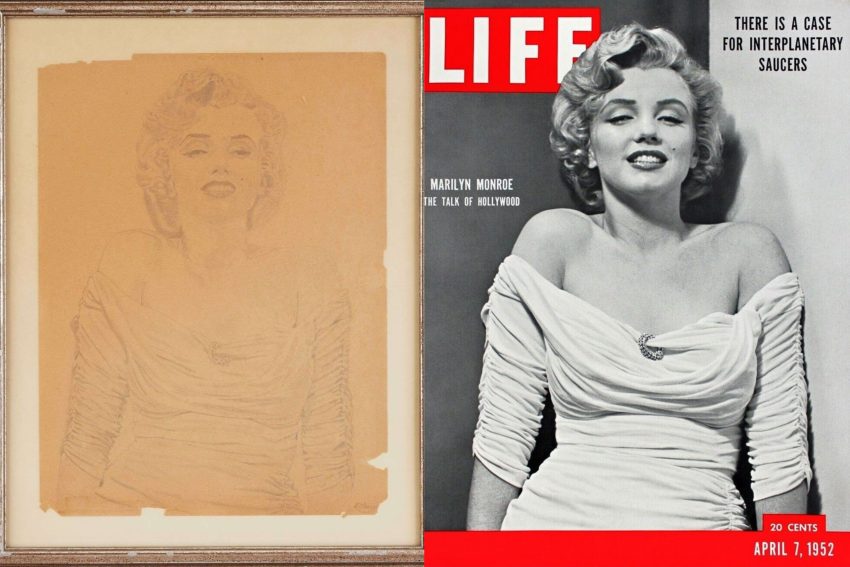
A framed drawing by a Monroe fan, based on Philippe Halsman’s photograph of Marilyn for the April 1952 issue of LIFE magazine (her first cover story.)
SOLD for $1,920
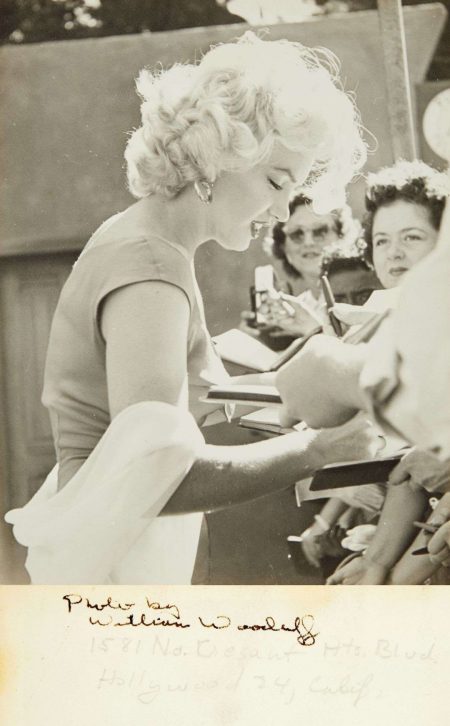
A rare original print of Marilyn signing autographs during the ‘My Marilyn‘ party at bandleader Ray Anthony’s home in August 1952; a handwritten annotation on the verso reads in part ‘Photo by William Woodruff / Hollywood 24 Calif.’
SOLD for $6,400
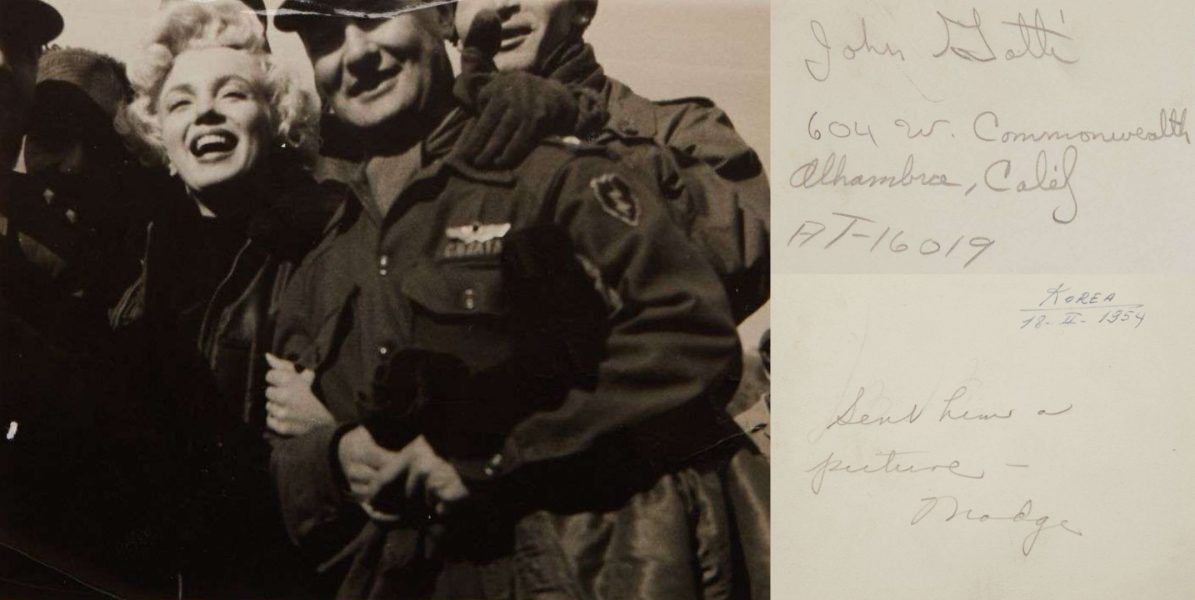
An original snapshot taken during Marilyn’s tour of Korea in February 1954; verso with pencilled annotations reading ‘Send him a picture – Madge’ (one of the fake names used interchangeably by Marilyn and her secretaries to protect her privacy); also included is a slip of paper with another annotation reading in part: ‘John Gotti / …Alhambra Calif.’ — presumably the man in the photo, but not the New York mobster who shared his name (and was only 13 years old at the time.)
SOLD for $1,920
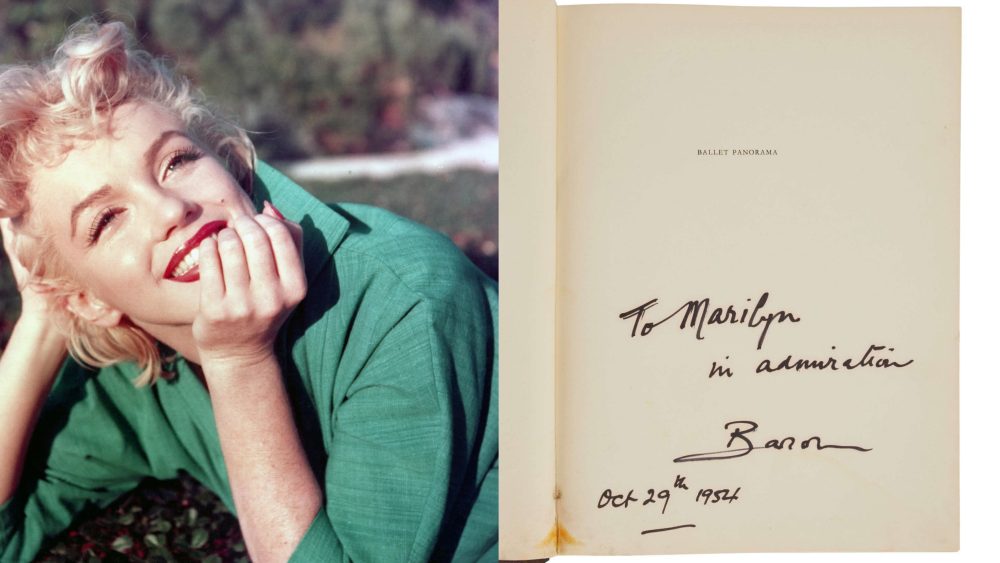
Ballet Panorama (1954), a photography book inscribed ‘To Marilyn / in admiration / Oct 29th 1954’ by its author Baron, a British photographer, after a photo shoot with Marilyn in Palm Springs.
SOLD for $1,024
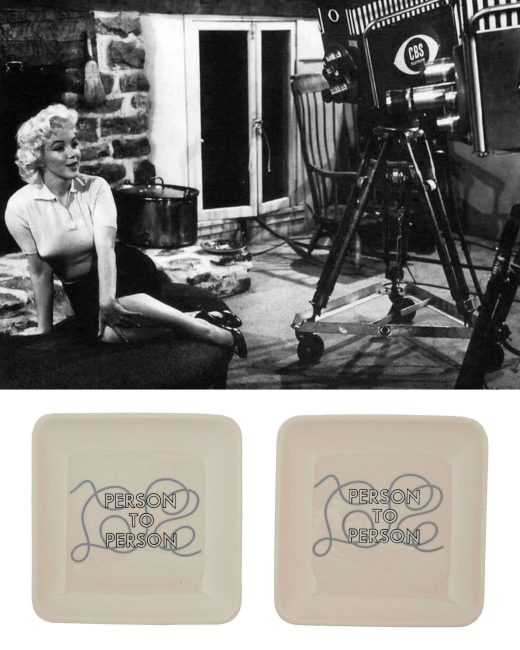
Two ceramic trinket trays commemorating Marilyn’s appearance on Person to Person, the CBS television show hosted by Edward R. Murrow, in April 1955. The interview was broadcast live from the Westport, Connecticut home of photographer Milton Greene, Marilyn’s business parter in the newly formed company, Marilyn Monroe Productions.
SOLD for $768
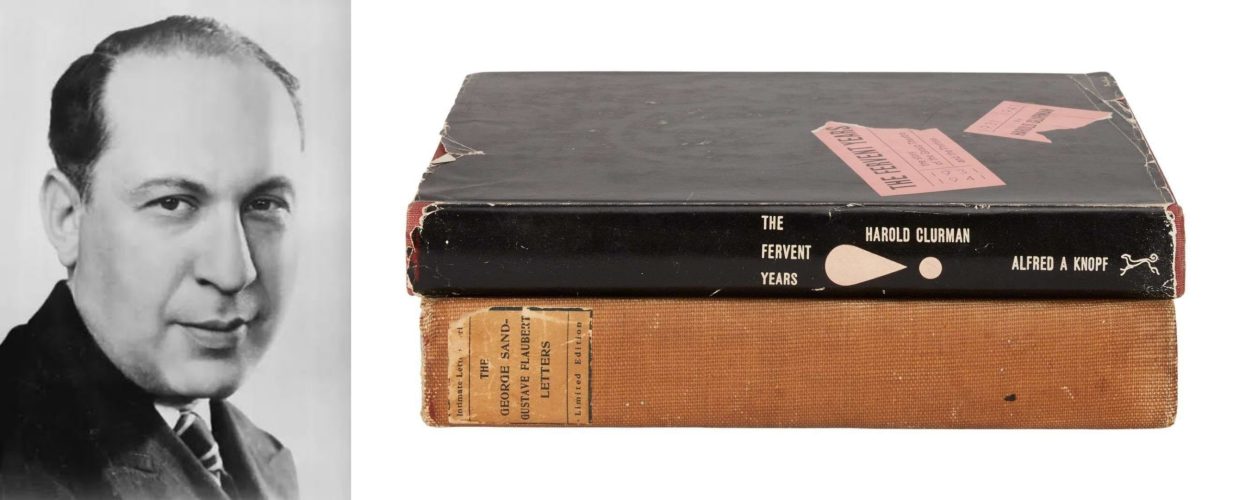
Two books owned by Marilyn, including The Fervent Years (1950), the memoir of theatre director and drama critic Harold Clurman, who founded the Group Theatre with Lee Strasberg in the 1930s. The second book is The George Sand-Gustave Flaubert Letters, ed. Aimee L. McKenzie (1921.)
SOLD for $1,920
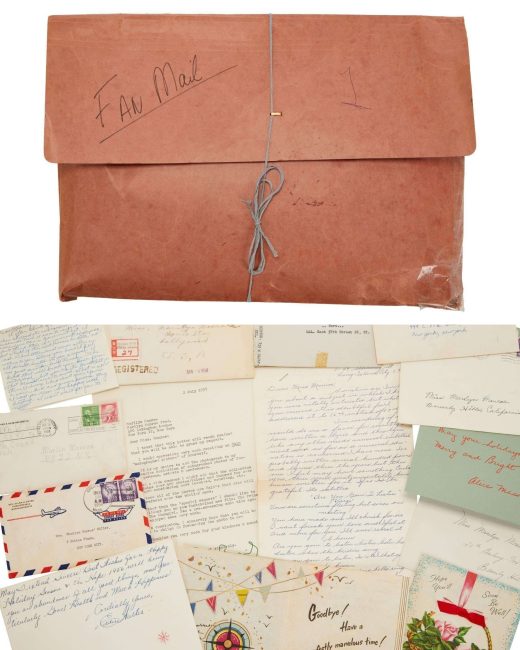
A group of approximately 75 pieces of fan mail kept in an accordion file; many still have their original transmittal envelopes; all sent to Marilyn at various addresses in Los Angeles or New York, ranging in date from about 1954 to 1956, including ‘get well’ cards, Christmas cards, postcards, typed notes, and handwritten letters from fans mostly based in the United States, though a few are from international locations as well.
SOLD for $16,000
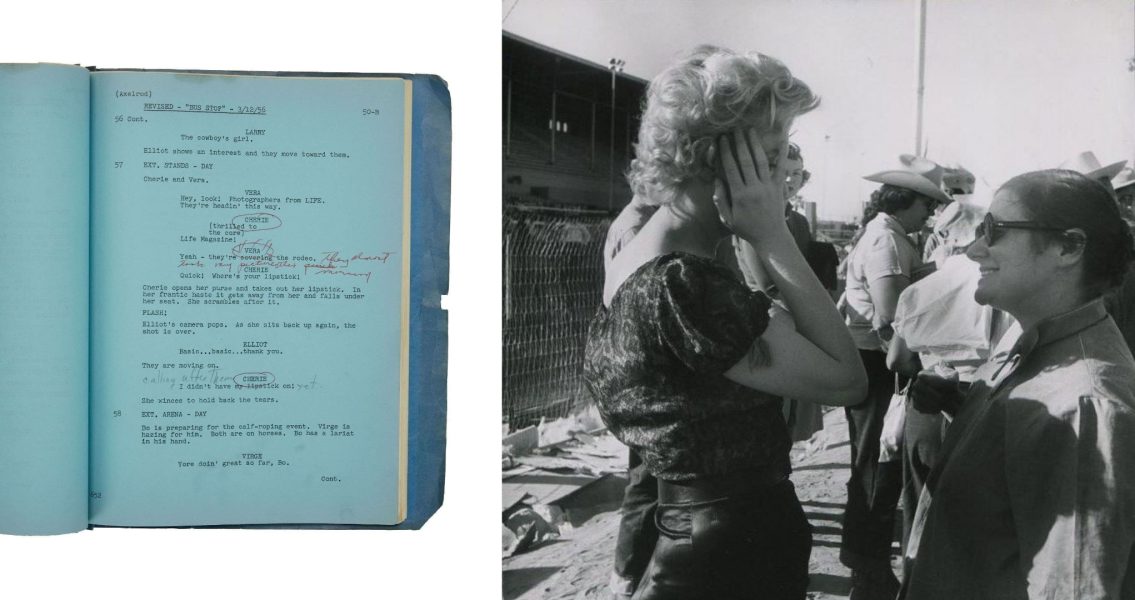
Screenplay for Bus Stop with ownership signature from ‘Paula S’ [Paula Strasberg], dated February 27, 1956, marked ‘Final,’ 124 pages including a number of colored ‘script change’ ones, very lightly annotated by both Strasberg (in red ballpoint ink) and by Marilyn (in pencil) including on page 48 where Monroe writes ‘nervous;’ on page 49 where she writes ‘foot;’ and on page 50-B where she writes ‘calling after them yet.’
SOLD for $1,920
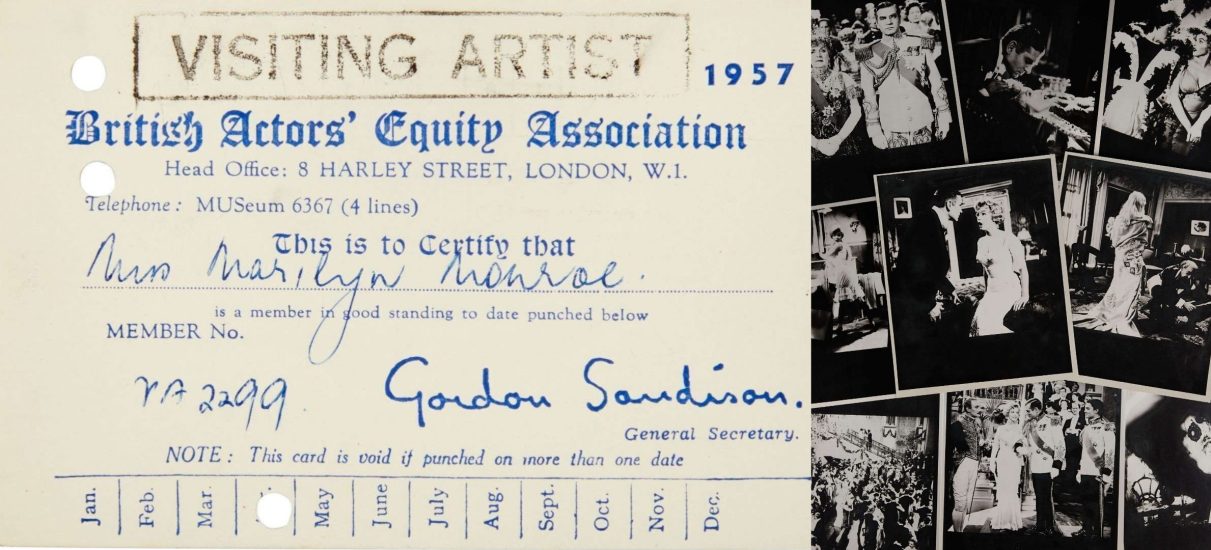
At left: ‘Visiting Artist’ card issued by the British Actors’ Equity Association, authorising her appearance in The Sleeping Prince. The film was in production from July-November 1956. Marilyn’s name was handwritten by a secretary, with a punch-out for the month of April indicating Marilyn had paid her dues up to that month in 1957, although she never returned. At right: a group of nine mimeograph prints on flimsy paper with a semi-gloss finish, depicting the star and others on the set of The Prince and the Showgirl, as the film was renamed for its release in June 1957.
Equity card SOLD for $1,280; prints SOLD for $1,152
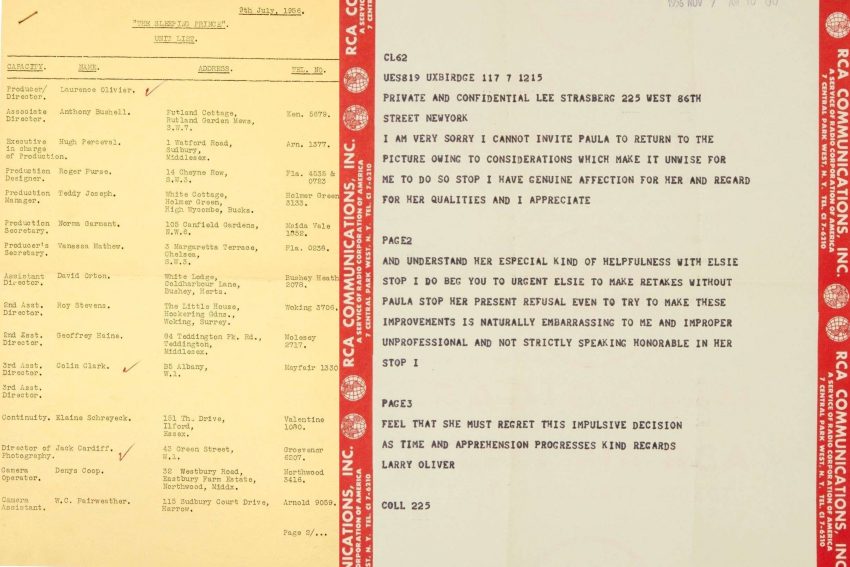
Two documents relating to Laurence Olivier, Marilyn’s director, co-star and co-producer on The Prince and the Showgirl. At right, a typed ‘Unit List’ dated July 9, 1956, listing the crew members including two in particular who have a red check mark next to their names — Jack Cardiff, the film’s director of photography; and third assistant director Colin Clark. Essentially a ‘gopher’ for Olivier, Clark later wrote two fanciful memoirs, adapted into the 2010 movie, My Week With Marilyn. At right, a message dated November 7, 1956 sent from Olivier to Lee Strasberg in New York, regarding his wife Paula being barred from the set. For privacy reasons, Olivier referred to Marilyn throughout by her character’s name, Elsie. The message reads in part: ‘…I cannot invite Paula to return to the picture / I appreciate her special kind of helpfulness with Elsie / I do beg you to urgent [sic] Elsie to make retakes without Paula / her present refusal even to try to make these improvements is naturally embarrassing to me and improper / unprofessional and not strictly speaking honourable / …she must regret this impulsive decision …’
SOLD for $2,560
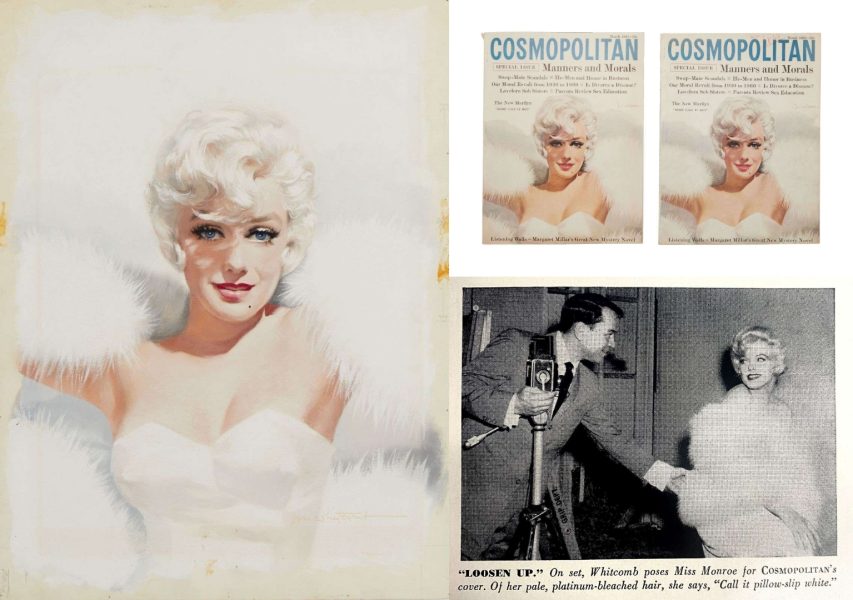
An original gouache painting by Jon Whitcomb for the March 1959 cover of Cosmopolitan, where an accompanying article by Whitcomb appeared alongside a small photograph of Marilyn posing for him. Whitcomb later gifted this finished painting to her. Also included are two copies of the magazine from Marilyn’s personal files.
SOLD for $8,960
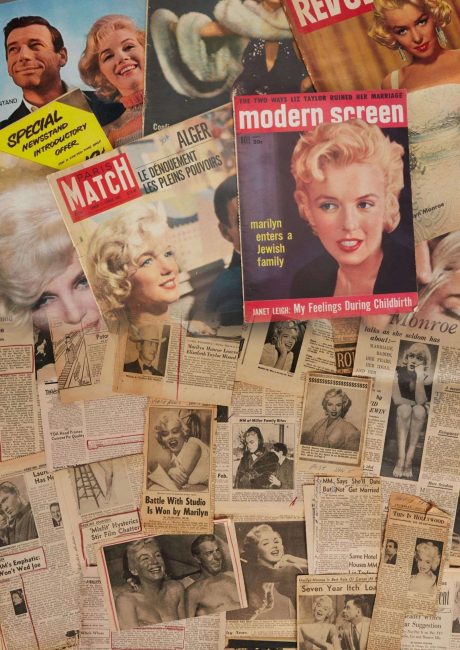
A bankers box filled with approximately 50 magazines from Marilyn’s own files, all feature the star on the cover or in articles on the inside pages; titles are American and foreign, including ones such as Life, Look, Manchete, McCall’s, Modern Screen, Motion Picture, Photoplay, Revue, and many others; all in various states of condition; also included are a number of later magazines dating from the 1970s-1980s that Lee Strasberg owned, some of which still display his address label on the front covers. And sold separately, a group of two bankers boxes filled to the brim with scores of press clippings from Marilyn’s own personal files, includes complete articles as well as brief tidbits from newspapers and magazines all over the world (though most are American publications); most were sent to Monroe from the various professional press clipping services she used (as noted by their telltale red wax pencil annotations), but a number of clippings were sent to her by press agents, managers, and friends; ranging in date from 1953 to 1961.
Magazines SOLD for $19,200; press clippings SOLD for $16,000
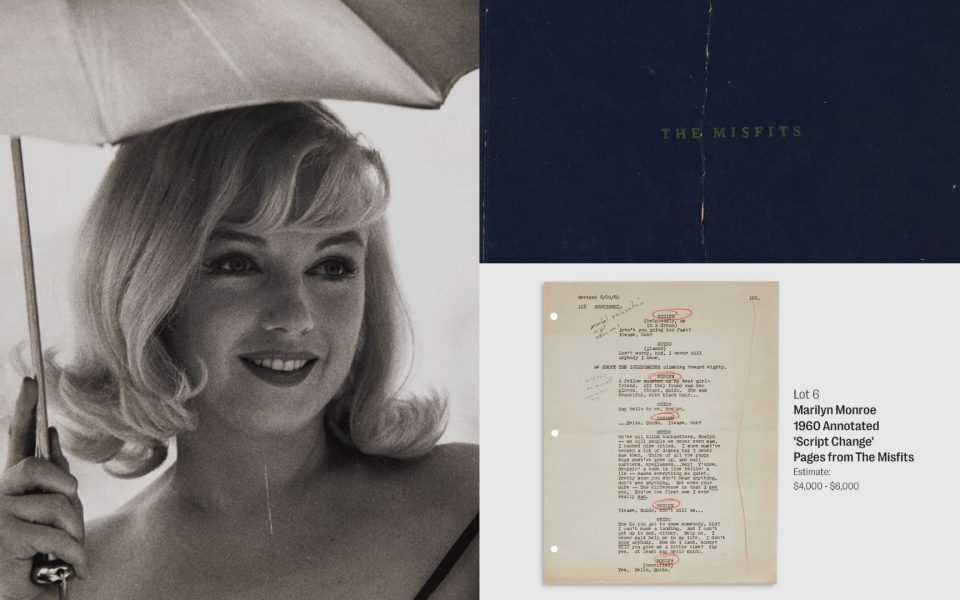
At left, an original print showing Marilyn photographed by Inge Morath, who later became Arthur Miller’s third wife. At right, a folder containing approximately 100 loose leaf pages of revised text for The Misfits, ranging in date from the beginning of August to the end of September 1960. These were Paula Strasberg’s own copies, though five have been annotated in pencil by Marilyn herself; on the first page dated ‘8/20/60’, Marilyn writes ‘metal [mental] relaxation / night / where am I / cold chill / to myself / remember 7B;’ on the second page dated ‘Sept. 27, 1960,’ she writes ‘it’s like a dream’ … on the fourth page with same date she writes ‘like a child / almost hear my heart …’
Morath print SOLD for $4,480; script pages SOLD for $12,800
 The Marilyn Report