Amid the recent widespread coverage of Marilyn’s centenary, several publications have considered the financial aspects, from auctions to merchandising – and the fine line between fan service and posthumous exploitation. (This is a follow-up to my earlier post, ‘Marilyn and the Dead Celebrity Industry‘. )
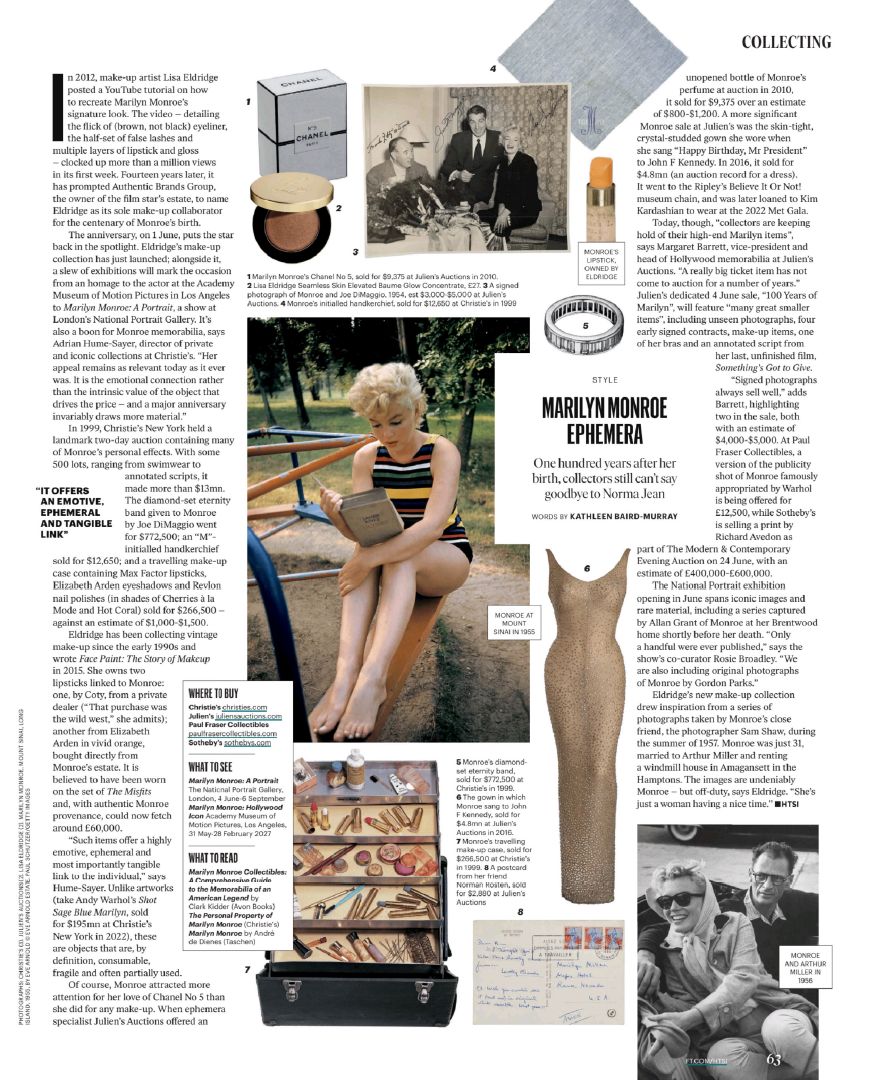
‘Marilyn Monroe is 100 – and we still want a piece of her,’ Kathleen Baird-Murray writes for the Financial Times, suggesting that demand for original artefacts is now outstripping the supply.
“In 2012, make-up artist Lisa Eldridge posted a YouTube tutorial on how to recreate Marilyn Monroe’s signature look. The video – detailing the flick of (brown, not black) eyeliner, the half-set of false lashes and multiple layers of lipstick and gloss – clocked up more than a million views in its first week. Fourteen years later, it has prompted Authentic Brands Group, the owner of the film star’s estate, to name Eldridge as its sole make-up collaborator for the centenary of Monroe’s birth.
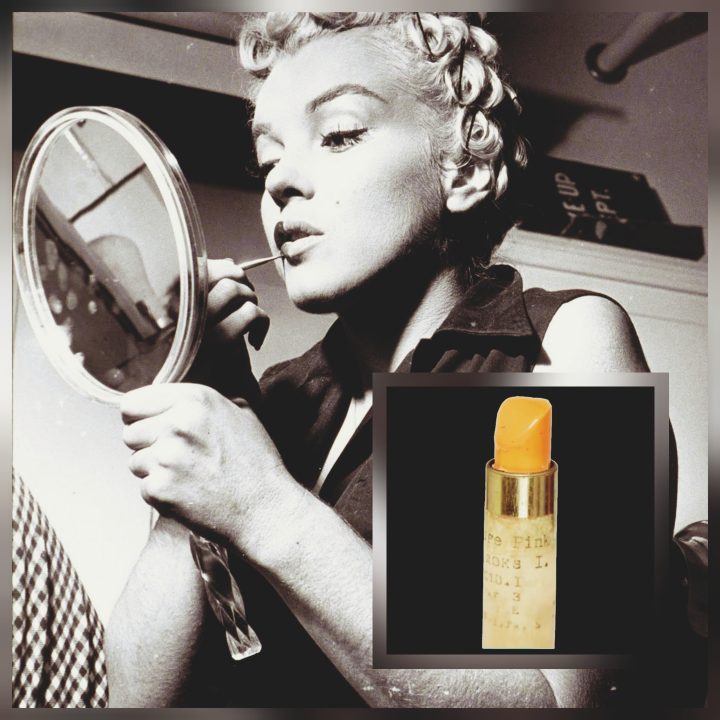
Eldridge has been collecting vintage make-up since the early 1990s … She owns two lipsticks linked to Monroe: one, by Coty, from a private dealer (‘That purchase was the wild west,’ she admits); another from Elizabeth Arden in vivid orange, bought directly from Monroe’s estate. It is believed to have been worn on the set of The Misfits and, with authentic Monroe provenance, could now fetch around £60,000.
It’s also a boon for Monroe memorabilia … Today, though, ‘collectors are keeping hold of their high-end Marilyn items’, says Margaret Barrett, vice-president and head of Hollywood memorabilia at Julien’s Auctions. ‘A really big ticket item has not come to auction for a number of years … Signed photographs always sell well,’ adds Barrett.”
Meanwhile, Tanya Gupta reports for the BBC on a rare discovery shedding light upon Marilyn’s time in England.
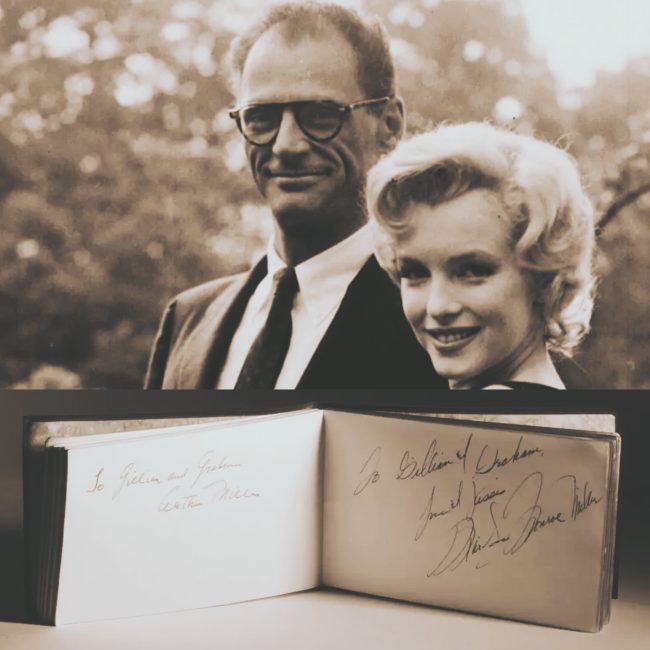
“An autograph book signed by Marilyn Monroe and Arthur Miller at a Surrey police station has sold at auction for £3,600 – more than six times its estimate.
The album had an estimate of between £500 and £600, external in the sale at Ewbank’s auction house in Woking and was invoiced at £4,680 including fees.
It went under the hammer after attracting ‘a huge amount of interest’ before the sale, auctioneer Andrew Ewbank said.
The signatures were collected at Weybridge Police Station in 1956, when Monroe was visiting the UK to film The Prince and the Showgirl with Laurence Olivier, and had to register as an ‘alien’. The rule had been introduced during the Cold War because of security fears.
The officer who oversaw the registration asked the couple for their signatures, which they dedicated to his daughter, Gillian, and his son, Graham … In the book, the actress signed her name, adding ‘love and kisses.'”
‘A hundred years later, Marilyn Monroe is still the beauty blueprint,’ Genevieve Monsma reports for Harper’s Bazaar.
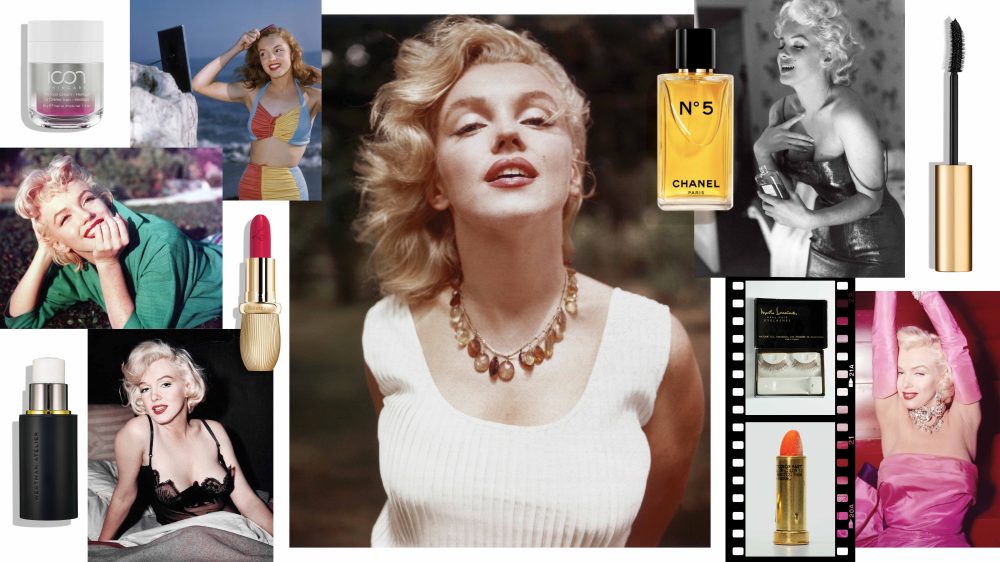
“‘Norma Jeane created Marilyn,’ says Bryan Johns, a Hollywood collector and the cofounder of iS Clinical and the just-launched Icon Skincare, which was directly inspired by Monroe and her facialist, Madame Renna. (More on her later.) Monroe was the careful architect of her own scene-stealing image, and she couldn’t have done it without a team of image makers, most notably her longtime makeup artist, Allan ‘Whitey’ Snyder. Together, they drew from other screen stars—Greta Garbo’s eyes, Rita Hayworth’s lips, Jean Harlow’s hair—quilting together the icy-blond sex symbol we know as ‘Marilyn Monroe.’
Lisa Eldridge is paying tribute to Monroe’s milestone birthday with a limited-edition makeup collection … Eldridge says the idea for the balm came from Monroe’s reported habit of layering Vaseline on her skin to give it a dewy, camera-ready gleam. ‘I was so obsessed with this incredible glow that she had on her skin, but I thought, well, I can’t sell Vaseline,’ she notes.
Vaseline was just one of Monroe’s beauty magic tricks. Another was the inverse of today’s dermaplaning trend. ‘Marilyn knew the power of her skin,’ says Johns. ‘She had fine hair on her face that she refused to let the studio wax off because she knew it would give her an ethereal glow on film.’ That glow was also a credit to the prowess of her facialist, Madame Renna; through collecting Hollywood memorabilia, Johns discovered that Renna was an early pioneer of fascia massage and developed skincare formulas, such as one simply called ‘cream,’ with honey, royal jelly, and propolis. His Icon Skincare line, which has nine products, includes Icon Cream–Heritage, a nourishing formula that’s true to about 95 percent of Renna’s original idea.
Fame and beauty weren’t things that just happened for Monroe; she willed them into being. Erin Parsons, a celebrity makeup artist and another collector of Monroe’s ephemera, says Monroe ‘showed me that you don’t have to be born beautiful’ … To mark Monroe’s centennial birthday, the Academy Museum of Motion Pictures is debuting Marilyn Monroe: Hollywood Icon … The exhibition pays special attention to Monroe’s makeup artist. ‘We hope to pay a nice tribute to her and Whitey’s relationship,’ curator Sophia Serrano says.
The show, which will run through February of next year, features roughly 230 objects … She was photographed in 1955 clutching a bottle of Chanel No. 5 Eau de Cologne (now known as Eau de Toilette), and in 1952, Monroe famously told Life magazine, ‘Once this fellow says, “Marilyn, what do you wear to bed?” So I said I only wear Chanel No. 5.’ Fittingly, Chanel is the sponsor of the museum exhibit.
Part of Monroe’s mystique is that she remains suspended in time. As Parsons puts it, ‘We didn’t see her grow old.’ But in some ways, who she was and the spirit of self-invention she has come to represent resonate differently—and perhaps even more deeply—now than they did in her lifetime. ‘When my looks start to go,’ Monroe reportedly said, ‘so will most of my fans.’ More than six decades later, she’s still turning heads.”
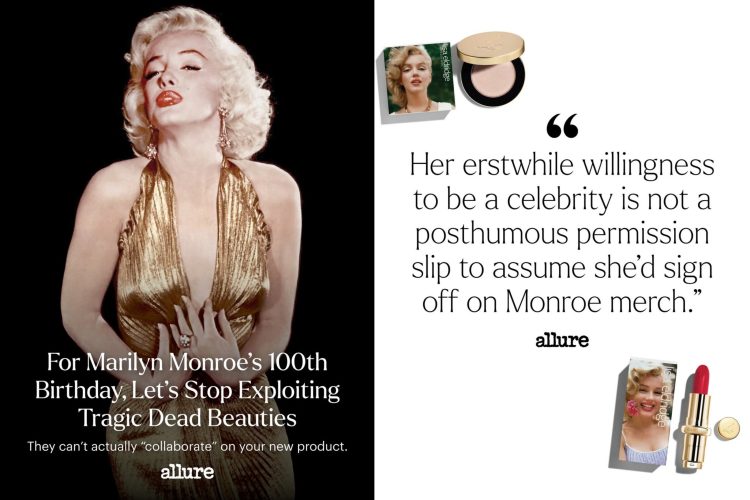
Writing for Allure, however, Marci Robin admits her unease with the deluge of Marilyn-themed beauty products.
“Currently, there are two dozen brands participating in Marilyn Monroe partnerships specifically surrounding her 100th birthday via Authentic Brands Group, four of which are beauty brands. Color Street is offering nail polish strips with Marilyn Monroe motifs; Ipsy has designed Monroe-inspired bags for its June subscription box; SharkNinja launched a Marilyn Monroe edition of its CryoGlow LED Face Mask; and Lisa Eldridge is offering a makeup collection inspired by photos of Monroe taken by Sam Shaw.
‘Throughout time, throughout history, she’s probably the most replicated look—the iconic red lips or her beauty mark or her shade of blonde is probably the most replicated,’ Dana Carpenter, executive vice president, entertainment, at Authentic Brands Group told me in a recent interview. I asked Carpenter if that means any beauty brand that has the money—she wouldn’t reveal the cost of licensing—can slap Monroe’s image on a freckle pen.
Thankfully, no. ‘The consumer is very smart. They can see through things that look like a money grab,’ Carpenter assures me, adding that the partnership has to feel ‘thoughtful and organic’ with ‘true Marilyn DNA’ in the storyline the brand is bringing forth. It’s unclear how that’s determined or how a Marilyn Monroe LED face mask is part of the DNA of a woman who passed away in the early ‘60s.
Look, I love the CryoGlow, as do many other members of the Allure team. But the idea of a Marilyn Monroe edition of the device is completely absurd to me. Would the ‘Ruby Glow’ colourway—apparently the only thing that makes it Marilyn—really be the tipping point for someone who was on the fence about splurging on it?
The Lisa Eldridge collection, on the other hand, does feel ‘thoughtful and organic,’ as Carpenter said, with shades directly influenced by specific images of Monroe … ‘Discover the inspirations and references behind the collaboration,’ the Eldridge website suggests. But can you really ‘collaborate’ with someone who has been dead for 64 years? No matter who holds the rights to Monroe’s estate, and no matter how intense their parasocial relationship with her may be, there’s truly no way to know if she would have wanted any of this.”
 The Marilyn Report